

Project Resources
Caltrans works closely with internal and external stakeholders to deliver the highest-quality tools, resources, and training. This library reflects that partnership, offering materials designed to advance Complete Street planning, design, and engineering practices.
In addition, Caltrans endorses guidance from respected organizations such as NACTO and AASHTO to inform and support project design decisions, ensuring projects align with industry standards and innovative approaches.
Project Planning, Scoping & Development
These Active Transportation data sources provide the most updated information and data on statewide Active Transportation efforts.
- California Healthy Place Index (Webpage):Tool that helps assess community conditions
- Caltrans Web Map Gallery (Webpage):A series of interactive web maps showcasing California-focused transportation themes
- ITHIM (Webpage):Integrated Transport and Health Impact Model
- CCRS (Webpage): California Crash Reporting System (formerly SWITRS)
- TIMS (Webpage): Transportation Injury Mapping System developed by UC Berkley SafeTREC
- Traffic Volumes (Webpage): Traffic volumes available for download on the California State Highway system
- Cal-ITP Data and Digital Services Analysts Section (Webpage): Cal-ITP project information and resources for analysts.
- Caltrans Transportation Equity Index (EQI) | Web Mapping Tool: Spatial screening tool designed to identify transportation-based priority populations at the census block level.
CAT plans identify specific locations and specific bike or pedestrian needs ("location-based needs", or LBNs) which can be referenced to help scope projects. Caltrans staff use these CAT Plans to address active transportation needs along and across the State Highway System (SHS) in future construction or maintenance projects.
District Plans can be viewed here: CAT Plans
Caltrans collaborates with internal and external stakeholders to provide the most up to date and relevant tools, resources and guidance materials to assistant with complete streets planning and project delivery. The resources below were created by working with our stakeholders to expand knowledge and understanding of Active Transportation practices.
- Active Transportation Emphasis Area Guidance (PDF): Utilizes an eight step process to provide consistency in assessing and analyzing active transportation issues and improvements. This document helps within information and analysis that can be integrated into each step, and where to find it.
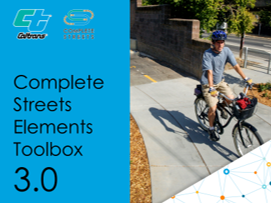
- Complete Streets Element Toolbox 3.0 (GIS Story Map): A comprehensive guide of facilities and design options to assist in project development that includes definitions, diagrams, and design resources.
- Complete Streets Elements Toolbox 3.0 external PDF coming soon!
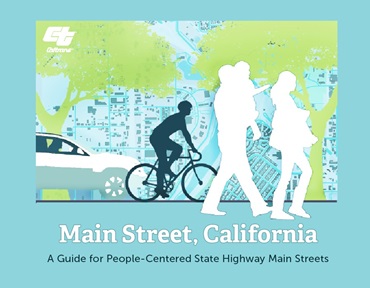
- Main Street, California (PDF): A photo rich document that emphasizes holistic site analysis during planning and design. Intended for Caltrans staff, partners and stakeholders interested in implementing complete streets, livability and equity related strategies on State Highway Main Street projects.
- Pedestrian Safety Countermeasures Toolbox (PDF): Toolbox that provide a set of tools for improving pedestrian safety on the SHS
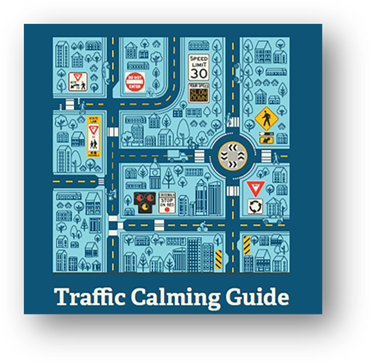
- Traffic Calming Guide (PDF): This guide discusses traffic calming measures that can be implemented within a project segment with the intent to slow speeding vehicles by building self-enforcing roadways that encourage users to travel at safe speeds.
- Toward An Active California - State Bicycle and Pedestrian Plan (SBPP) (PDF): Use this plan to support complete street elements in projects
- Traffic Safety Bulletin 20-07: Rumble Strip Guidelines (PDF): Updated in 2023, this memo includes guidance for rumble strips adjacent to bike lanes or where bikes are allowed on shoulder.
Guided by Senate Bill 960, Caltrans Office of Transit Planning is working to embed transit into Complete Streets projects on the State Highway System—integrating bike lanes, sidewalks, and transit-priority features to improve mobility and equity statewide.
SB 960 sets bold goals for transit including, but not limited to,:
- Development of a Transit Priority Policy
- New Design Guidance for transit-friendly infrastructure.
Project Design Tools
The below Design Information Bulletin's (DIB) provide guidance for the scoping and design of Complete Streets projects and specific Complete Street elements on the State Highway System (SHS). These guidance documents may supersede the HDM.
- DIB 82 Pedestrian Accessibility Guidelines for Highway Projects (PDF)
- DIB 89 Class IV Bikeway Guidance (Separated Bikeways/Cycletracks) (PDF)
- DIB 90 Diverging Diamond Interchange (PDF)
- DIB 94 Complete Streets: Contextual Design Guidance (PDF)
The 7th Edition Highway Design Manual (HDM) establishes uniform policies and procedures to carry out the state highway design functions of the California Department of Transportation, including the design of active transportation facilities. The following chapters of the HDM are those that specifically reference these facilities.
The full HDM and these chapters can be found and accessed here Highway Design Manual
- Chapter 80: Application of Design Standards
- Chapter 100: Basic Design Policies (Topic 105)
- Chapter 200: Geometric Design and Structure Standards (Topic 208)
- Chapter 300: Geometric Cross-Section (Topics 302, 303, 305) (lane widths, Class II bike lane widths, shoulder widths, etc.)
- Chapter 400: Intersections at Grade (Topics 401, 403, 404, 405) (treatments at right turn lanes, etc.)
- Chapter 890: Stormwater Management
- Chapter 900: Landscape Architecture - Roadsides (site design, locating plants and trees)
- Chapter 1000: Bicycle Transportation Design (Class I shared-use paths)
The Project Development Procedure Manual (PDPM) provides the framework of policies and procedures for developing State highway improvement projects, including the design of active transportation facilities. The following chapters of the PDPM are applicable to the development of Complete Street projects
The full PDPM and these chapters can be found and accessed here PDPM
- Chapter 21: Design Standard Decisions
- Chapter 22: Community Involvement
- Chapter 29: Landscape Architecture
- Chapter 31: Nonmotorized Transportation Facilities
- Appendix BB: Design Standard Decision Documentation
- Appendix FF: Complete Streets Decision Document
- Appendix HH: Public Involvement
Operational Resources
The CA Manual on Uniform Traffic Control Devices provides uniform standards and specifications for all official traffic control devices in California. The following chapters of the CA MUTCD are applicable to Complete Street facilities.
The full CA MUTCD and these chapters can be found and accessed here CA MUTCD
- Part 2 Signs
- Part 3 Markings
- Part 6 Temporary Traffic Control
- Part 9 Traffic Control for Bicycle Facilities
Caltrans provides intersection design guidance to objectively assist with the selection of intersection control and geometric designs for the expected users within the context of an intersection’s location. The resources below were created by working with stakeholders to expand knowledge and understanding of intersection design.
- Complete Intersections Guide (PDF): A guide to reconstructing intersections and interchanges for bicyclists and pedestrians
- Intersection Safety and Operational Assessment Process (Webpage)
- Intersection Safety and Operational Assessment Process Guide (ISOAP) (PDF): The Intersection Safety and Operational Assessment Process (ISOAP) Guide presents a data-driven, performance-based framework incorporating the Safe System Approach to screen intersection strategies and identify optimal solutions for new or improved intersections.
NACTO, AASHTO, & Partner Resources
Caltrans endorses these guides from the American Association of State Highway and Transportation Officials (AASHTO) and recommends them as resources to inform project design and support design decisions.
- Green Book
- Pedestrian Guide
- Bike Guide
These resources are available for purchase through AASHTO. To learn more about these external resources, please visit the following link: Learn More
The following materials were developed by the Federal Highway Administration (FHWA) to provide authoritative guidance on transportation planning and design. While Caltrans did not produce these resources, they are widely accepted and may be referenced to complement Caltrans policies and standards.
Caltrans endorses the guides from the National Association of City Transportation Officials (NACTO) and recommends them as resources to inform project design and support design decisions
These resources are available for purchase through NACTO. To learn more about these external resources, please visit the following link: Learn More