

Dive team photo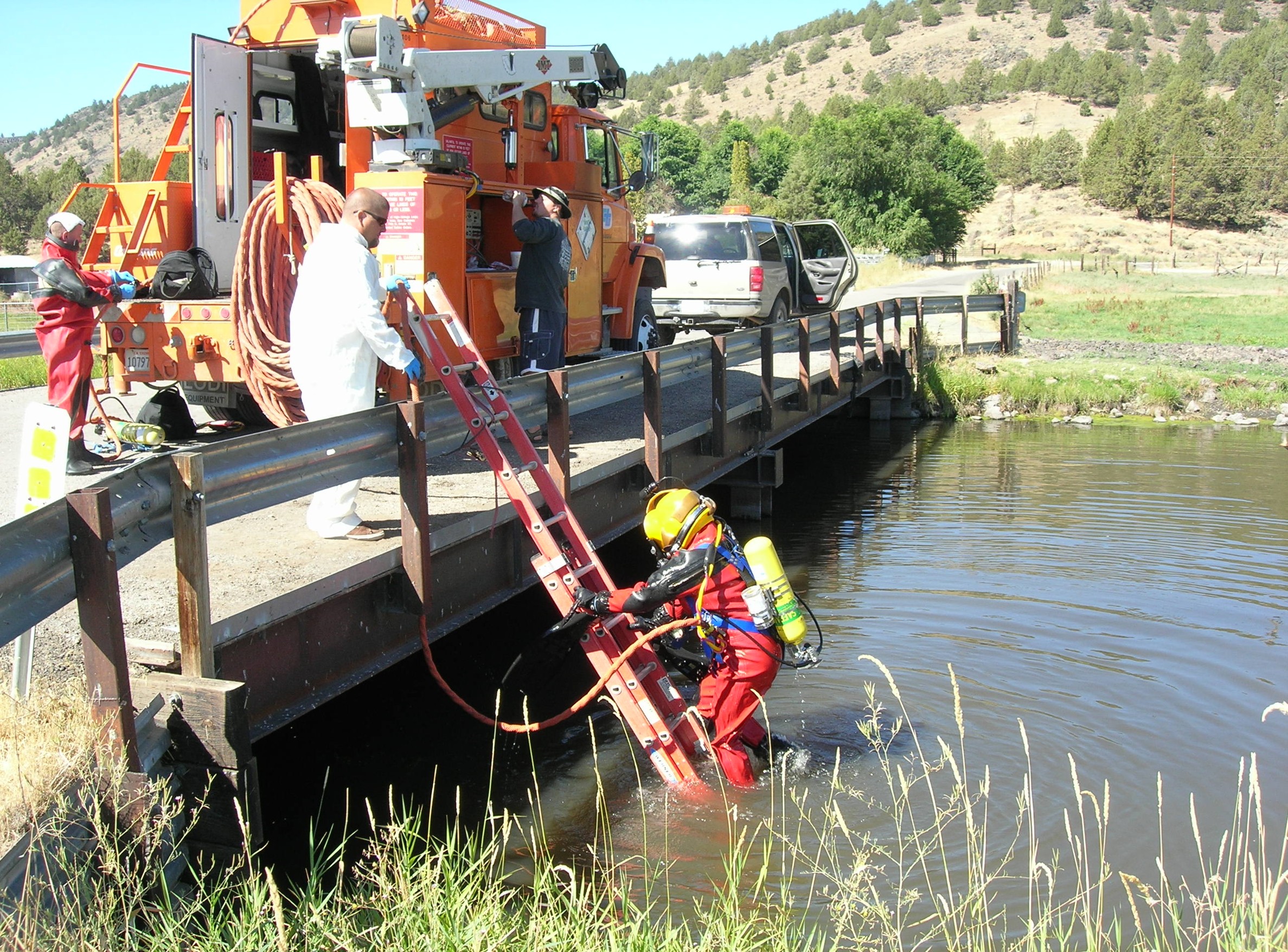 Caltrans' 12-member dive team inspects all waterway-related bridges in the state highway system.
By Nicole Mowers
Headquarters public information officer
Long before Mitch Miller became a diver with the Caltrans Dive Team, he was a kid drawn to the water. What started with snorkeling and swimming eventually grew into a passion for recreational scuba diving, leading Miller to earn his open-water certification before joining Caltrans.
Now, after 22 years with the Dive Team, the water that first captured his curiosity has become an important part of his career.
“It’s a very rewarding job. We are making sure the travelling public is safe. That’s the biggest reward. Knowing that you’re making a difference,” said Miller.
Caltrans has a lean, mean and mighty machine of a 12-person dive team. It’s the department’s only team and covers all state highway system bridges from the Oregon border to the Mexico border and the coastline of nearly 840 miles.
Most bridges are on a 5-year cycle for the underwater portion. Some bridges require a “based on need” inspection based on their condition. Some bridges are on an annual inspection. Some have a 2-year inspection schedule. It all depends on the condition of the bridge.
“Safety is our priority. So, we are not going to put anyone in the water, if it’s not safe,” said Miller.
Diving is a physical job, what with the heavy-duty equipment and submerging into the water. For starters, the divers’ equipment weighs between 60 and 70 pounds.
“It’s all tactical. So, if you can’t see it, you’re just feeling it. And it’s tough,” said Miller. “You must be able to visual what you are actually touching and that is a big part of the experience, I think, over the years, you figure it out. They say that if you lose one of your senses, that your other senses heighten. So, if you can’t see, then your hands are telling your brain what you’re feeling. And it’s just a lot of experience to know what you are feeling.”
While many dives require Miller and the Dive Team to rely heavily on touch and experience, the job also offers moments when the underwater world is clear enough to see and appreciate the environment around them.
“Coronado Bay Bridge is always a good dive because the water is nice and clear. You can see all the sea life. Lots of coral, lots of stuff. The water is clear, and you can see well. The dive team can see a lot of fish and a lot of cool stuff like that. Those are always memorable dives for them.”
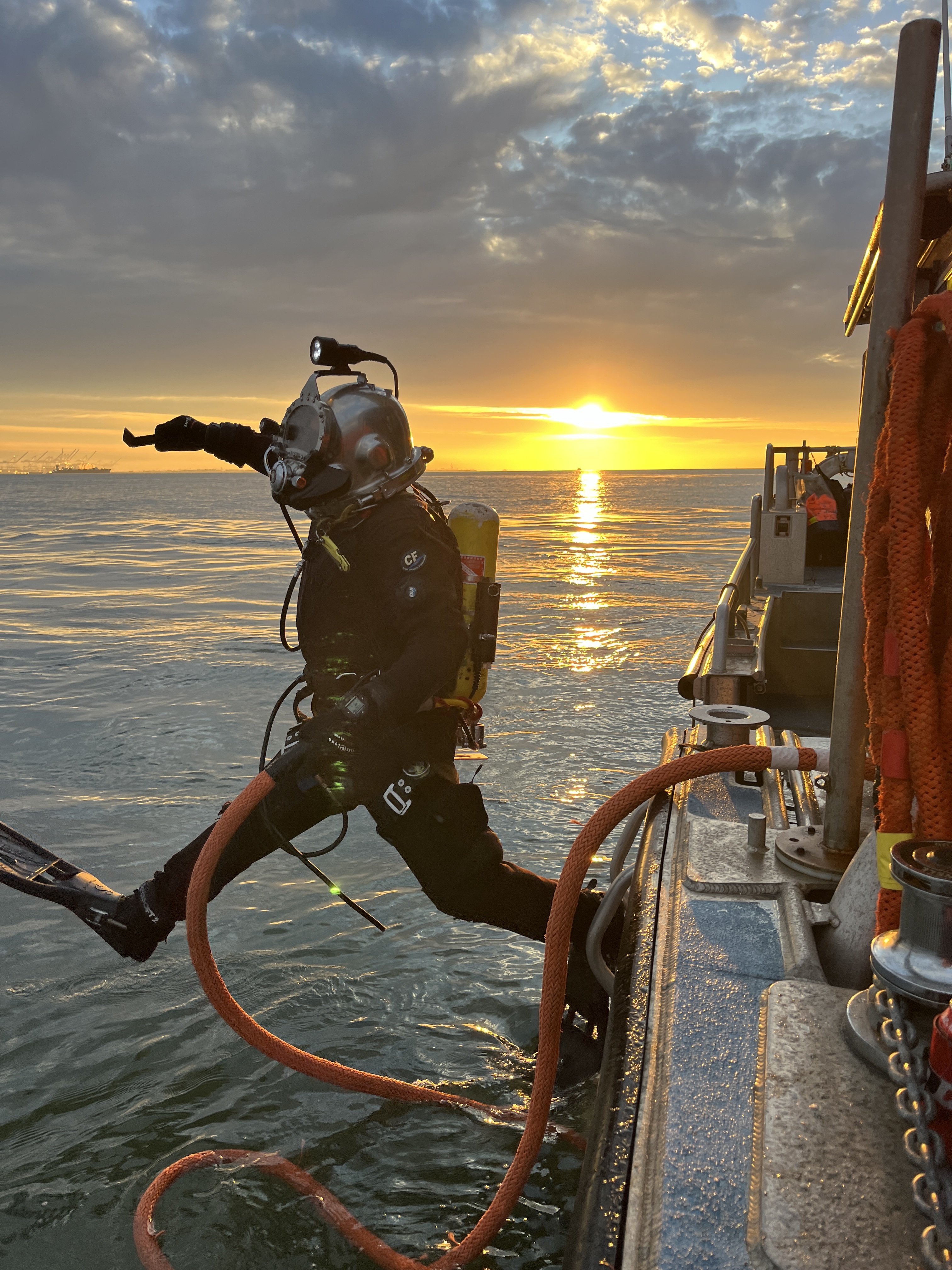 Amazing scenery and cool equipment are among the perks enjoyed by Caltrans divers.
Dive team photo
Visibility is one of the biggest challenges for divers assessing bridges. Currents play a large factor in how quickly the team can get the job done.
“I think it would be neat for everyone to know that we are out there inspecting the bridges. A lot of people don’t even think about it until the bridge is falling apart. We (the Dive Team) are down there doing the job making sure that the public is safe,” said Miller. “It’s always fun. It’s always rewarding. It’s known that you are doing a job that helps with public safety. You’re performing something that is pretty unique.”
For Miller, the reward goes beyond the adventure of working underwater, it comes from knowing the team can make a difference by finding problems before they become bigger safety concerns.
“You are always proud of the fact that you’re finding the damage and cool that you found something and fix it. Most of the time, you don’t find anything. That part is making sure that you make a difference. You found a problem before it became a bigger problem. That’s cool,” said Miller.
Miller started with the Caltrans paint crew as a bridge painter in 1999. In the spring of 2004, he met one of the dive team members and turned into his mentor, Dave Kindle.
Miller was the young new diver and that was fun at the beginning and now he is the seasoned veteran diver with his long-standing career that gets to teach the next generation.
“As I am on the road to retirement, you look back on those moments that you will be retiring with a career that not many people have the opportunity to do,” said Miller.
The next generation appreciates that Miller has years of knowledge and he is willing to share with them. Everyone wants to gain more from Miller and it’s nice that they recognize, appreciate and value what he brings to the table. Miller is happy that the next generation can lean on him for anything that he has and is willing to share.
The Underwater Investigations Office currently maintains an inventory of almost 800 public bridges in the State that have submerged structural elements and require regular underwater investigations on an interval not to exceed five years. The Office develops and maintains the inventory of bridges requiring underwater investigations, schedules and performs the investigations, and recruits and trains the divers who perform them.