

District 2 photo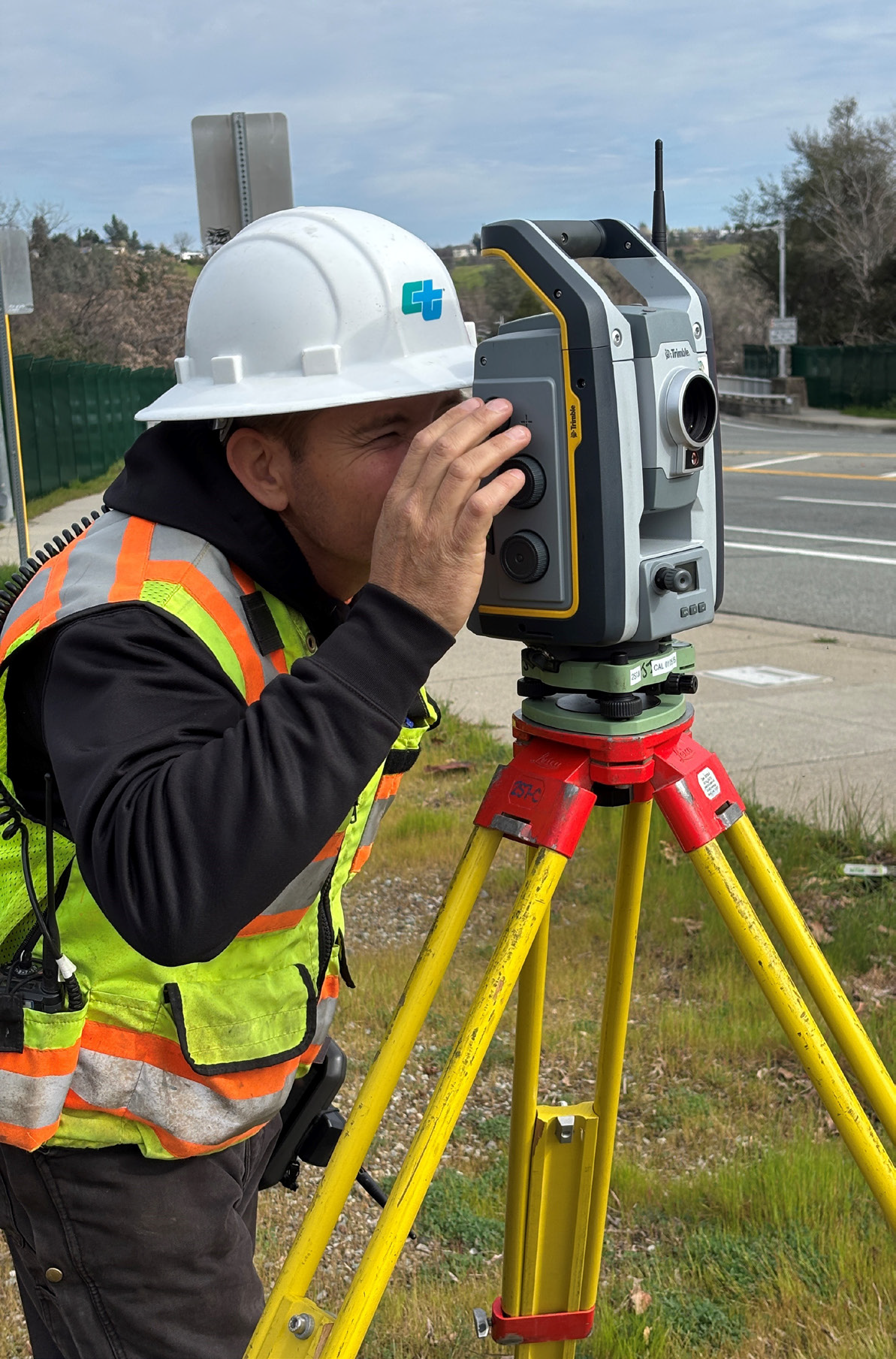 Junior Engineering Technician John Irvin sets his sights on getting a pinpoint measurement in District 2.
By Yvonne Mazzotta
District 2 public information officer
Most people don’t notice surveyors until they stop traffic.
They’re the ones standing just off the roadway, looking through instruments while cars rush past. Drivers slow down, ask questions, and worry about what’s happening. Is this a camera? Are we losing land? Is parking going away?
Those questions point to a simple truth: most people don’t know what surveyors do.
At Caltrans, surveyors are the first on a transportation project and the last to leave. Before a road is redesigned or safety improvements are built, surveyors are already at work — measuring, mapping, and establishing the foundation every project depends on.
Craig Turner, a Senior Transportation Surveyor at Caltrans, came to the profession after seeing a colleague thrive in it. Inspired by that success, Craig pursued surveying himself and now also teaches surveying courses at Shasta College, helping train the next generation in a field that blends math, law and public service.
Surveying requires extreme precision. Surveyors map property lines and easements, locate utilities above and below ground, and document roadway features with accuracy required by law—within two millimeters. That precision ensures projects are designed correctly, built safely, and returned exactly as they were found once construction is complete.
Surveyors often begin work when safety issues arise, such as repeated incidents in a specific area. Their work starts in the earliest planning phase and continues even after construction, when they re-monument property markers and restore boundaries to protect property rights.
They are also the technological front line of Caltrans, using drones, aerial laser imaging, scanners, and robotic equipment. Their training includes climbing, blasting awareness, and working in challenging terrain—often in live traffic, without cones or lane closures.
Surveyors don’t just measure land. They protect communities, support safer roads, and ensure transportation projects are built on truth—not assumptions. Their work may be quiet, but without it, California’s transportation system cannot move forward.