

Photo collage by Suzanne Hackel, District 7 Graphic Designer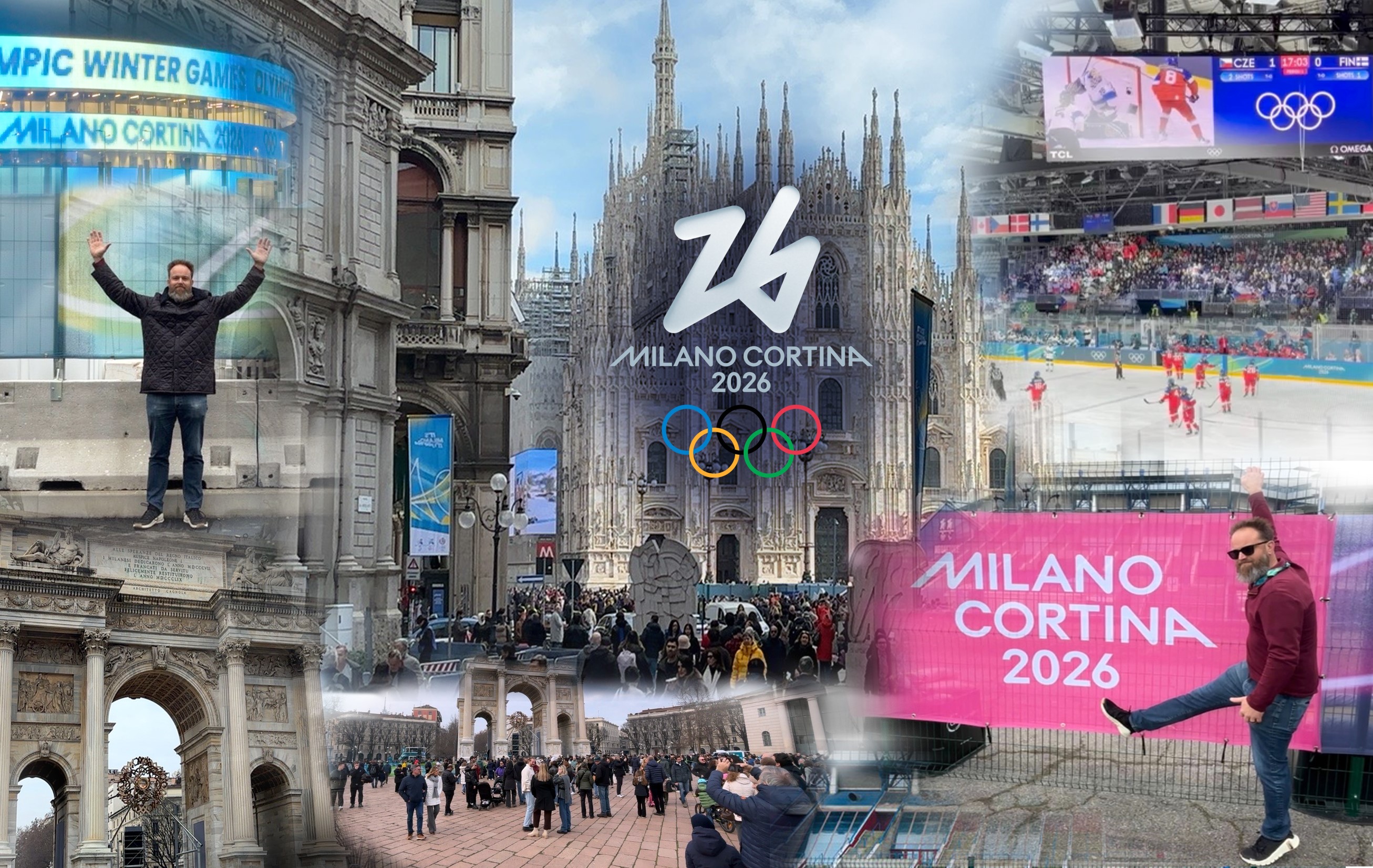 District 7 maintenance superintendent Martin Wagner toured Milan Winter Games venues the week of Feb. 9 as part of a survey trip for LA28 agency planners.
By Erik Skindrud
District 7 Customer Service Liaison
Martin Wagner knows L.A. traffic. Superintendent for District 7’s Metro Region maintenance area, his beat is downtown, where US-101 meets the I-5, I-10, I-110, I-710 and SR-60.
It’s an urban pressure cooker where encampments, graffiti, and litter compete for crews’ time and attention.
For the past two years, however, planning for Los Angeles’ 2028 Summer Olympic Games has also occupied Wagner’s schedule. As part of the process, he spent a week in Milan to observe that city’s traffic response plan for the 2026 Winter Games.
“Our Milan observer sessions focused on transportation operations, security, and interagency coordination, which are related to the work I’ve been doing for the 2028 Summer Games,” Wagner explained recently. “Several partners, including from Los Angeles Department of Transportation, were there as well – allowing us to observe operations together and exchange ideas in real time.”
In the exchange that follows, Wagner shares his Olympic takeaways with CT News.
When traveling, I’m curious to see if drivers overseas are as aggressive as L.A. drivers. I’ve heard Italian motorists like to go fast, and will honk if you’re blocking them. True?
“Like many large metropolitan areas, driving behavior in Milan can appear absurd or frightening to most people, but can also seem normal, once you observe it for a while. Italian drivers do use their horns more frequently than drivers in Los Angeles, but much of the honking seems less confrontational than what we sometimes experience in Southern California. In many cases, the horn functions as a communication tool, essentially a polite ‘I’m coming through,’ rather than an expression of frustration.”
What did you think of Milan’s ground transportation plan?
“Transportation planning appeared to be well structured and highly integrated with existing mobility systems. The organizing committee placed a strong emphasis on multimodal transportation, which helped reduce reliance on private vehicles.
“One notable element was the use of mobility hubs and locations where spectators and workforce could transition between rail, bus, shuttle, and pedestrian routes. This approach helped distribute travel demand and kept the immediate areas around venues from becoming overwhelmed by traffic.”
What observations are you relaying to District 7’s LA28 planning team?
“First, early and continuous coordination between transportation agencies, security partners, and event organizers is essential. The relationships built during the planning phase directly influence how operations function during the event.
“Second, the concept of dedicated travel corridors, like the Games Route Network that Caltrans is currently leading, appears to be an effective way to ensure reliability for athletes, officials, and emergency services, while maintaining access for the public.
“Third, mobility hubs and strong public transit integration significantly reduce pressure on roadway infrastructure. Encouraging transit ridership and communicating travel options to spectators can improve traffic flow.
“Finally, the value of observing operations in person cannot be overstated. Watching transportation in real time and seeing how venue access and security function, provided insights that can’t be replicated in a tabletop environment.”
Share your “most fun” moment.
“Attending an Olympic hockey game was a once in a lifetime experience. And the food. It’s nearly impossible to find a bad meal in Milan, or really Italy as a whole.”
How would you rate maintenance by Caltrans’ Italian counterparts?
“Roadways in Milan were functional and well maintained, very little litter was present, and traffic operations performed well. However, on Italian highways there’s more graffiti than we see on state highways in Southern California – although some of it was on private property.
“In many locations, graffiti appeared to remain in place for extended periods, including political or vulgar graffiti. It’s interesting to see how another agency and culture manages graffiti and urban aesthetics.”