

District 1 photo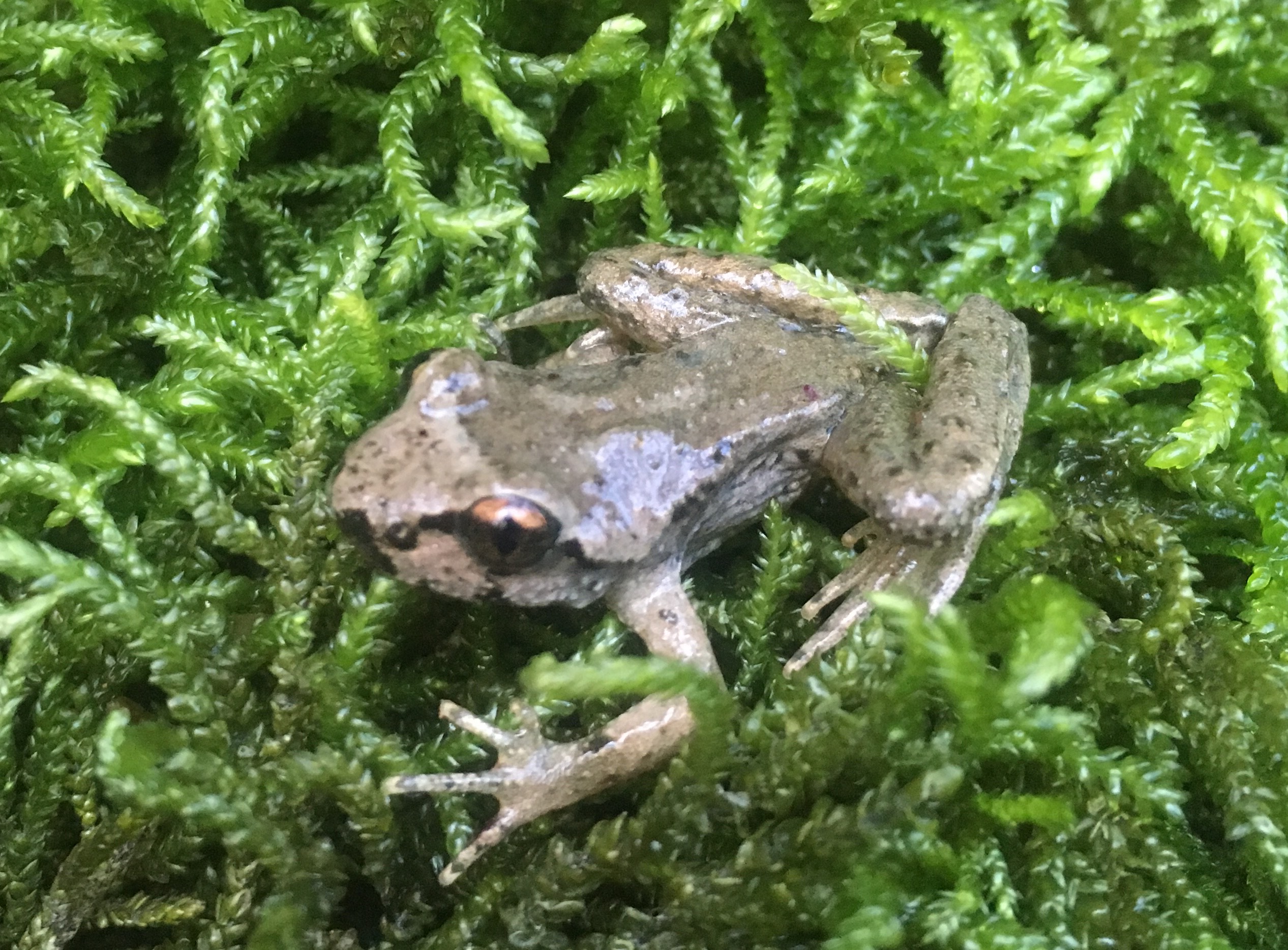 The Coastal Tailed Frog (Ascaphus truei) is one of many species whose needs and habitats are considered as Caltrans goes about its maintenance of state roadways.
By Paul Amato
District 1 biologist
Okay, confession time: one of the absolute BEST parts of my job? Culvert replacements.
Yep, you heard that right. It’s basically like opening a box of chocolates – except instead of not knowing what you’re going to get, you might find a frog. Or … just a sad puddle. Either way, it’s an adventure!
But here’s the deal. I don’t check culverts when they’re doing their thing. I show up when they’re getting swapped out. Most of the time, they’re just handling boring roadside run-off or seep water, but every now and then, you hit the jackpot!
Some culverts are like secret VIP tunnels for streams, connecting tiny creeks to big waterways. And guess what? They double as critter highways for everything from fish to frogs to who-knows-what.
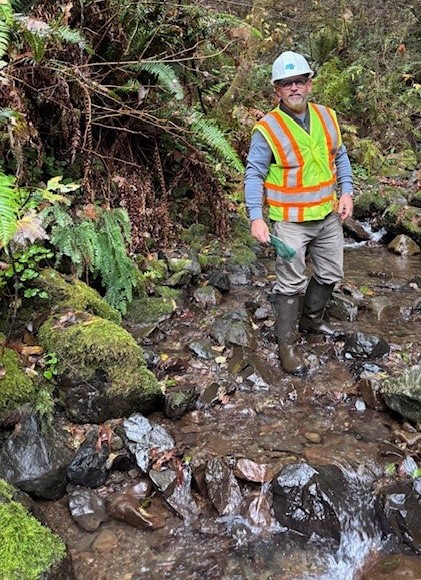 District 1 biologist Paul Amato brings empathy for wildlife to his duties, and passion for a particular amphibian.
District 1 photo
Right now, there’s a whole squad of culverts in District 1 getting a glow-up. My mission? Figure out what’s flowing through, stormwater or an actual stream. If it’s storm runoff, yawn … the habitat’s usually a hot mess. But if it’s a stream with a steep slope and rocky bottom? Cue the drumroll, that’s prime real estate for my favorite amphibian.
This little frog is tiny, elusive, loves fancy digs, and get this, it doesn’t even make a peep!
Meet the Coastal Tailed Frog (Ascaphus truei) known for its unique "tail," which is an extension of the male's cloaca used for internal fertilization. This internal fertilization prevents sperm from being washed away in fast-moving water. That’s mind-blowing enough but hardly its only exciting modifications.
When it comes to romance, the Coastal Tailed Frog keeps things cool, literally. Breeding happens in late summer to early fall, right in those icy streams. Females tuck their eggs under rocks, and the eggs have a sticky coating to keep them from washing away. Tadpoles hatch equipped with suction cup mouths, ready to ride out the rapids. Metamorphosis is no quick fling either. It takes one to four years before they grow into adults. Talk about patience!
These frogs have several adaptations for their fast-flowing, cold stream habitats, including hardened fingertips for clinging to rocks on the bottom of streams. The pupil is vertical like a cat for improved low-light vision. Adults lack vocalization because they don't have external eardrums (croak much?). They are also one of the longest living frog species, potentially reaching 20 years, and are considered an indicator species for stream health.
We are incredibly lucky to have such unique wonders in our own backyard and learn about how our work matters to so many species in the state.