

State of California graphic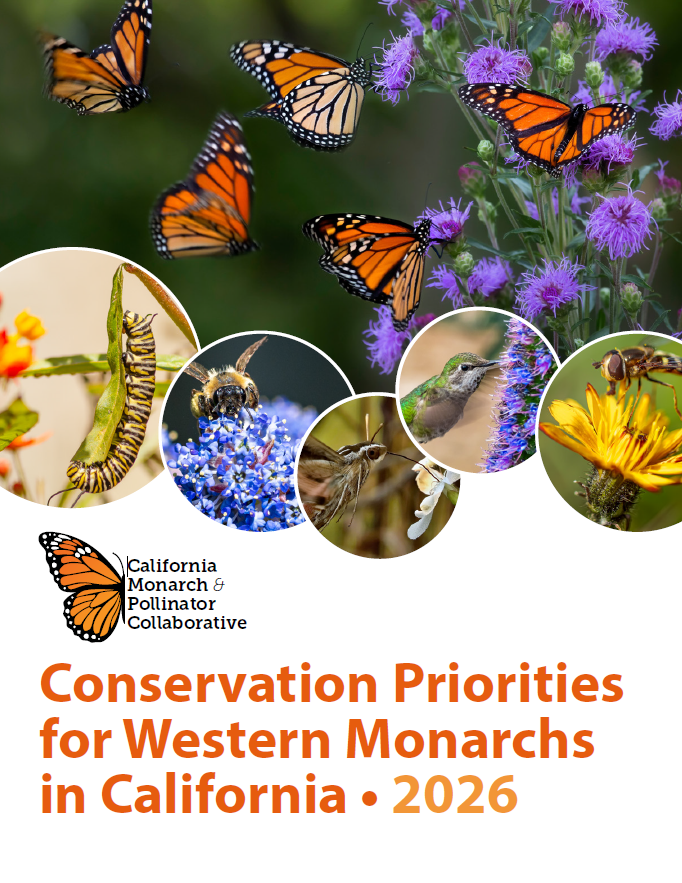
By the Division of Public Affairs
As thousands of western monarch butterflies return this fall to their overwintering sites along the central coast and other coastal locations of California, Caltrans and partner agencies are working to protect their migration and habitats, which are increasingly stressed by urban growth and climate change.
Caltrans’ engagement in the California Multi-Agency Monarch and Pollinator Collaborative (Pollinator Collaborative), along with enrollment in the Nationwide Candidate Conservation Agreement with Assurances (Monarch CCAA), demonstrates the department’s commitment to the long‑term conservation of western monarchs. Through the Collaborative, participating agencies have agreed to improve the identification of western monarch habitats in California and advance implementation of science‑based conservation actions. Together, these actions reflect Caltrans’ leadership role in elevating and coordinating western monarch conservation efforts statewide.
“Caltrans’ engagement in the Collaborative and our enrollment in the Monarch Candidate Conservation Agreement, demonstrates our ongoing commitment to the conservation of monarch butterflies. Caltrans is actively implementing conservation actions that positively impact monarchs and their habitats, ensuring that our efforts contribute to the long-term survival of pollinator species,” said Caltrans Director Dina El Tawansy.
Monarchs, like many of California’s invertebrate pollinators, are experiencing steep population declines—a troubling trend shared by numerous species of bees, nectar‑feeding bats, and other butterflies. More than a third of agricultural crops and 85 percent of all flowering plants rely on pollinators to trigger the germination process needed to grow fruit or flowers. Nearly a quarter of all native North American pollinators are now at risk of decline in population, according to a 2025 study. The loss of even a small portion of these species would have significant ecological repercussions, affecting agricultural productivity as well as the broader function of plant communities, wildlife interactions, and natural ecosystem processes.
As part of its long-standing stewardship practices, Caltrans routinely incorporates monarch and pollinator conservation into the project planning and field operations. Caltrans supports monarch and pollinator habitat through the use of native, climate‑appropriate, and pollinator‑supportive vegetation during the Project Development Process.
To support this effort, Caltrans developed “species cards,” are distributed to maintenance crews, contractors, inspectors, project managers, etc. These cards provide concise, science‑based guidance for working safely and responsibly in areas where sensitive species may be present. The monarch card specifically highlights the importance of milkweed and encourages staff to engage with their District Biologists to further understand what monarch habitat is and how to survey monarchs prior to vegetation management practices.
Caltrans’ enrollment in the Monarch CCAA further underscores its commitment to long‑term monarch conservation. As part of this agreement, Caltrans designates specific rights‑of‑way that support monarch habitat as idle lands, allowing extended intervals between vegetation treatment cycles to maintain monarch‑friendly habitat.
By joining the Pollinator Collaborative, Caltrans strengthened its commitment to advancing statewide western monarch and pollinator conservation. Caltrans will develop performance targets to guide and measure improvements in western monarch habitat over the next five years through the Monarch CCAA..
The Pollinator Collaborative identified the following actions as high priorities to augment western monarch conservation in California:
• Develop common western monarch habitat definitions for the West.
• Track implementation and success of habitat projects.
• Centralize existing pollinator resources.
• Improve the availability of native plant materials.
• Develop a demographic model to help identify key vulnerabilities in the western monarch life cycle.
In addition to Caltrans, the members of the collaborative are: the U.S. Bureau of Land Management, California Coastal Commission, California Department of Food and Agriculture, California Department of Fish and Wildlife, California Department of Parks and Recreation, California Department of Pesticide Regulation, California Wildlife Conservation Board, National Park Service, Natural Resources Conservation Service, U.S. Fish and Wildlife Service, U.S. Forest Service, and U.S. Geological Survey. The Department of Defense is also involved in an unofficial capacity.
Combined, the member agencies own or manage approximately 50 percent of California’s land area.
To read the full report or learn more, visit the California Multi-Agency Monarch and Pollinator Collaborative page.