

Headquarters photo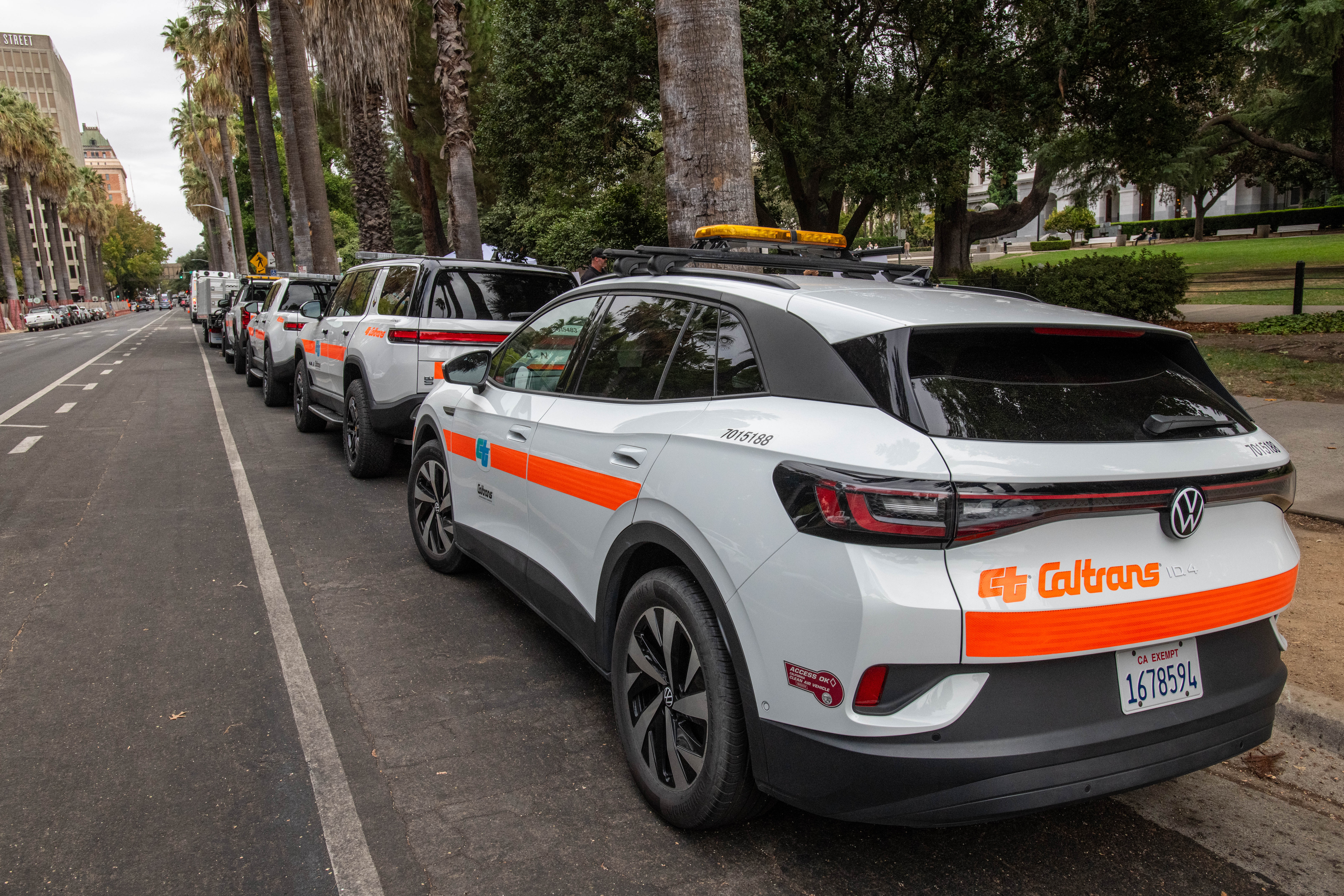
From the Division of Equipment
Caltrans’ Division of Equipment’s commitment to fleet modernization is more than just acquiring new vehicles. It's about becoming the greenest government fleet in the nation.
As of fall 2025, Caltrans has 1,227 electric vehicles (EVs) in its fleet, consisting primarily of Teslas, Volkswagen ID.4s, Chevy Silverados, Chevy Bolts and a variety of heavy-duty fleet vehicles. The Division of Equipment also had an additional 485 all-electric units on purchase order and in delivery, including Rivian R1-T trucks, Rivian R1-S SUVs, Ram ProMaster EV vans, Volvo VNR Class 7 cargo trucks, electric sweepers and Bollinger cone trucks.
In addition, Caltrans has 289 new plug-in hybrid vehicles coming into the fleet: 75 Jeep Grand Cherokee 4xe plug-in hybrids, 22 Toyota RAV4 Primes, and 192 Ford F-150 hybrids.
There are several benefits to the regular replacement of Caltrans light-duty fleet vehicles. Newer vehicles are more reliable, leading to more uptime for customers and less unexpected downtime.
Also, they allow Caltrans to take advantage of factory warranties, ensuring manufacturers are responsible for major repairs, not Division of Equipment staff. Most new EVs carry an eight-year, 100,000-mile warranty on the battery and drivetrain.
Additionally, a modern fleet promotes a People First culture. When Caltrans employees are driving newer, well-maintained vehicles, it creates a sense of pride in their work and shows the division’s commitment to providing the best possible equipment for the department.
Finally, regular replacement is a sound financial strategy. By turning over its fleet more regularly, Caltrans gets more money back when vehicles are auctioned off at the end of their useful life cycle. This provides a better return on investment, adds more money back into the department’s new equipment fund, ensures the most value for the fleet, and continues a sustainable fleet replacement cycle.
The California Air Resources Board has set a goal for Caltrans to replace its entire fleet with fully electric vehicles by 2035. The Division of Equipment is embracing this transition, but there are challenges to overcome, particularly with heavy-duty equipment.
The typical range for a heavy-duty Class 4-8 electric truck is currently between 120 and 250 miles, with an average of about 150 miles.
A significant challenge in the industry is managing the size and weight of battery packs, as well as thermal management to keep batteries cool during use.
The industry is rapidly evolving, and the Division of Equipment's continued investment and partnership with the original equipment manufacturers (OEMs) is critical to helping vehicle-makers move technology forward.
Caltrans is actively working with manufacturers such as Volvo, Bollinger, Mack, Global Environmental Products, and International Trucks to purchase and help develop new EV products. The department already has a Volvo VNR Electric transport tractor in service, with another on order, along with 11 straight-frame cargo trucks.
Caltrans also has a purchase order for eight Bollinger vehicles, which will be upfit into electric cone trucks, and 15 Global Environmental Products electric sweepers.
To ensure these EVs are put to their best use, Caltrans’ Engineering & Production team uses fleet telematics data to identify locations where they are best suited.
Caltrans strives to be on the cutting edge of new EV technology. That approach comes with its own set of challenges, and the department is at a watershed moment when it comes to vehicle propulsion. Caltrans is working directly with OEMs to develop technology and solutions that will overcome challenges for the rest of the world, and the department’s field crews are finding ways to adapt.
Such efforts have earned Caltrans a reputation as globally respected subject-matter experts in the EV world. As the Division of Equipment continues to modernize its fleet, the integration of new technologies represents an evolution for the entire organization.