Carquinez Bridge
Located on Interstate 80 (I-80) between Contra Costa and Solano counties, the Carquinez Bridge has served the needs of North Bay travelers since 1927.
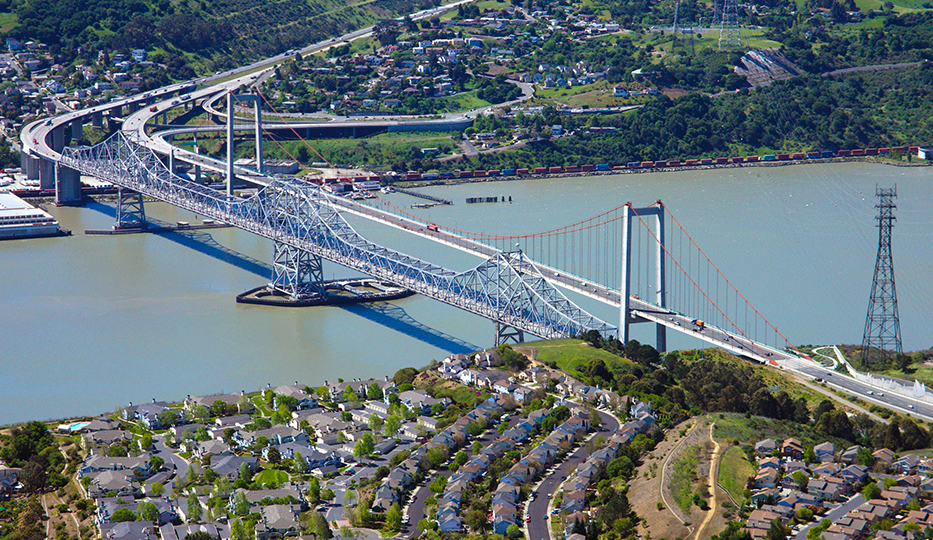
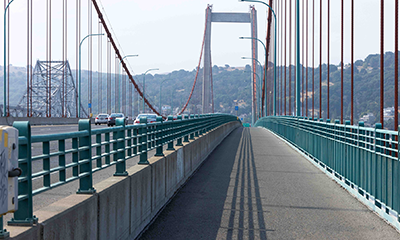
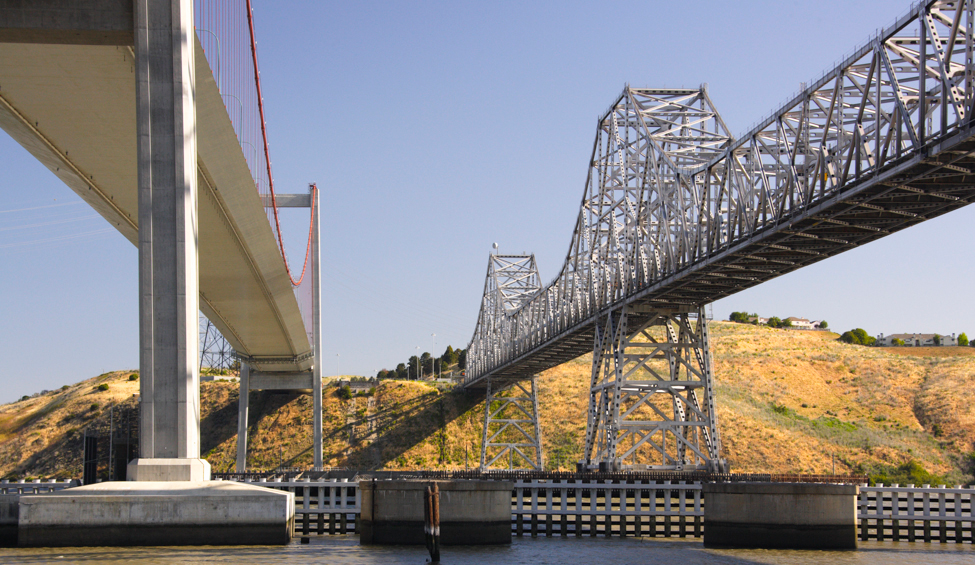
The Carquinez Bridge connects Crockett on the south side of Carquinez Strait and Vallejo on the north side. Eastbound traffic is handled by a cantilever bridge that opened in 1958. Westbound traffic is handled by a suspension bridge which opened in 2003.
What’s New
Caltrans is committed to maintaining and improving safety, reliability, and connectivity along the Richmond–San Rafael Bridge (RSRB). Several ongoing and upcoming projects are currently in progress to repair bridge infrastructure, improve communication systems, and prepare for future open road tolling operations.
Some current and planned work:
- Al Zampa Bridge Work
- Upcoming Project: Open Road Tolling (ORT)
Visit our Projects page to get more information on current and planned work.
Advisories
October 16, 2026
Daytime Two Lane Closure on Interstate-80 (I-80) Carquinez Bridge, Solano/Contra Costa County
October 8, 2026
Daytime Ramp and Lane Closure on Interstate-80 (I-80) Carquinez Bridge, Solano/Contra Costa County
September 24, 2026
Rescheduled: Nightly Overnight Lane Closure on Westbound I-80 Carquinez (Alfred Zampa) Bridge in the cities of Vallejo and Crockett
September 21, 2026
UPDATE: Nightly Overnight Lane Closure on Westbound I-80 Carquinez (Alfred Zampa) Bridge in the cities of Vallejo and Crockett | Caltrans
September 10, 2026
UPDATE: Nightly Overnight Lane Closure on Westbound I-80 Carquinez (Alfred Zampa) Bridge in the cities of Vallejo and Crockett | Caltrans
To receive email updates, please sign up for Al Zampa Bridge Deck Rehabilitation Project Email Advisories
History & Facts
Located on Interstate 80 (I-80) between Contra Costa and Solano counties, the Carquinez Bridge has served the needs of North Bay travelers since 1927.
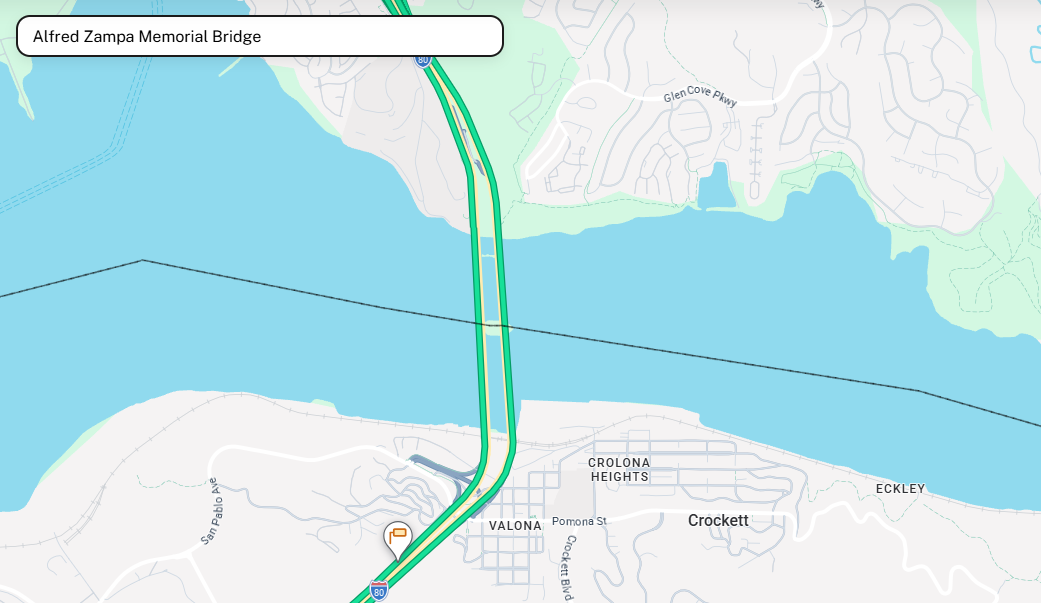
The Carquinez Bridge connects Crockett on the south side of Carquinez Strait and Vallejo on the north side.
Spanning 3,465 feet, or .66 miles, the Carquinez Bridge has taken on many forms. Originally, it was a single cantilever bridge in 1927 connecting to the rest of the Lincoln Highway, a historic transcontinental roadway, what is now I-80.
In 1958 a second parallel cantilever bridge was installed to relieve congestion and handle the eastbound traffic, while the original 1927 span handled westbound traffic. After the 1989 Loma Prieta and 1994 Northridge earthquakes, state engineers found replacing the original 1927 span would cost less than the substantial structural reinforcing and seismic upgrades needed.
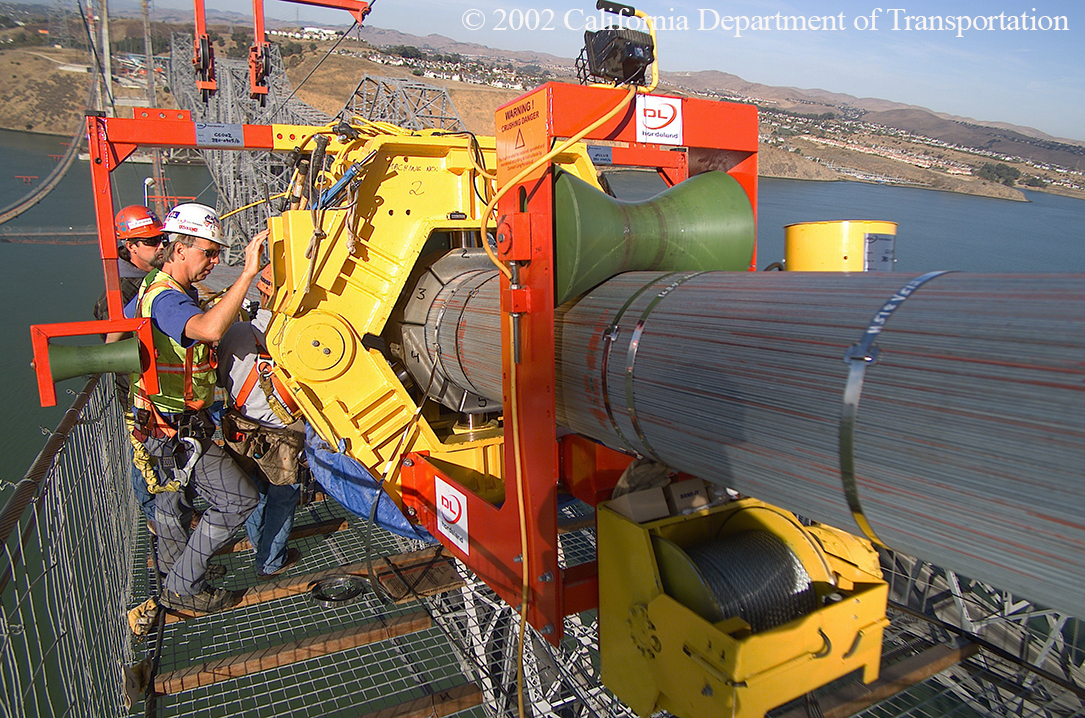
Work then began on the new westbound suspension bridge, which opened in 2003. It is dedicated to Al Zampa, an ironworker who worked on a number of the San Francisco Bay Area bridges, including the original 1927 Carquinez span.
Tolls are collected in the eastbound direction (entering Vallejo). The toll is $8.50 for FasTrak, license plate accounts, one-time payments or invoices. A carpool discount of $4.25 is available for qualifying vehicles using the HOV lane.
| Location: | Interstate 80 between Contra Costa and Solano counties |
| Structure: | Steel cantilever truss (eastbound span) Main cable catenary suspension (westbound span) |
| Length: | 0.8 miles (eastbound span) 0.7 miles (westbound span) |
| Vertical Clearance: | 148 feet |
| Channel Span: | 1,100 feet |
| Tower Height: | 314 feet (eastbound span) 420 feet (north tower of westbound span) 403 feet (south tower of westbound span) |
| Opened: | Original structure: May 1927 Eastbound structure: November 1958 Westbound Structure: November 2003 |
| Cost: | $66 million |
| Auto Toll: | $8.50 |
| Carpools: | $4.25 |
| Collection: | One way, eastbound in Vallejo |
| Traffic Lanes: | Four lanes in each direction |
| FY 2022-23 Total Toll-Paid Vehicles: | 20,554,928 |
| FY 2022-23 Total Tolls Collected: | $138,484,029 |
| Bridge Path Counter Data: | Access bicycle and pedestrian counter data (link is external) |
Connect With Caltrans District 4 On Social Media




#CaltransLovestheBay