

2025 EIT Winners
Category 1 – Multimodal Transportation
Santa Monica 20th Street Pedestrian and Bicycle Connection
- General Technologies and Solutions (GTS)
- JMC2
- City of Santa Monica
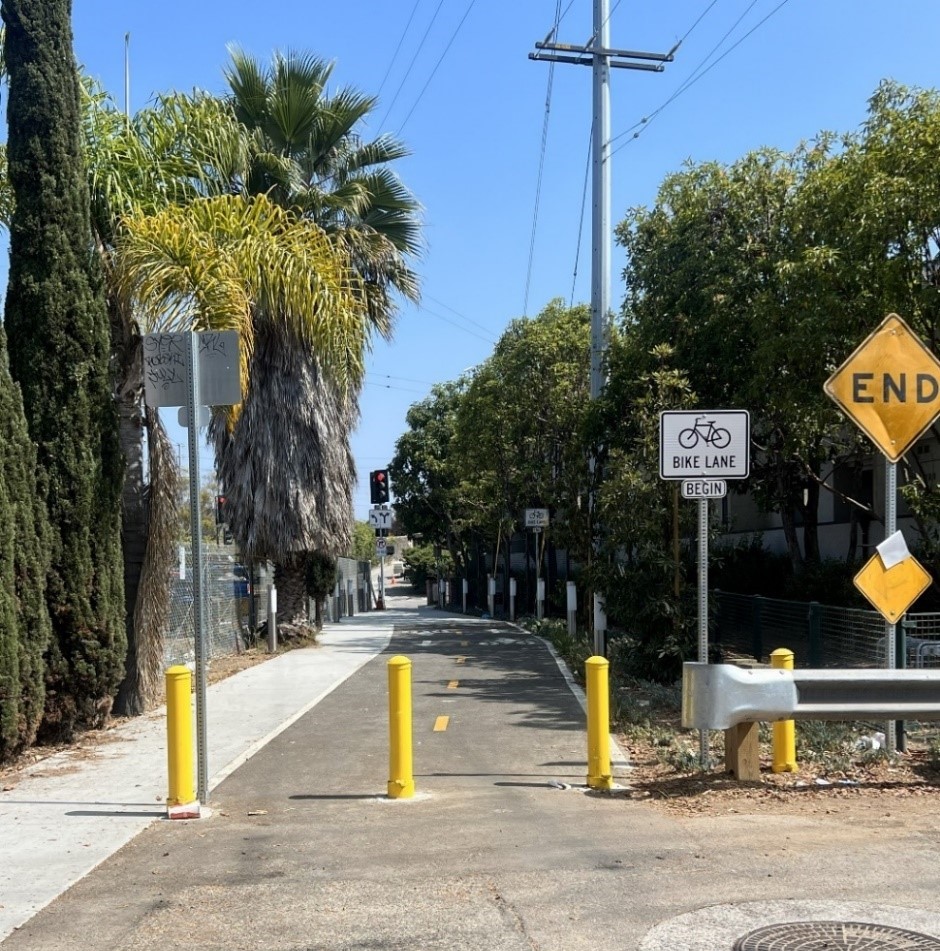
The Santa Monica 20th Street Pedestrian and Bicycle Connection began with a community call for a safe way to walk and bike across the I-10 freeway. The project closes a long-standing gap between the Michigan Avenue Neighborhood Greenway and the Exposition Corridor Bike Path, creating a continuous, multimodal, low-stress route linking neighborhoods, schools, parks, jobs, and transit. The connection supports Santa Monica’s broader goals to improve mobility, safety, and connectivity for all road users and aligns with the City’s Vision Zero commitment.
The project introduces innovative active transportation features, including a bicycle signal, protected crossings, and a two-way cycle track separated from traffic by concrete barriers. Drawing from international best practices and tailored to Caltrans requirements, the design delivers a safe, intuitive, and context-sensitive facility. Completed on time and on budget, the project shows how focused, cost-effective improvements can advance community mobility, equity, and sustainability.
Category 2 – Climate Action
Plumas 70 Permanent Restoration
- Caltrans District 2
- QD Construction LLC
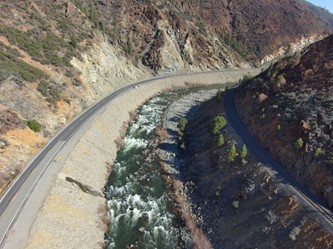
The Plumas 70 Permanent Restoration project delivered a permanent restoration of roadway slope caused by a 2017 storm event along the State Route 70 Feather River corridor. The work included installing grouted Rock Slope Protection (RSP) at nine sites and constructing a tie-back retaining wall at one location.
To preserve rainfall infiltration and reduce environmental impacts within the Feather River Basin, the team intentionally avoided fully grouting the RSP. Instead, a partial-grout design was used, allowing willows to be planted directly into the RSP. This approach supports vegetation growth, enhances soil stability through root development, and promotes riparian habitat along the riverbank.
Category 3 – Equity and Livability
The Hanami Line at Robert T. Matsui Park
- Caltrans District 3
- The City of Sacramento
- The Sacramento Tree Foundation
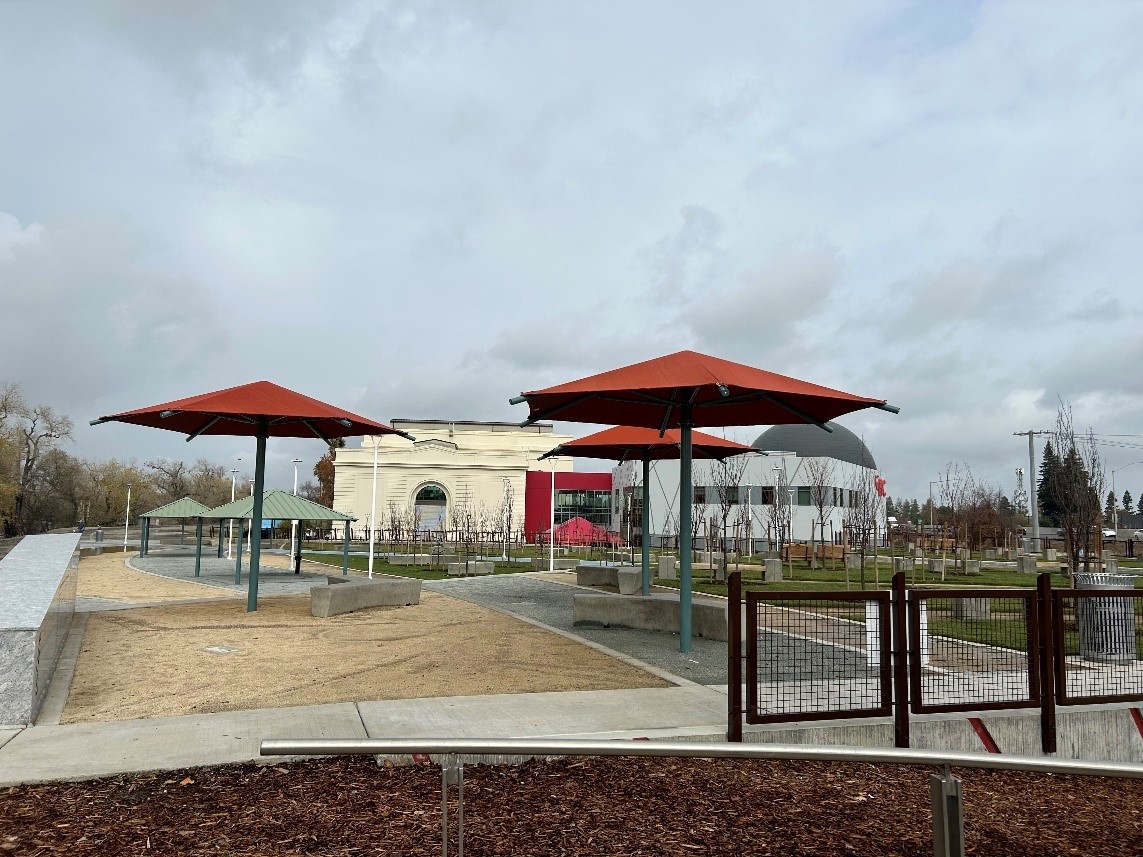
The Clean California Hanami Line at Robert T. Matsui Park is a renovation and beautification project in an underserved Sacramento waterfront neighborhood. Improvements include 104 cherry trees, native plants, advanced irrigation and lighting, an iconic sculpture, a promenade, festival seating, event spaces, shade structures, decorative railing, and elevated topsoil for river views. Partnerships with the Sacramento Tree Foundation, MOSAC, and the City of Sacramento ensure long-term care, while the Office of Arts and Culture maintains public art.
Located in a low-income area with limited green space, extreme heat, and low tree canopy, the park provides vital recreational, cultural, and environmental benefits. It honors Japanese American history and resilience while supporting the Mayor’s Climate Initiative to expand tree canopy in historically marginalized communities. The project enhances access to green space, fosters community engagement, and creates a vibrant, sustainable, and culturally meaningful public space.
Category 4 – Cultivating Excellence
Old River Bridge Preventive Maintenance and Systems Modernization
- Caltrans District 10
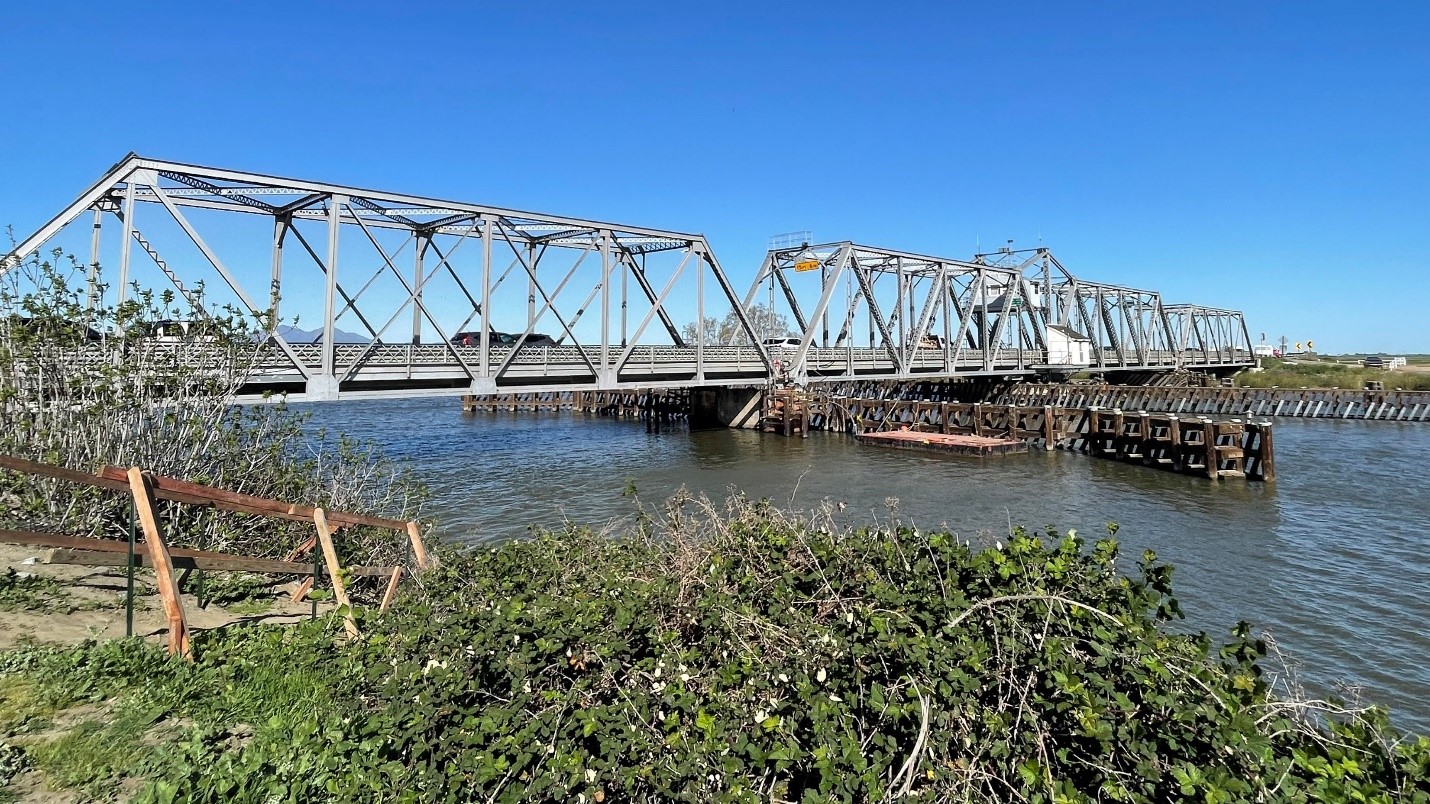
The Old River Bridge Preventive Maintenance and Systems Modernization Project rehabilitated a historically significant, 100-year-old movable bridge on State Route 4 in the Sacramento San Joaquin Delta. Rather than replacement, the project strategically upgraded critical mechanical and electrical systems to restore reliability, improve safety, and extend service life. Improvements included modern PLC-based control systems, LED navigation and traffic signals, replacement of swing-span machinery, and installation of a protected submarine power cable using low-impact jet-plow technology. Construction was carefully staged to maintain traffic operations and minimize environmental impacts.
By leveraging existing infrastructure, proactively managing risks, and implementing innovative rehabilitation techniques, the project reduced long-term maintenance needs
while preserving a vital transportation and navigation link for the region. The project exemplifies Caltrans’ commitment to cultivating excellence through innovation, stewardship, and community benefit.
Category 5 – Safety First
Pacific Coast Highway (PCH) Master Plan Feasibility Study
- Caltrans District 7
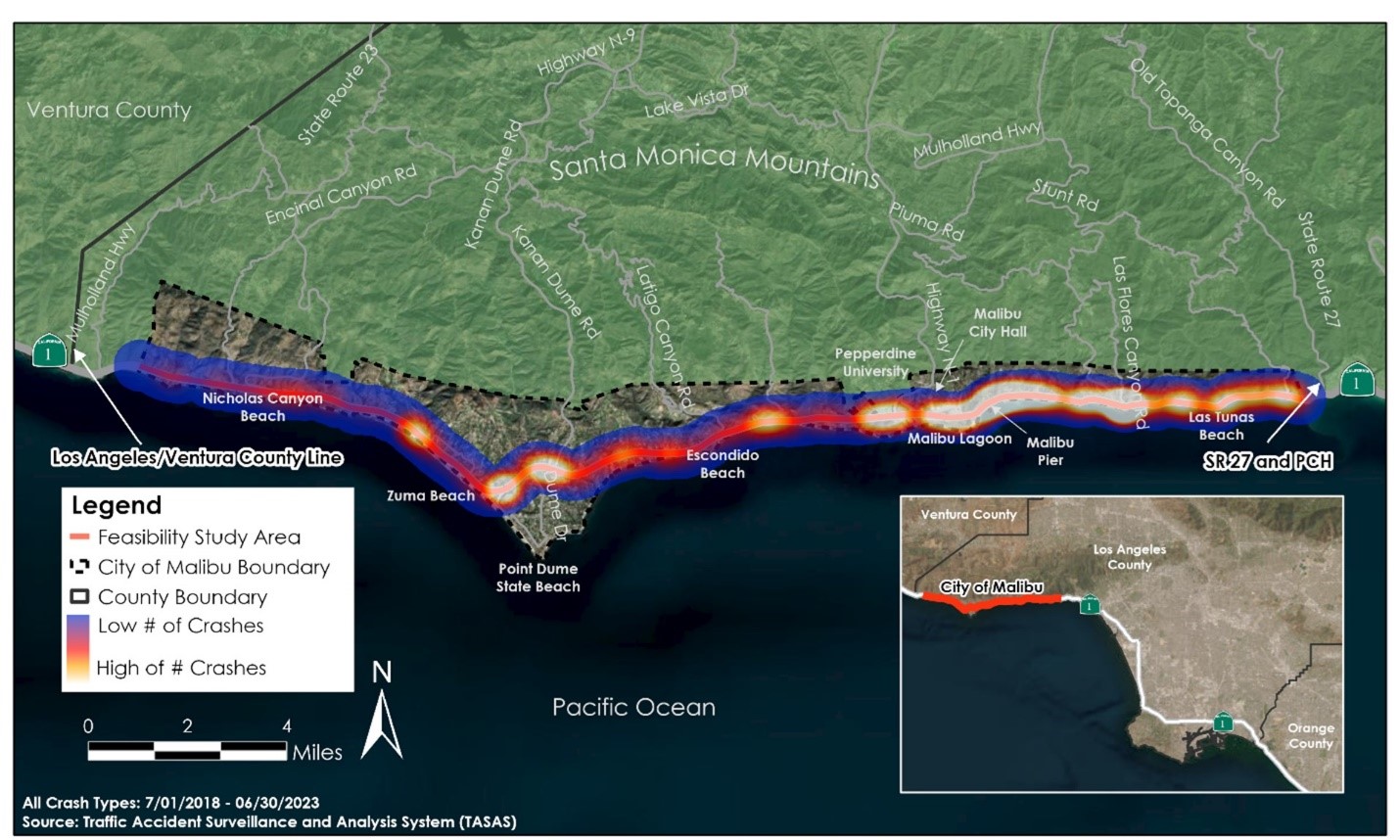
The Pacific Coast Highway (PCH) Master Plan Feasibility Study evaluates and recommends potential multimodal transportation improvements to enhance safety and connectivity for all users along State Route 1 in the City of Malibu – a vital corridor for residents, visitors, and emergency access. PCH faces safety challenges from limited right-of-way and high demand for coastal destinations, creating heavy traffic where motorists, cyclists, and pedestrians share space and speeding is common.
The Study addresses these issues through a comprehensive assessment of existing conditions, crash analysis, robust public engagement, and an interactive project website using the Caltrans Engagement Portal. The Study recommends transformative improvements, including separated and buffered bike lanes, new sidewalks, signalized crossings, traffic calming, and upgraded bus stops, among others. Upon implementation, the Study will reduce the rate and severity of collisions by transitioning PCH from an auto-centric highway to a safer, more accessible, and context-sensitive roadway for all users.
Category 6 – The Highway Urban
SB 101 Carpinteria to Santa Barbara HOV – Segment 4C Summerland
- Caltrans District 5
- Santa Barbara County Association of Governments
- Granite Construction Company
- Mark Thomas
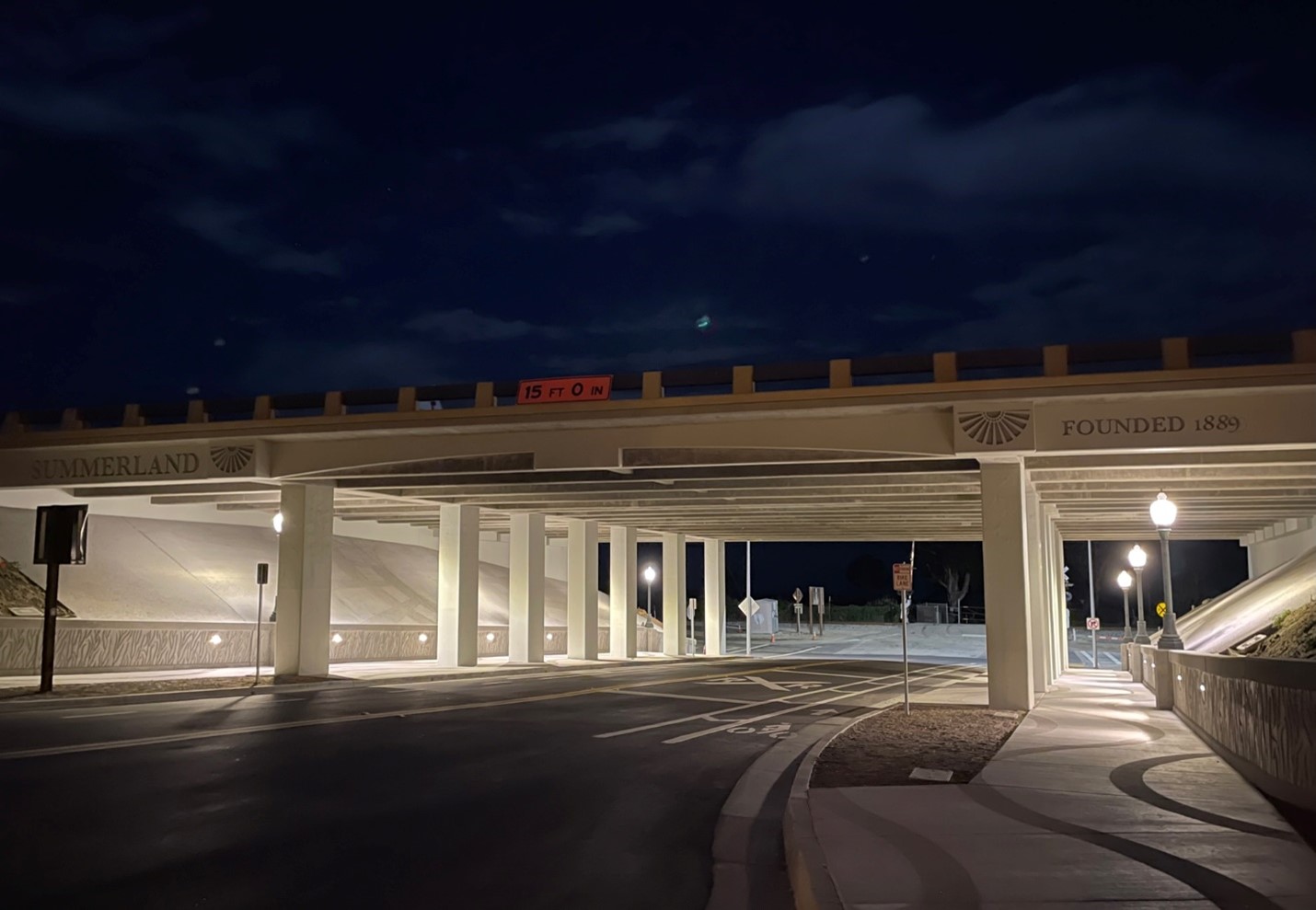
The SB 101 Carpinteria to Santa Barbara HOV – Segment 4C Summerland project brings congestion relief in the form of part-time peak hour HOV lanes to a segment of Highway 101 in Santa Barbara County in the unincorporated community of Summerland. The project also includes a full rehabilitation strategy of the existing highway facility combining local funds, California Senate Bill 1 gas tax funds, and Caltrans’ contributed SHOPP funds.
The diverse funding makeup of this project exemplifies the cooperation of the various partners who worked together to deliver a multi-faceted scope of mainline improvements, a local parallel bike and pedestrian pathway, and coastal access parking. In addition, the project also reconstructed an existing interchange removing two left-hand ramps, added new auxiliary lanes, soundwalls, and improved roadway geometric deficiencies.
Category 7 – The Highway Rural
Calpella Creek Two-Bridges Replacement Project
- Caltrans District 1
- Myers and Sons Construction
- Ghirardelli Associates
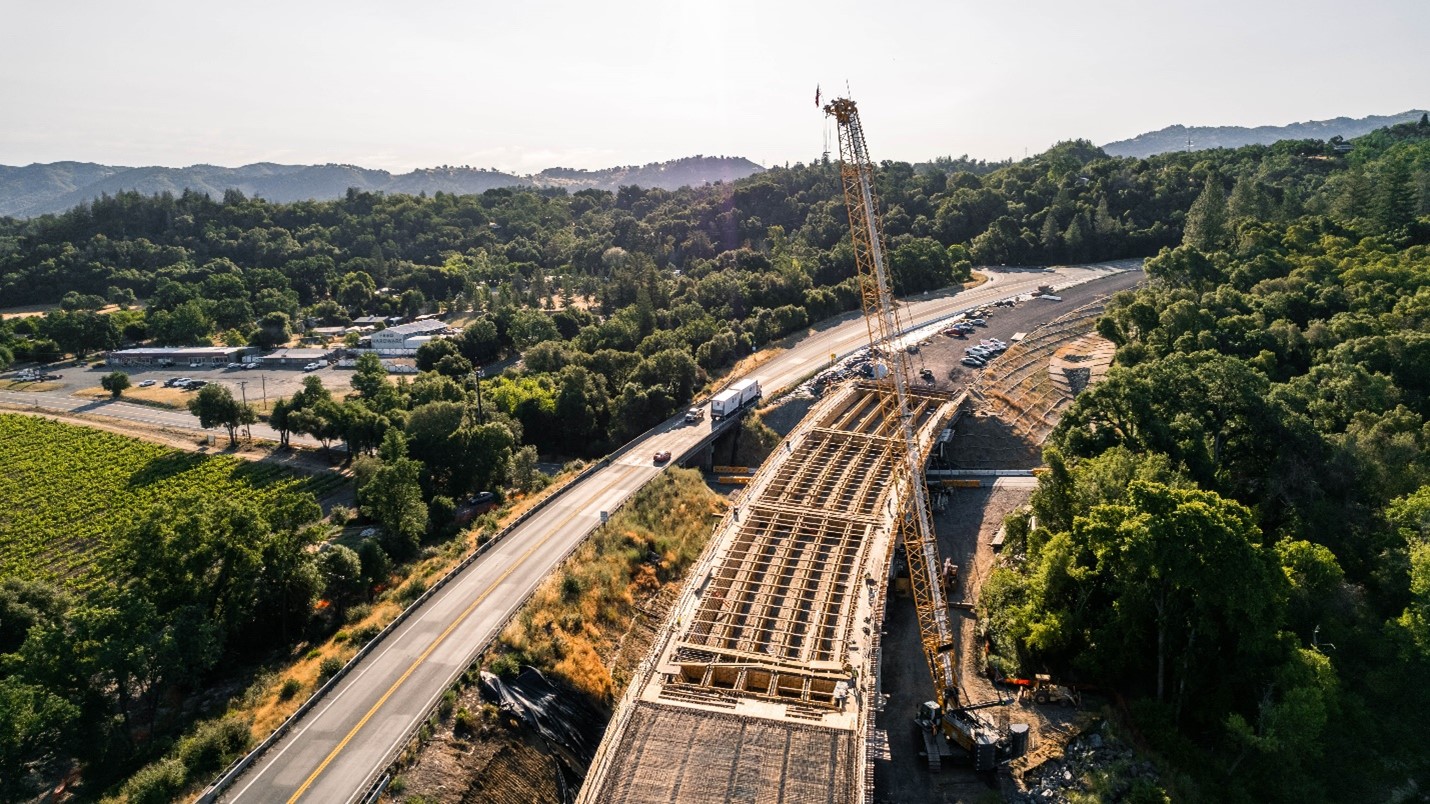
The Calpella Creek Two-Bridges Replacement Project improves safety for motorists and bicyclists in Mendocino County. Built in 1955, the old Russian River Bridge was experiencing segregation and efflorescence of the concrete and had reached the end of its service life. Myers replaced two structures (a bridge over the Russian River and an undercrossing at Eastside Capella Road) with a new cast-in-place box girder bridge. The new alignment is adjacent to the former bridges along State Route (SR-20) near the U.S. 101 on ramp and crosses the environmentally sensitive Russian River and over the Northwestern Pacific Railroad.
The replaced bridges remained intact during construction to accommodate traffic and avoid a detour through local and county roads. The alignment allowed standard acceleration and deceleration lanes at the intersection of SR-20 and County Road 144, along with increased sight distance of the intersection, enhancing safety for the traveling public. Myers was also responsible for restoring the wetlands adjacent to the river and bridges, which are home to regulated species.
Category 8 – Major Structures
Saratoga Creek Bridge Replacement Project
- Caltrans District 4
- Myers and Sons Construction
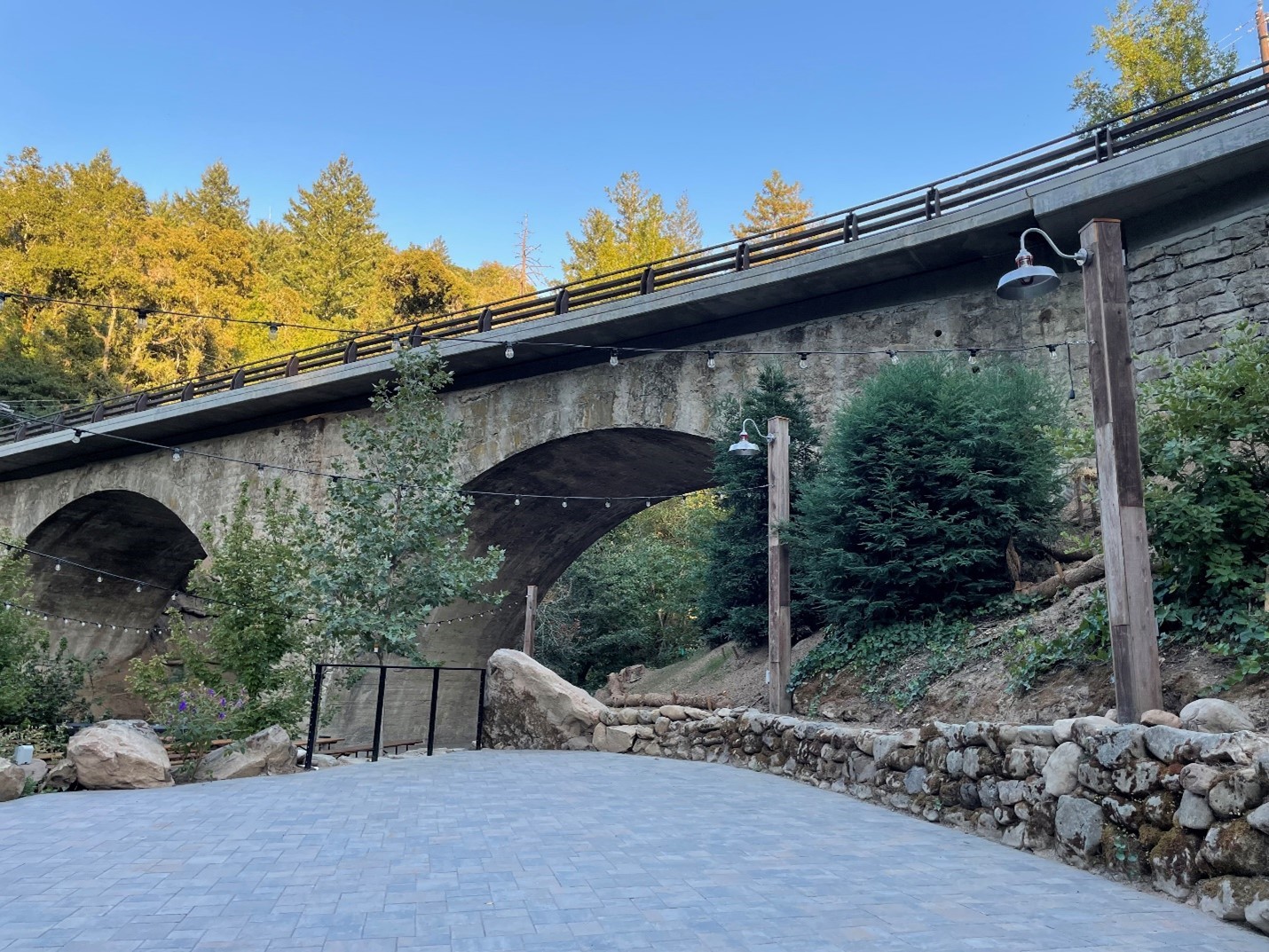
The Saratoga Creek Bridge Replacement Project replaced a 146-ft long, 2-span earthen filled concrete arch bridge constructed in 1902 that provides connectivity to State Route 9 in Santa Clara County. The original bridge is a historical and cultural asset to the community situated in a remote location constrained by limited space adjacent to private property and environmentally sensitive areas. Replacement was needed due to seismic vulnerabilities of the existing bridge.
The project implemented an innovative design to construct a new bridge hidden within the confines of the existing bridge. The new bridge addresses the seismic vulnerability to the travelling public while retaining the historical features of the existing bridge's original outside facade walls. The innovative design was further improved with the use of the Construction Management/General Contractor delivery method. The project was completed on schedule, and the new bridge was fully opened to the public in July 2024.
Category 9 – Public Awareness Campaigns
Cordilleras Creek Bridge Replacement Project
- Caltrans District 4
- Myers and Sons Construction
- Convey
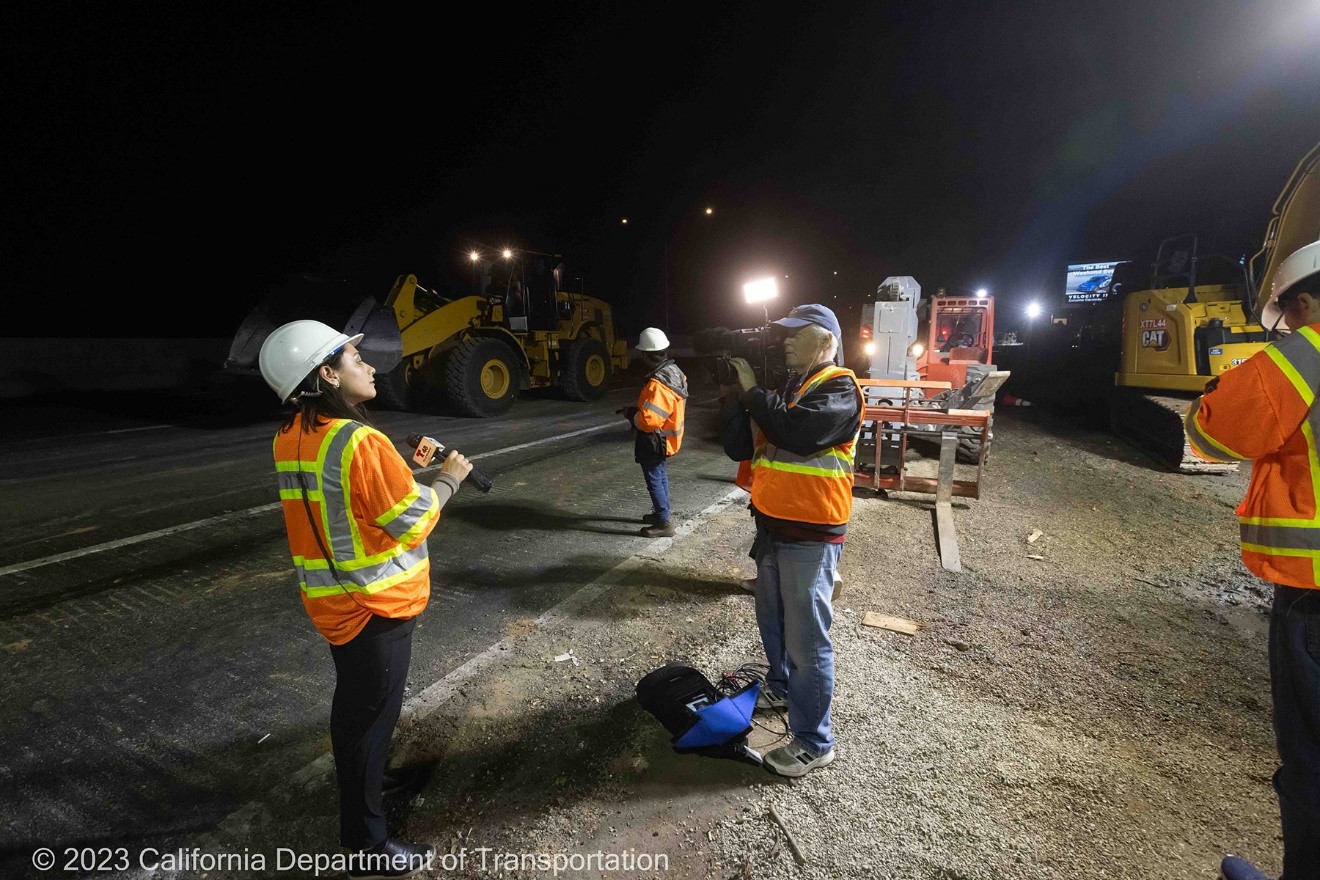
The Cordilleras Creek Bridge Replacement on U.S. 101, a 12-lane high-traffic corridor, demanded an innovative approach to minimize disruption for 240,000 daily travelers. Caltrans and Myers & Sons implemented Accelerated Bridge Construction, slashing the timeline from three years to one season and cutting four planned 55-hour closures to two, saving millions in delay and toll revenue loss. Caltrans External Affairs, communications firm Convey and Myers & Sons launched a robust awareness campaign, delivering clear, consistent messaging through a dedicated website, mailers to households, portable message signs, multilingual flyers and integration with Google/Waze. Partner cities drove outreach through local networks and Nextdoor, reaching residents at no extra cost.
The results were successful with zero accidents, no complaints, early closure reopenings and significant traffic reductions. This cost-effective strategy set a benchmark for public engagement in infrastructure projects. Most importantly, Caltrans kept emergency service access uninterrupted, a priceless outcome when lives are at stake.