

Division of Landscaping photo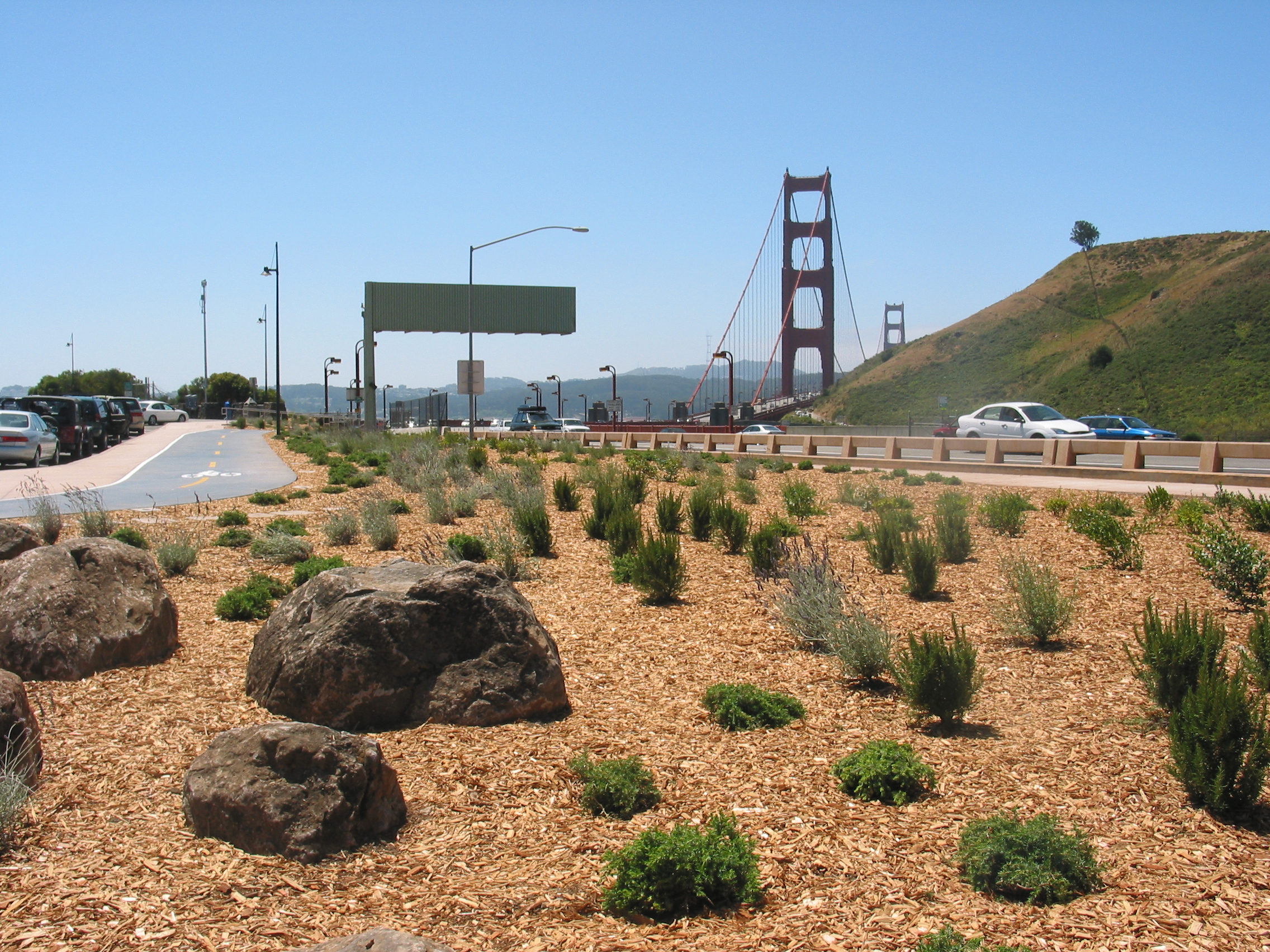 Caltrans recently completed this landscaping project along U.S. Highway 101 north of the Golden Gate Bridge in Northern California.
By Tom Chorneau
Headquarters public information officer
Drivers speeding past a Caltrans landscape project might be surprised to learn how big a role native plants are playing not just in beautifying roadsides and controlling erosion – but also in building climate resiliency.
From coastal sagebrush and wildrye to sunflowers and poppies—almost all state-sponsored transportation projects today utilize a careful mix of historically native vegetation as part of the final landscaping design.
Over the past three years, Caltrans has purchased more than 100,000 pounds of seeds native to California for use in land restoration projects statewide.
The benefits are not just to reestablish natural ecosystems. Native species have proven to be much more successful than non-native plants in meeting many of the objectives of land managers working under a changing climate, said Scott Blair, a senior landscape architect at Caltrans in Sacramento.
“Native plants generally have root systems that are strong and deep, and therefore excellent for erosion control,” he explained. “They also tend to retain moisture better than non-native plants, enough that many species are more resistant and adapted to fire and burn more slowly.
“It’s also important to remember that many native species support pollinators,” he said.
The stakes could not be higher. The California Floristic Province, which includes parts of southern Oregon and northern Baja California, is recognized as one of 36 biodiversity hotspots on earth, where critical habitat is facing severe risk of extinction, according to Conservation International.
Of nearly 7,000 plant species native to California, about 40 percent are found nowhere else in the world, according to the California Native Plant Society. At the same time, few places are also challenged by the combination of factors that put all those species at risk.
Population growth and urbanization have put pressure on natural habitat for decades in the Golden State, but more recent changes in the climate have fostered epic wildfires, record droughts and widespread flooding.
As the sponsor of hundreds of major construction projects statewide each year, Caltrans is uniquely positioned to help mitigate habitat loss, and the agency has a long history of using native seeds in landscaping and restoration.
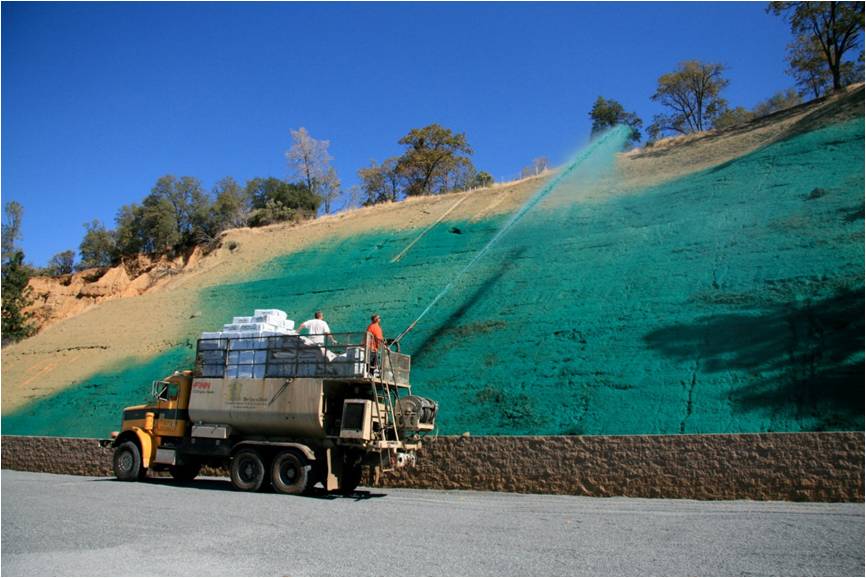 The steps are many but the rewards are, too, in the department's efforts to establish appropriate landscaping.
Division of Landscaping photo
While still known as the Division of Highways, the agency conducted research into native seed restoration beginning in the 1950s. The inclusion of native seed as part of the specifications for Caltrans construction projects began in the 1990s.
Following Gov. Gavin Newsom’s landmark commitments in support of climate resilience and biodiversity, Caltrans has adopted guidelines aimed at restoring local ecosystems when possible along roadsides disturbed by highway construction.
To keep pace with the new demands for native seeds, Caltrans has helped create a network of growers and seed collection operations. The agency has also helped establish a forecasting tool that gives growers the ability to do multi-year planning and helps avoid market shortages. This ability has become especially important as other states have come to recognize the value of native species.
Another Caltrans innovation is a database tool called TransPlant, which helps landscape architects and designers select plant species appropriate to a particular highway site. Once loaded with site-specific information such as elevation, rainfall, soils and other geographic and climatic features, the system can generate recommendations for seed mixtures that are likely to grow successfully at a particular location.
An example might be a modest Caltrans project on U.S. 101 near Gilroy to install rumble strips along the highway shoulders and median strips on about 3 miles of roadway.
The project, which sits at the southern end of the Santa Clara Valley, offers a classic Mediterranean climate characterized by cool, wet winters and warm, dry summers. The deep alluvial soils support some of the most productive and diverse farming in the state.
To match the local climate and geology, the Caltrans planting tool selected eight native seeds to be used in the landscaping process: western yarrow; California buckwheat; golden yarrow; California goldfields; small fescue; baby blue eyes; and, indeed, California poppies too.
“As you can imagine, a lot of planning goes into each landscape project,” Blair said. “But at the end of the day, the native seed program at Caltrans serves as one of the agency's most impactful programs, playing a critical role in stabilizing roadside soil and restoring local ecosystems.”