

All-in-one version
News
Native plants prove vital to Caltrans restoration projects
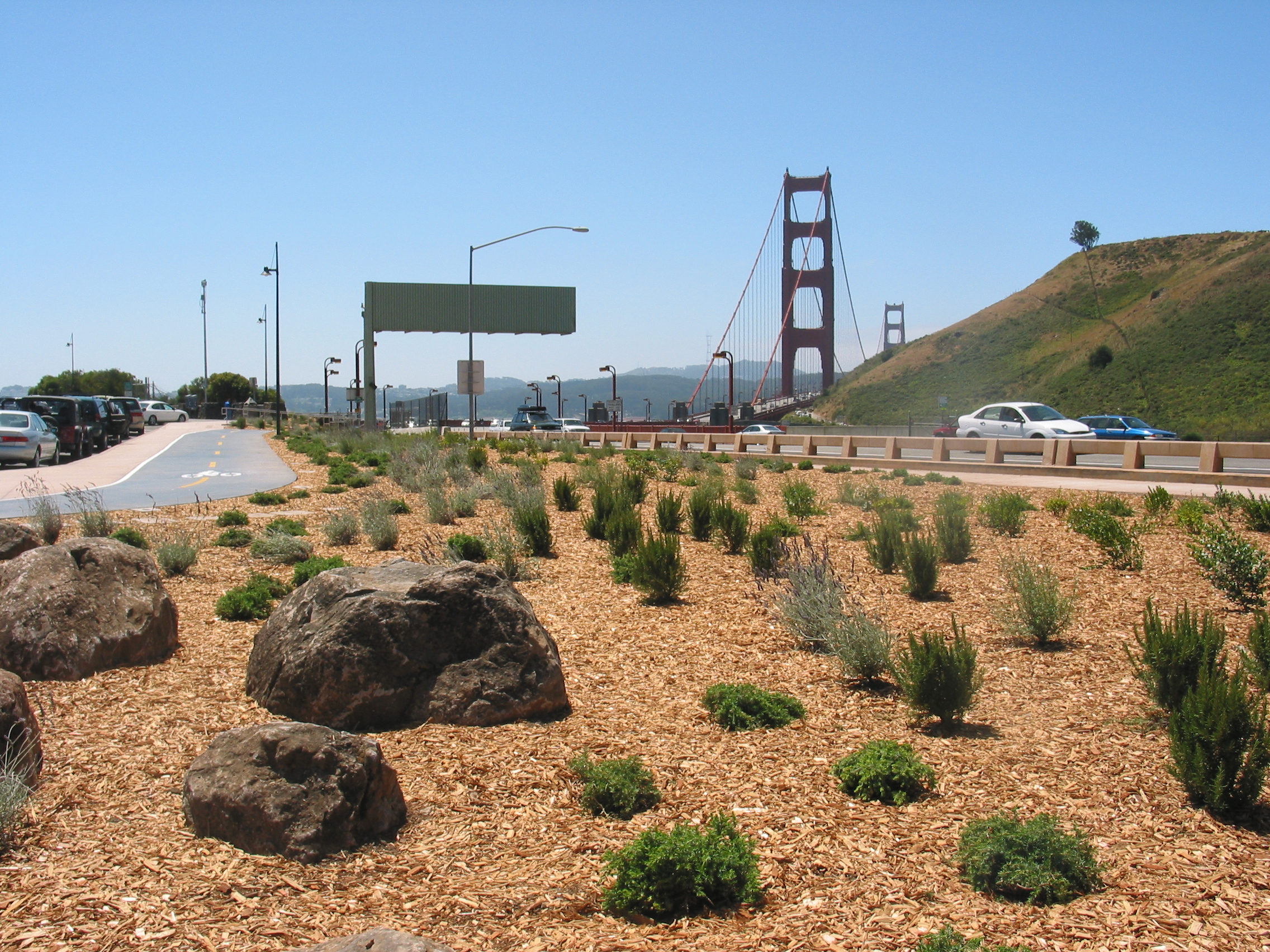 Caltrans recently completed this landscaping project along U.S. Highway 101 north of the Golden Gate Bridge in Northern California.
Division of Landscaping photo
By Tom Chorneau
Headquarters public information officer
Drivers speeding past a Caltrans landscape project might be surprised to learn how big a role native plants are playing not just in beautifying roadsides and controlling erosion – but also in building climate resiliency.
From coastal sagebrush and wildrye to sunflowers and poppies—almost all state-sponsored transportation projects today utilize a careful mix of historically native vegetation as part of the final landscaping design.
Over the past three years, Caltrans has purchased more than 100,000 pounds of seeds native to California for use in land restoration projects statewide.
The benefits are not just to reestablish natural ecosystems. Native species have proven to be much more successful than non-native plants in meeting many of the objectives of land managers working under a changing climate, said Scott Blair, a senior landscape architect at Caltrans in Sacramento.
“Native plants generally have root systems that are strong and deep, and therefore excellent for erosion control,” he explained. “They also tend to retain moisture better than non-native plants, enough that many species are more resistant and adapted to fire and burn more slowly.
“It’s also important to remember that many native species support pollinators,” he said.
The stakes could not be higher. The California Floristic Province, which includes parts of southern Oregon and northern Baja California, is recognized as one of 36 biodiversity hotspots on earth, where critical habitat is facing severe risk of extinction, according to Conservation International.
Of nearly 7,000 plant species native to California, about 40 percent are found nowhere else in the world, according to the California Native Plant Society. At the same time, few places are also challenged by the combination of factors that put all those species at risk.
Population growth and urbanization have put pressure on natural habitat for decades in the Golden State, but more recent changes in the climate have fostered epic wildfires, record droughts and widespread flooding.
As the sponsor of hundreds of major construction projects statewide each year, Caltrans is uniquely positioned to help mitigate habitat loss, and the agency has a long history of using native seeds in landscaping and restoration.
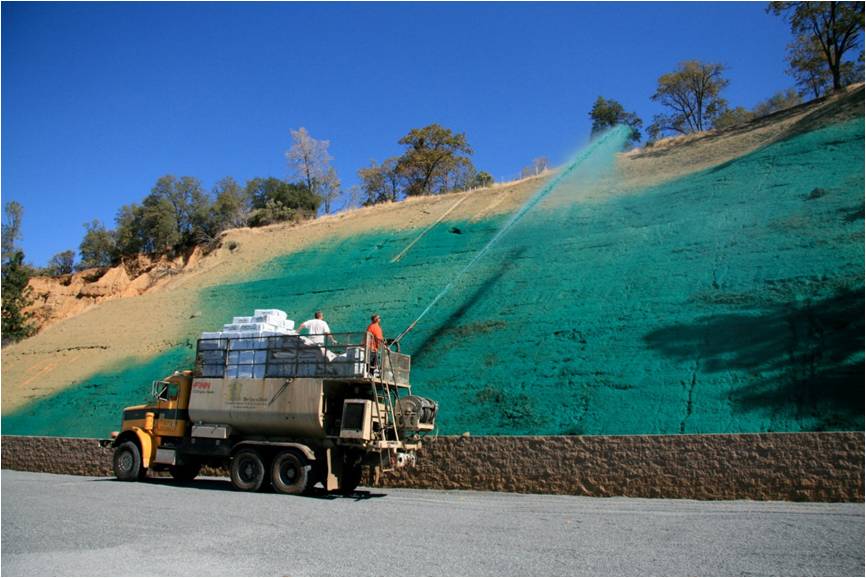 The steps are many but the rewards are, too, in the department's efforts to establish appropriate landscaping.
Division of Landscaping photo
While still known as the Division of Highways, the agency conducted research into native seed restoration beginning in the 1950s. The inclusion of native seed as part of the specifications for Caltrans construction projects began in the 1990s.
Following Gov. Gavin Newsom’s landmark commitments in support of climate resilience and biodiversity, Caltrans has adopted guidelines aimed at restoring local ecosystems when possible along roadsides disturbed by highway construction.
To keep pace with the new demands for native seeds, Caltrans has helped create a network of growers and seed collection operations. The agency has also helped establish a forecasting tool that gives growers the ability to do multi-year planning and helps avoid market shortages. This ability has become especially important as other states have come to recognize the value of native species.
Another Caltrans innovation is a database tool called TransPlant, which helps landscape architects and designers select plant species appropriate to a particular highway site. Once loaded with site-specific information such as elevation, rainfall, soils and other geographic and climatic features, the system can generate recommendations for seed mixtures that are likely to grow successfully at a particular location.
An example might be a modest Caltrans project on U.S. 101 near Gilroy to install rumble strips along the highway shoulders and median strips on about 3 miles of roadway.
The project, which sits at the southern end of the Santa Clara Valley, offers a classic Mediterranean climate characterized by cool, wet winters and warm, dry summers. The deep alluvial soils support some of the most productive and diverse farming in the state.
To match the local climate and geology, the Caltrans planting tool selected eight native seeds to be used in the landscaping process: western yarrow; California buckwheat; golden yarrow; California goldfields; small fescue; baby blue eyes; and, indeed, California poppies too.
“As you can imagine, a lot of planning goes into each landscape project,” Blair said. “But at the end of the day, the native seed program at Caltrans serves as one of the agency's most impactful programs, playing a critical role in stabilizing roadside soil and restoring local ecosystems.”

Chief Engineer Donna Berry signs off on her career
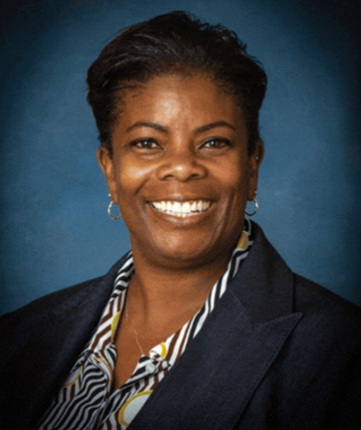 Donna Berry retired as Caltrans' chief engineer and deputy director for Project Delivery.
Headquarters photo
Note: The Division of Human Resources sent this as an email to Caltrans employees on Oct. 14.
After more than three decades of service to Caltrans, Donna Berry, chief engineer and deputy director for Project Delivery, is retiring.
Donna’s career is a remarkable example of where dedication, curiosity and a willingness to embrace new opportunities can lead. What began as a steppingstone into engineering evolved into a journey through rotational programs, district assignments, emergency response, operational improvement and, ultimately, serving as Caltrans’ chief engineer.
Along the way, Donna has left her mark on the people and projects around her. She believes strongly in seeing things through, clarifying what needs to happen next, and making sure unfinished work doesn’t come back around.
She credits her teams, leadership colleagues and family for helping shape her career.
Her advice to others?
Stay focused on doing the work in front of you, rather than on the job you hope to have someday. She encourages people to find work that plays to their strengths, keeps them motivated, and allows them to be authentic.
Now, Donna is looking forward to a different kind of busy. Retirement will bring more time for family, rest, health, community work, travel, reading and golf (and some time to work on her barista skills as well).
We’re grateful for the more than 30 years Donna has given to Caltrans, for the expertise and leadership she has shared, and for the many people she has encouraged and influenced along the way.
Caltrans PIOs rub shoulders with colleagues from other states
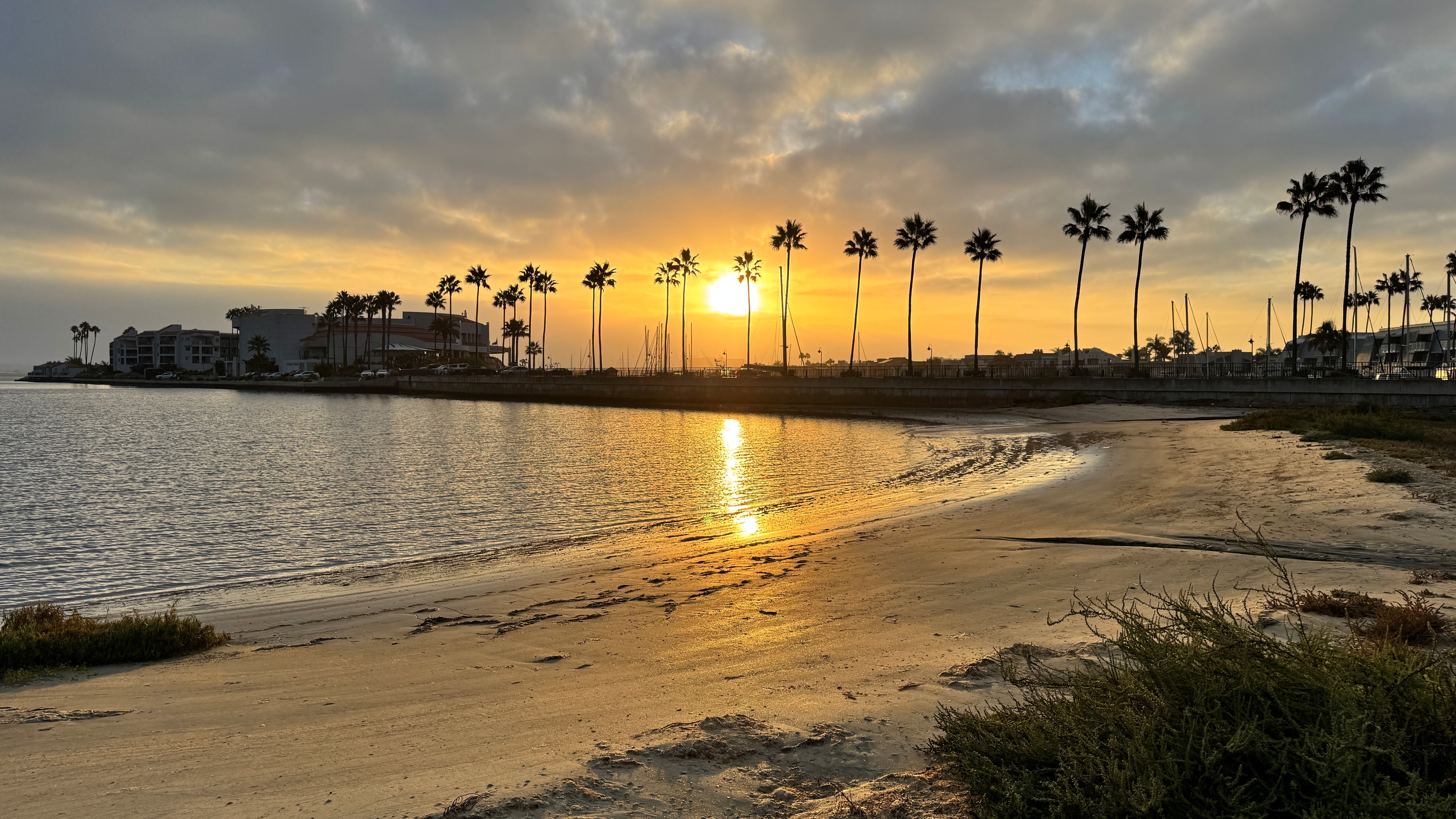 San Diego's shoreline set the stage for Caltrans public information officers' TransComm gathering in late September.
Michael Lingberg photo
By Michael Lingberg
District 9 public information officer
What happens when more than 200 transportation communication professionals around the country gather in one place for four days?
Set against the scenic backdrop of Coronado Bay, this year’s American Association of State Highway and Transportation Officials (AASHTO) Committee on Transportation Communications (TransComm) conference brought together transportation communicators for four days of connection, collaboration, inspiration and professional development, Sept. 27-30.
TransComm is a nationwide conference that rotates to a different host city each year, bringing together transportation communications professionals from across the country. With this year's event taking place in Southern California, Caltrans made a strong showing, sending more than 70 representatives and accounting for a significant portion of the 241 attendees from 40 state departments of transportation. The conference set a new attendance record, drawing 20 percent more participants than last year's event, which had previously held the distinction of being the conference's largest gathering.
“The annual meeting of AASHTO’s Committee on Transportation Communications is a living forum and a laboratory of ideas,” Caltrans Director Dina El-Tawansy stated in her program welcome message. “There is something unique that happens when we gather to learn from one another’s challenges and innovations in shaping transportation communications.”
TransComm gave Caltrans and national transportation communicators a unique opportunity to exchange ideas, share lessons learned, and tackle common challenges together. From navigating the rapidly evolving world of artificial intelligence to preparing for global events like the 2026 FIFA World Cup and the Olympic Games, transportation agencies are facing a new era of communication demands.
Attendees also shared stories about promoting innovative wildlife crossings, responding to emergencies that closed critical highways, and finding creative ways to collaborate, such as the partnership between neighboring states Ohio and Kentucky, which operate under a unified public information approach. While each department brought its own challenges and successes to the table, the shared goal was the same: keeping the public informed, engaged, and connected.
Mario Montalvo of Caltrans District 2 gave a thought-provoking presentation about their challenges building a roundabout in the small town of McCloud. Caridad Sanchez, the PIO chief of District 11 based in San Diego, spoke about having to juggle communications with not only California’s media and legislators, but Mexico’s as well thanks to D11’s shared international border.
There were daily large panel discussions, and opportunities to attend breakout presentations from individual states. For example, the Wyoming Department of Transportation presented its network of wildlife undercrossings and overcrossings and discussed public messaging pitfalls. The Kentucky and Ohio DOTs led a joint presentation on the Brent Spence Bridge Corridor over the Ohio River in Cincinnati, OH, discussing how they communicated as a single entity in both Ohio and Kentucky.
They also shared their strategy to release information to all media outlets simultaneously and amplifying awareness of this project by involving professional sports teams like the Cincinnati Reds and Cincinnati Bengals, as well as other organizations with large, public followings.
Georgia DOT (which also won several awards at this year’s TransComm) discussed lessons learned while communicating about an unfamiliar undertaking like the State Route 400 Expressway Lanes Project near Atlanta. Other breakout sessions included strategies to reach more people through social media and to make posts more engaging, Hawai’i’s experiences in fueling research, communicating about roadway emergencies from Oklahoma, approaching problems with curiosity instead of judgement from Arkansas, and designing proactive public messaging for an emergency ahead of a crisis.
The awards ceremony showcased some of the most innovative and impactful transportation communications work from across the nation, with states such as Georgia, Kentucky and Illinois earning multiple honors for their exceptional campaigns. Among the celebrated projects was Caltrans District 2's award-winning "Homecoming" campaign, which received top recognition in the advertising and marketing category.
The awards ceremony showcased some of the most innovative and impactful transportation communications work from across the nation, with states such as Georgia, Kentucky and Illinois earning multiple honors for their exceptional campaigns. Among the celebrated projects was Caltrans District 2's award-winning "Homecoming" campaign, which received top recognition in the advertising and marketing category.
"Homecoming" demonstrated a creative approach to public outreach by linking Caltrans' commitment to roadway safety with the traditions, values, and sense of community that define California's rural regions. Rather than focusing solely on infrastructure improvements, the campaign highlighted the people, places and experiences those investments help protect and preserve. By telling a story that resonates on a personal level, "Homecoming" transformed transportation messaging into a meaningful community narrative, creating a stronger connection with local audiences and illustrating how transportation projects enhance everyday life.
It wasn’t all business though. The conference kicked off with a welcome reception overlooking San Diego Bay, where attendees gathered against a backdrop of the city skyline and a vibrant Southern California sunset. The evening featured remarks from Assistant Deputy Director of Public Affairs Matt Rocco and Director El-Tawansy, setting the tone for the days ahead, while HQ Public Information Officer Jay Connerly provided live entertainment with an acoustic guitar and vocal performance. And during the final night of TransComm, each of the attendees had the opportunity to travel to Old Town San Diego for an evening of dinner, drinks, and live entertainment.
It was a fun opportunity for Caltrans PIOs to strengthen professional connections by putting faces to the names we all recognize, reflect on the week's insights, and celebrate the community of transportation communicators from across the country.
Know an excellent employee? Then nominate!
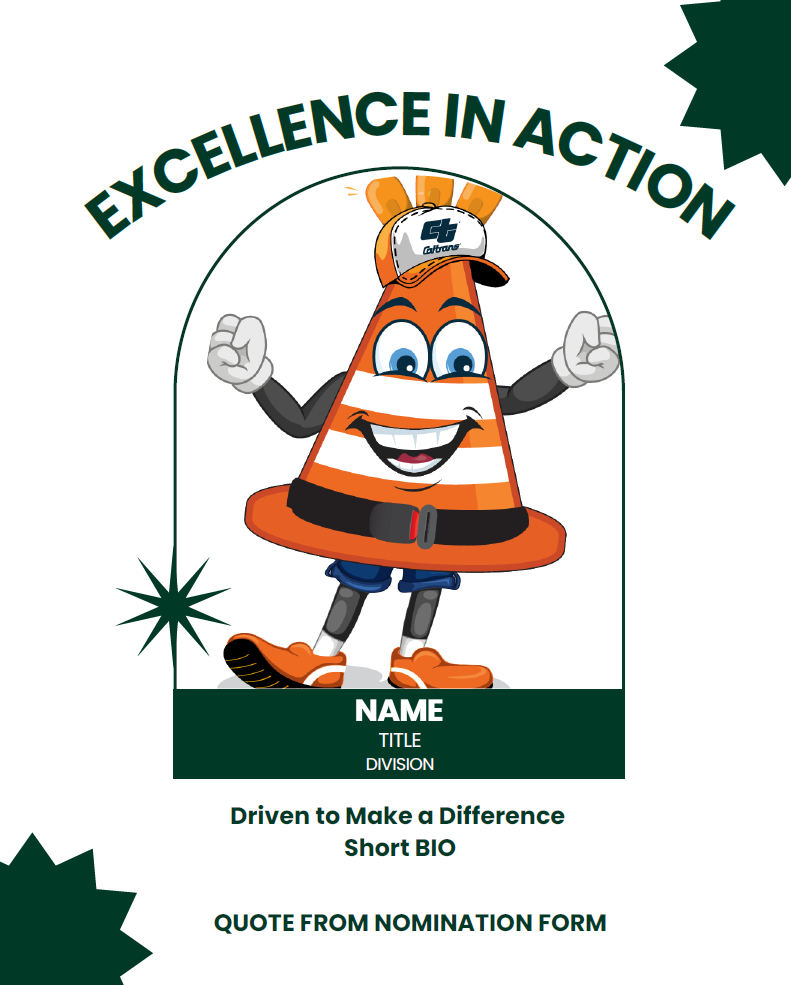
Employee Excellence Award nominations are due by Friday, Nov. 13.
The quarterly recognition program celebrates employees who demonstrate Caltrans leadership competencies and embody the department’s core values and lead with integrity, innovation and impact.
Anyone in the Administration Program may submit one nominee per quarter. Awardees will be recognized in the new “Excellence in Action” profile series.
Our Promise campaign runs through end of December
 The campaign raises funds for nonprofits throughout the state of California.
Headquarters photo
By the Caltrans Administration Program
United in Giving! The Our Promise campaign, which runs through Dec. 31, helps fund vital resources for people experiencing poverty, homelessness, food insecurity and more.
Year after year, state workers come together and raise more than $3.8 million for nonprofits, making a real difference in the lives of those in need throughout California.
By contributing as little as $5 a month, you can be part of this powerful collective effort. Your generous gift, combined with those of thousands of colleagues, will have a profound impact on the state and the lives of those relying on the essential services provided by nonprofits.
Visit Cal Employee Connect today to make your contribution and be a force for positive change in our state. Together, we can make a lasting difference for those in need.
Scholarship honors legacy of District 10’s Debra “Sam” Haack
 Two Stockton high school seniors won this year's Debra “Sam” Haack Memorial Scholarship.
District 10 graphic
By Erin McQueary
District 10 public information officer
For the first time in five years, two local high school seniors pursuing careers in highway maintenance and operations have been awarded the $1,500 Debra “Sam” Haack Memorial Scholarship, established in honor of District 10’s former Maintenance and Operations Deputy Director, Debra “Sam” Haack.
To strengthen the scholarship fund, the Maintenance Continuous Improvement Committee (MCIC) gathered donations from several engineering unions and their members, and – with the help of the District 10 Employee Events Committee – raised an additional $450 through a Nacho fundraiser.
According to Valley Maintenance Manager Jesus Zuniga, the MCIC has long served as a forum where field staff share safety concerns and ideas with management. In recent years, the committee expanded its role by forming a scholarship subcommittee responsible for fundraising, posting the scholarship, creating selection criteria, and choosing the recipients – a process previously handled by Sam’s husband.
“Continuing this scholarship in her name allows us to support young people who share her dedication to the maintenance community,” Zuniga said.
The scholarship is administered by the California Transportation Foundation, which matches the amount contributed by the MCIC.
Sam Haack, who passed away from cancer in 2017 at age 52, dedicated 25 years to Caltrans and was known for her deep commitment to her family, co‑workers, and the safety and reliability of District 10’s highways. This scholarship honors her legacy by supporting students who aspire to work in the maintenance and operations field.
Caltrans promotes engagement, safety at State Fair
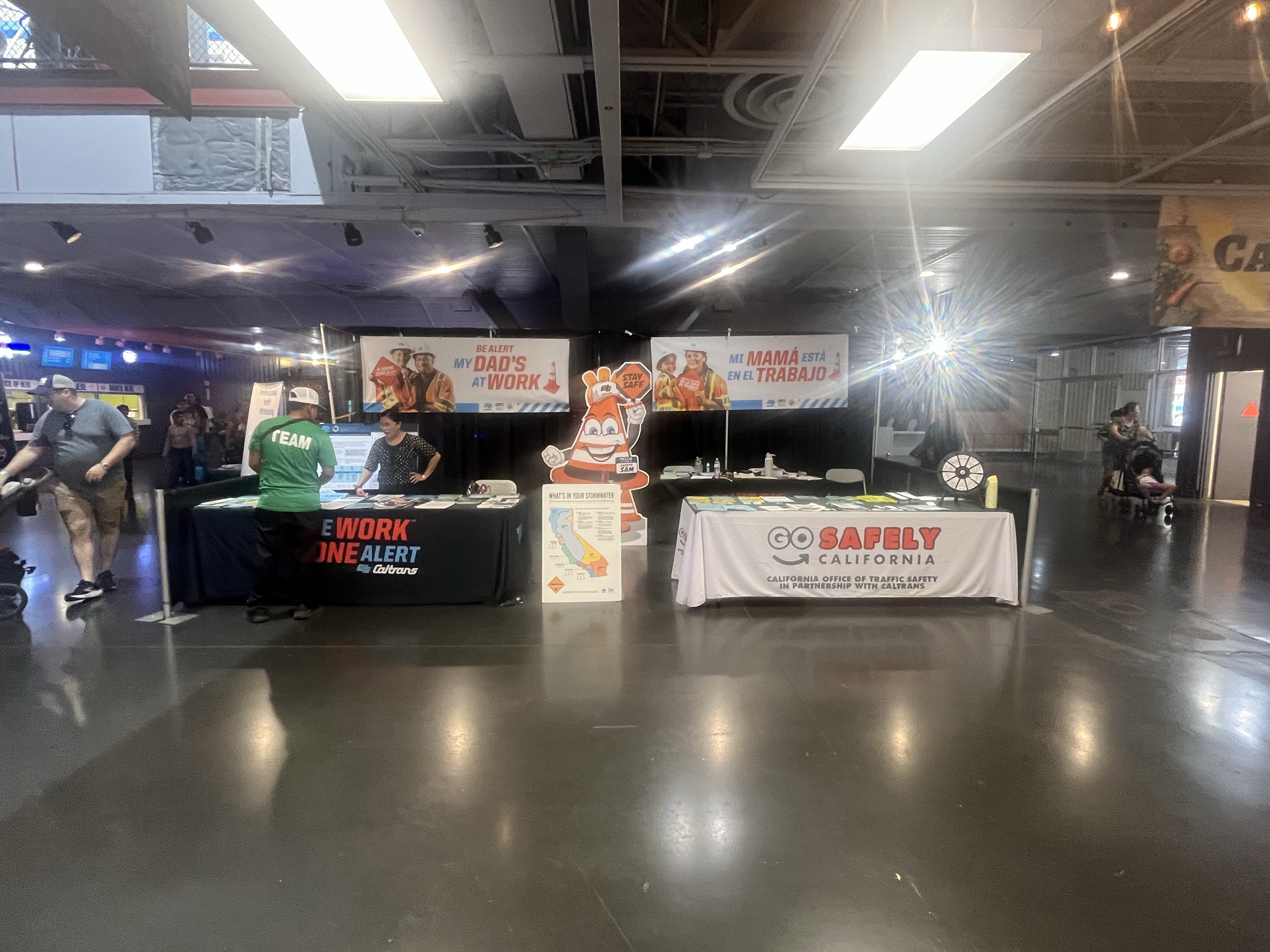 Caltrans staffed an information area at the California State Fair this summer in Sacramento.
Division of Public Affairs photo
By Wayne Wilson
Caltrans Highway Safety Education Campaign Manager
Each summer, the California State Fair brings together hundreds of thousands of visitors from across the state and among its most engaging exhibitors is Caltrans.
The Caltrans booth has become a lively and educational destination where fairgoers of all ages can learn about roadway safety, explore transportation careers and connect directly with the people who help keep California moving.
Caltrans’ presence at the 2026 California State Fair once again demonstrated the department’s commitment to safety, community engagement and public service. With more than 600,000 attendees attending the fair this year, the Caltrans and Office of Traffic Safety (OTS) booth served as essential platforms for meaningful conversations about roadway safety.
Supported by more than 60 volunteers from across Caltrans and OTS, the booth operated continuously across the fair’s two-week run.
From July 17 through August 2, Caltrans partnered with the OTS, expanding the booth’s reach beyond traditional transportation topics. The booth showcased several core Caltrans and OTS safety themes, including:
- Be Work Zone Alert
- Move Over Law
- Go Safely Campaign Collaboration
- Secure Your Load
- Know Your Limit
- E bikes & Scooters
- Pedestrian safety
- Interactive Public Engagement
Housed inside an exhibit hall, the booth allowed visitors to learn about safety, explore informational materials, participate in surveys and speak one on one with Caltrans team members. Conversation topics spanned safe driving, work zone awareness, and emerging transportation topics such as e-bike and scooter safety. Staff from various divisions helped answer questions, share personal experiences and spotlight recruitment opportunities across Caltrans.
The outreach success was driven by highly engaged volunteers who staffed the booth. Volunteer engagement was essential in connecting with thousands of attendees and advancing the mission of roadway safety. Their enthusiasm and commitment helped ensure that every visitor felt welcomed, informed and empowered to make safer choices on the road.
Volunteering at the fair was truly rewarding. People were eager to learn about safety, and you could feel how much our conversations mattered. It reminded me that even small interactions can make a big difference in keeping Californians safe.
Thanks to your dedication and enthusiasm, we were able to connect with thousands of visitors over the two-week event and spread the message of safety. The conversations and connections were invaluable, and your commitment played a huge role in making this outreach impactful and successful.
Health and Safety
Tips on how to avoid, or deal with, depression

Note: The following Sutter Health story was shared with Caltrans employees by the Employee Assistance Program (EAP).
Sadness is a natural part of being human, but it’s different from depression, which can affect how you feel, think and function in daily life.
Depression, also called major depressive disorder, is more than feeling sad or down. Without treatment, symptoms may worsen over time and can affect relationships, work, school and overall quality of life. Some people may also experience thoughts of death or suicide.
The good news is that depression is treatable, and many people find relief with the right support.
Depression symptoms can show up as mental or physical changes. They may include:
- Anger or irritability
- Anxiety
- Difficulty concentrating
- Fatigue
- Loss of interest in activities
- Physical aches or pains
- Reduced appetite
- Sadness or feelings of emptiness
- Sleep disturbances
- Slowed thinking
- Suicidal thoughts
If depression symptoms last for more than two weeks or interfere with your everyday life, talk to a medical professional.
And then there’s anxiety.
Everyone feels anxious sometimes. You might feel nervous before a big presentation, exam or meeting new people. For some people, though, anxiety begins to interfere with everyday life, making even routine activities feel difficult. These feelings may become more intense over time and can feel out of proportion to the situation.
When anxiety is persistent and goes untreated, it can affect sleep, relationships and physical health. It may also lead some people to rely on unhealthy ways to cope, such as alcohol or drugs. If you’re struggling with anxiety, reaching out early can make a difference.
Like depression, anxiety symptoms can be mental and physical. Common anxiety symptoms include:
- Avoiding activities
- Digestive issues
- Excessive worrying
- Fatigue
- Feeling a sense of danger
- Increased heart rate
- Nervousness or tension
- Rapid breathing
- Restlessness
- Sleep disturbances
- Sweating
- Trembling
- Trouble concentrating
- Seasonal affective disorder (SAD)
As the seasons change, it’s normal to feel a bit different. But if you feel especially low during certain times of year, you may be experiencing seasonal affective disorder, or SAD. SAD is a type of depression related to seasonal changes.
Many people associate SAD with fall and winter, when days are shorter and darker. But seasonal affective disorder can also happen in spring or summer. Whatever the season, if symptoms begin to affect your daily life, talk to your doctor.
SAD symptoms can include sadness, hopelessness, loss of interest in activities, trouble concentrating, sleep changes or thoughts of suicide. Some people may also notice seasonal patterns. Fall and winter symptoms can include fatigue, sleeping more than usual, craving carbohydrates, increased appetite or weight gain. Spring and summer symptoms can include agitation, anxiety, insomnia, reduced appetite or weight loss.
When should you ask for help?
Whatever you’re struggling with, remember that there are people who care and want to help. You don’t have to simply live with anxiety, depression or seasonal affective disorder.
"Depression and anxiety are common, treatable medical conditions. You don't have to manage them alone,” says Khan. "Early treatment can make a meaningful difference."
Talk to your primary care provider or reach out to a mental health specialist for help. Effective treatments are available, and you don’t have to manage symptoms on your own.
Who’s New
Sergio Aceves, chief engineer and deputy director for Project Delivery
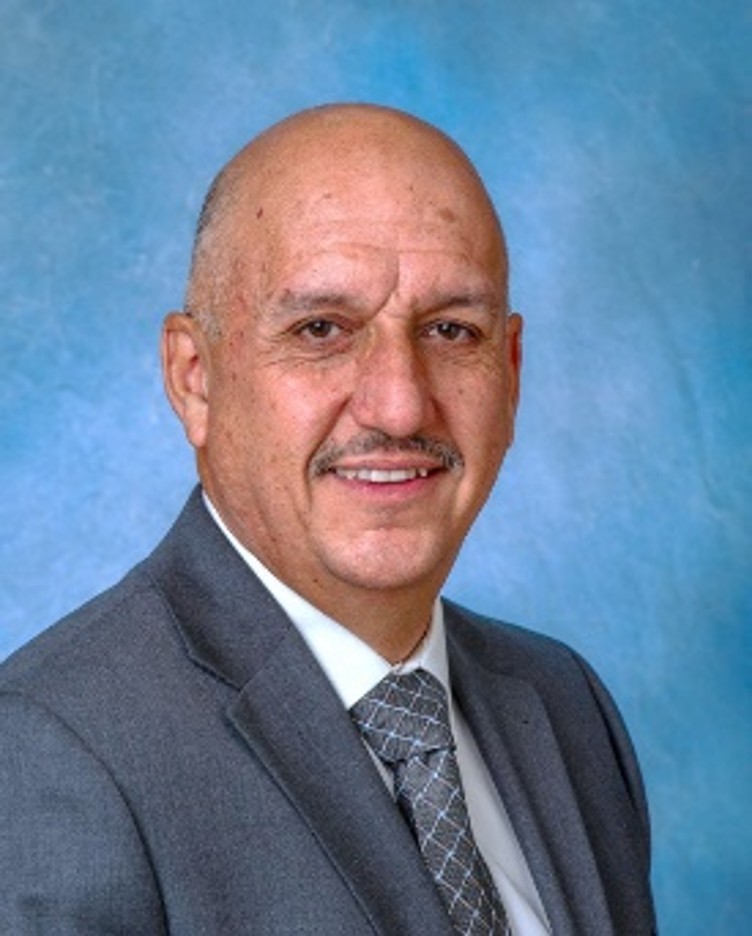
Sergio Aceves has been appointed chief engineer and deputy director for Project Delivery.
Throughout his 28-year career with Caltrans, Sergio has held numerous leadership positions, including 20 years in District 3, followed by assignments as state pavement engineer, division chief of Maintenance, and acting deputy director for Maintenance, Operations, Safety, and Equipment. Most recently, he served as District 3/North Region director.
As chief engineer, Sergio will provide leadership and policy direction while working closely with the capital team to ensure statewide project delivery commitments are met. Safety remains his top priority, both for the traveling public and Caltrans employees working in the field.
He also places a strong emphasis on collaboration and working with internal and external partners to improve lives and communities through transportation. Outside of work, Sergio enjoys hiking, jogging, and spending time outdoors. He also enjoys spending time with his family, including his wife, Patricia; daughter, Nataly; and sons, Gabriel and Adrian.
Keyona Brooks, deputy district director of District 6 Administration

Keyona Brooks has been appointed deputy district director of Administration for Caltrans District 6. She brings more than 11 years of state service, including seven years with Caltrans, and a belief that the strength of an organization begins with its people.
Since stepping into the acting role in June, Keyona has worked with the Administration and External Affairs teams to strengthen emergency readiness, support new hiring practices, and bring administrative services closer to the employees who rely on them. She is grateful for the team's work and for the partnerships they have built with divisions across District 6 and colleagues throughout the department.
Keyona previously led administrative and resource management work in District 6 and at Caltrans Headquarters. In her headquarters role, she oversaw state and federal resources for the Division of Planning and Modal Programs across all 12 districts. Those experiences taught her to listen for understanding, build strong partnerships, develop teams, and create practical systems that help people to do their best work.
As deputy, Keyona looks forward to working with her team and partners across the district and department to meet the needs ahead. She is especially committed to mentorship and helping employees find opportunities to grow in their careers.
Born and raised in the Central Valley, Keyona is proud to call the community she serves home. She earned a bachelor's degree in business administration and a master's degree in public administration. Outside of work, she enjoys attending church, helping others and spending time with her son and family.
Rachel Carpenter, deputy division chief for DRISI
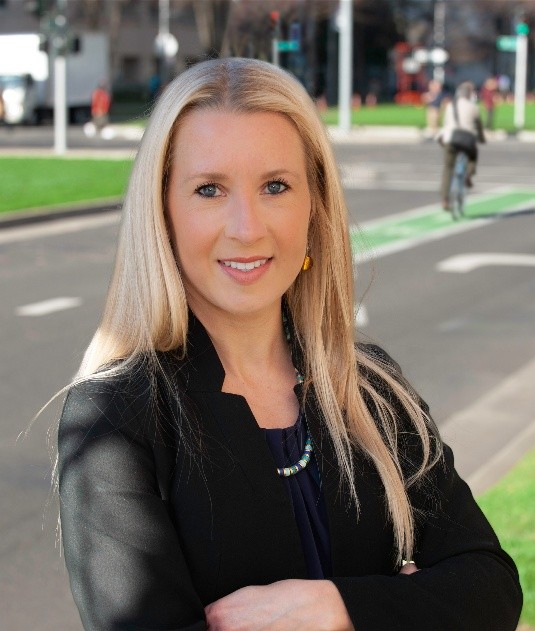
Rachel Carpenter is the permanent deputy division chief for Research and Innovation in the Division of Research, Innovation and System Information (DRISI), building on her acting assignment since May 2026.
During her acting assignment, she strengthened partnerships with districts and university partners; improved internal coordination and communication; and helped shape a more coordinated approach to research prioritization and innovation delivery.
Rachel previously served as Caltrans’ chief safety officer, establishing the Division of Safety Programs and advancing the Safe System approach, and as acting deputy secretary for safety and enforcement at the California State Transportation Agency.
Her background also includes building Caltrans’ pedestrian and bicyclist safety program and delivering complete streets projects at the San Francisco Municipal Transportation Agency.
She is a licensed professional engineer with a master’s degree in civil engineering from the University of California, Davis and a bachelor’s degree in civil engineering from Cal Poly San Luis Obispo.
Outside work, Rachel enjoys biking with her husband, baking and learning to make stained glass windows.
Aung Maung, deputy director for MOSE
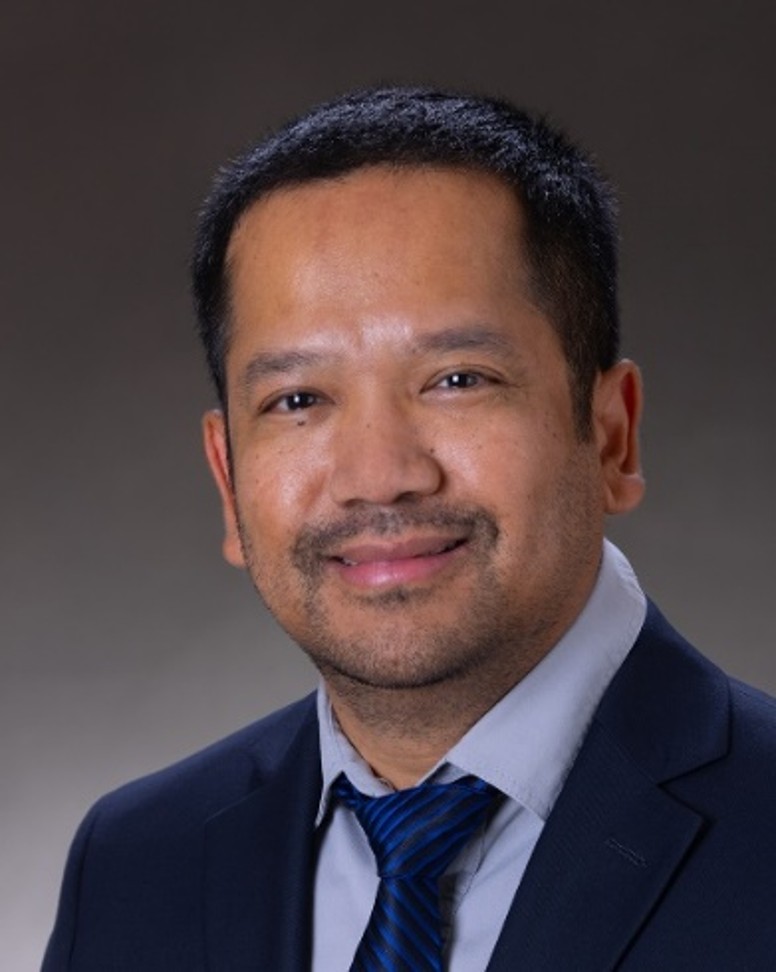
Aung Maung has been selected as Caltrans deputy director for the Maintenance, Operations, Safety and Equipment Program (MOSE).
In his new role, Aung will provide statewide leadership and policy direction to advance Caltrans priorities. He is committed to fostering collaboration and strengthening partnerships with internal and external stakeholders to advance Caltrans' mission and achieve meaningful results for California.
Aung previously served as the acting MOSE deputy director. Previously, he served as the Middle-Mile Broadband Network (MMBN) joint build permit liaison, providing statewide support and guiding the issuance of MMBN joint-build permits. Before that, he served as the deputy district director for Traffic Operations in District 4, overseeing the operation and safety of the San Francisco Bay Area State Highway System.
Aung began his Caltrans career in 2005 as a transportation engineer in District 3 North Region.
With more than 21 years of experience across Design, Construction, Project Management, Maintenance, Operations and Traffic Safety, Aung brings a depth of leadership, technical expertise and strategic insight that will serve the department and the State well.
Aung holds a bachelor of science in electrical engineering from Florida Atlantic University and is a licensed professional civil engineer.
Jimmy O’Dea, deputy director for Sustainability
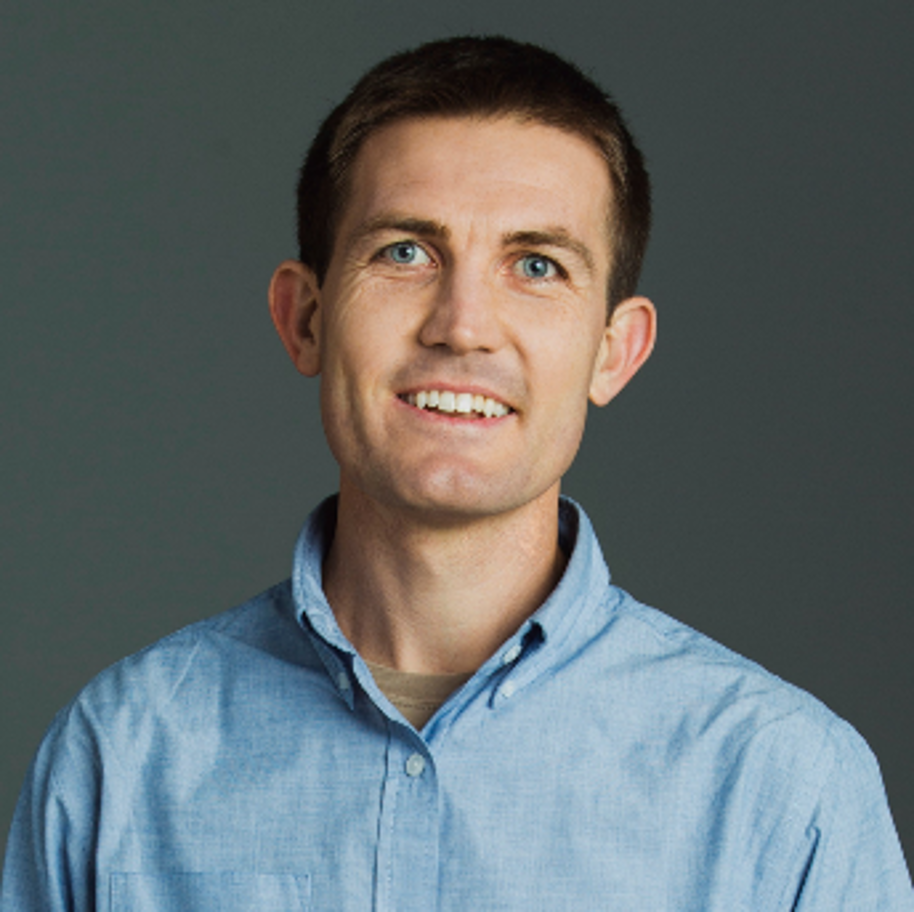
Jimmy O’Dea has been appointed by the governor as the deputy director for Sustainability at Caltrans.
Jimmy recently served as assistant deputy director for Transportation Electrification, where he led the Department’s efforts to advance zero-emission vehicles, including the administration of more than $500 million in new federal funding for electric vehicle charging projects.
Prior to joining Caltrans, Jimmy held roles at CALSTART and the Union of Concerned Scientists, where he helped develop and advance first-of-their-kind policies supporting the deployment of electric trucks and buses at the local, state, and federal levels. Jimmy also served as a Science and Engineering Congressional Fellow in the office of U.S. Senator Brian Schatz, contributing to federal energy and climate policy.
He began his career in research, earning a Ph.D. in Chemistry from the University of California, Santa Barbara, and conducting postdoctoral research at Cornell University, where he studied materials to improve the performance and reduce the cost of hydrogen fuel cells.
Jimmy lives in San Mateo with his wife and three children. Outside of work, he enjoys exploring California by train, bike and on foot with his family.
In his new role, Jimmy will lead Caltrans' efforts to integrate sustainability into the department's policies, programs, investments and operations, helping align California's transportation system with the state's climate, economic and mobility goals. The role coordinates with internal and external partners to advance Caltrans' priorities and support implementation of the Department's strategic objectives.
Obituaries
Daniel Perry Bliss, retired civil engineer
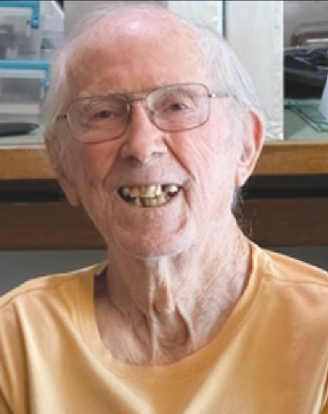
Note: The following obituary appeared in the Chico Enterprise-Record.
Retired civil engineer Daniel Perry Bliss, 87, passed away peacefully on July 31.
He was born in Palo Alto, California in 1938, and moved to Oroville with his family in 1941. He met his wife, Jeri, in 1958 (living across the street from each other!) and they married in 1959.
Dan loved the outdoors and found great joy in fishing and hunting-he cherished being in the woods and enjoyed sharing it with his family and friends. Fishing and hunting, and later riding ATV’s, were just a reason to get into the outdoors.
He joined the Army in 1960 and served two years, being deployed to Korea for end of war conflict management. After the army he returned to Oroville and started working for Caltrans, where he earned his civil engineering license and would remain working for 43 years.
He made numerous friends along the way and earned the respect of many. He was known around Oroville for driving his 1952 Chevy 5-window pickup, fondly known as Old Blue. Old Blue now lives in Lake Tahoe, driven around the north shore in the summer months by Dan’s oldest grandson, making new memories and friends there.
Dan enjoyed spending time with his grandkids and enjoyed visiting them in Lake Tahoe. Dan was also an avid fan of Little League baseball, as well as softball, enjoying watching a number of local friends’ kids.
His family and friends will remember him as intelligent and sharp, a patient teacher, a great storyteller, a sweet man with always a smile and a kind word.
Dan is survived by his wife of 66 years, Jeri Bliss, daughters Deborah Bliss and Dawn Bliss Baehr, and grandchildren Nash, Maia and Bixby Baehr.
- All-in-one version
- Health and Safety
- News
- Obituaries
- Who's New
- Wildlife crossing