

All-in-one version
News
Are you a vet or now serving? Share a photo by Oct. 16
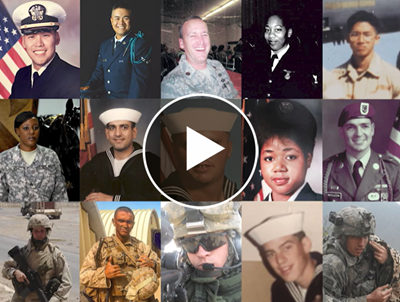 Click on the image to watch last year's Caltrans video salute to veterans.
Headquarters Public Affairs image
From the Division of Public Affairs
We are preparing to honor Caltrans employees who have served our nation in the United States military and would like your help.
If you are a veteran or are currently serving, please submit a photo of yourself in uniform to be included in this year's video. Below is a link where veterans can submit those photos to us: https://forms.cloud.microsoft/g/tTg4bH6w5f?origin=lprLink
If you have provided us with your picture in previous years, we ask that you resubmit, since this is the best way we can ensure that we are featuring current employees. The video will only include images of current Caltrans employees, not relatives of employees who are veterans or those who are no longer with the department.
Please submit your photo by Oct. 16 to be included in this year's video.
Please direct any questions to John Milne at john.milne@dot.ca.gov

Diving and discovering the depths with Caltrans
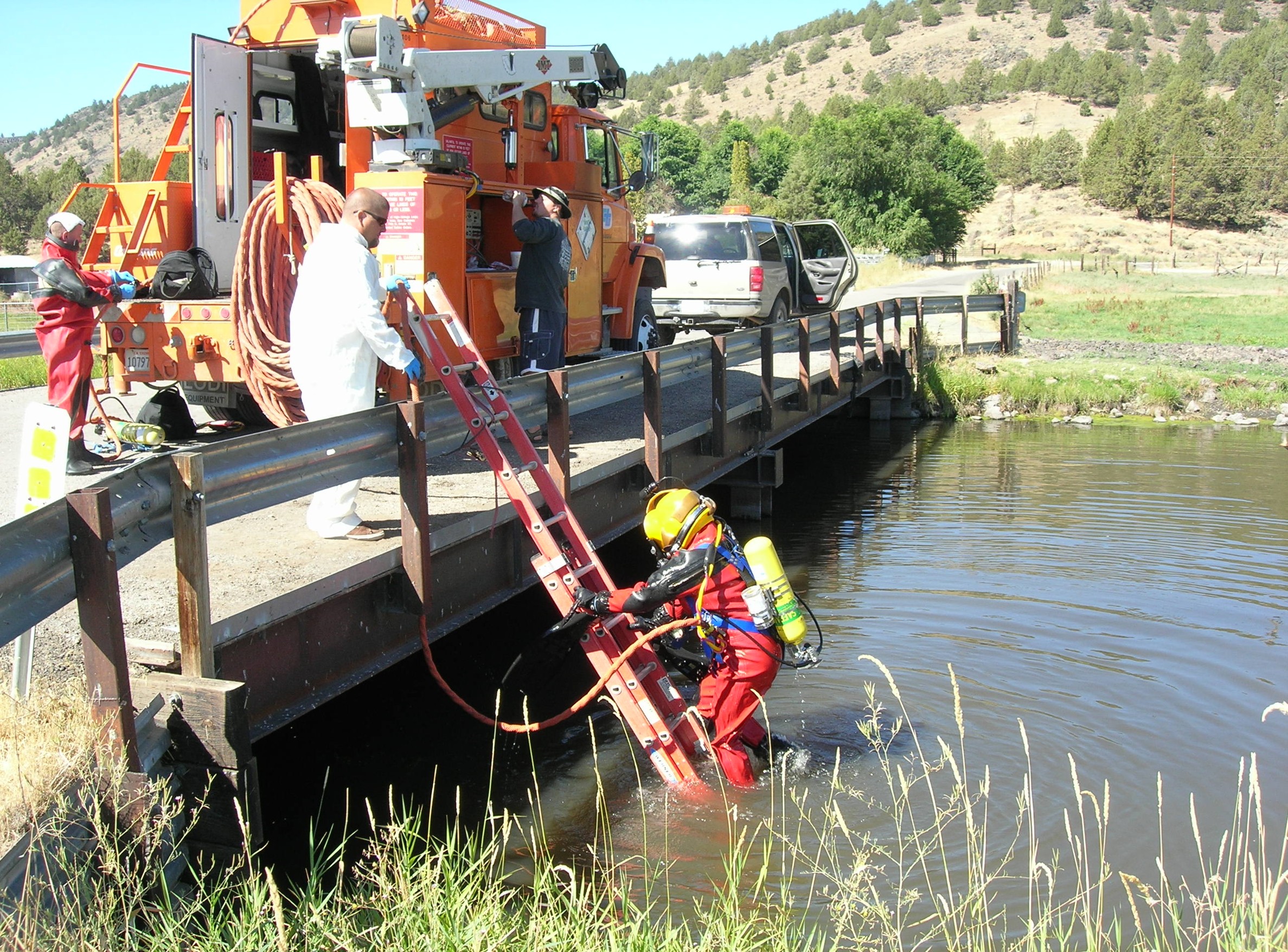 Caltrans' 12-member dive team inspects all waterway-related bridges in the state highway system.
Dive team photo
By Nicole Mowers
Headquarters public information officer
Long before Mitch Miller became a diver with the Caltrans Dive Team, he was a kid drawn to the water. What started with snorkeling and swimming eventually grew into a passion for recreational scuba diving, leading Miller to earn his open-water certification before joining Caltrans.
Now, after 22 years with the Dive Team, the water that first captured his curiosity has become an important part of his career.
“It’s a very rewarding job. We are making sure the travelling public is safe. That’s the biggest reward. Knowing that you’re making a difference,” said Miller.
Caltrans has a lean, mean and mighty machine of a 12-person dive team. It’s the department’s only team and covers all state highway system bridges from the Oregon border to the Mexico border and the coastline of nearly 840 miles.
Most bridges are on a 5-year cycle for the underwater portion. Some bridges require a “based on need” inspection based on their condition. Some bridges are on an annual inspection. Some have a 2-year inspection schedule. It all depends on the condition of the bridge.
“Safety is our priority. So, we are not going to put anyone in the water, if it’s not safe,” said Miller.
Diving is a physical job, what with the heavy-duty equipment and submerging into the water. For starters, the divers’ equipment weighs between 60 and 70 pounds.
“It’s all tactical. So, if you can’t see it, you’re just feeling it. And it’s tough,” said Miller. “You must be able to visual what you are actually touching and that is a big part of the experience, I think, over the years, you figure it out. They say that if you lose one of your senses, that your other senses heighten. So, if you can’t see, then your hands are telling your brain what you’re feeling. And it’s just a lot of experience to know what you are feeling.”
While many dives require Miller and the Dive Team to rely heavily on touch and experience, the job also offers moments when the underwater world is clear enough to see and appreciate the environment around them.
“Coronado Bay Bridge is always a good dive because the water is nice and clear. You can see all the sea life. Lots of coral, lots of stuff. The water is clear, and you can see well. The dive team can see a lot of fish and a lot of cool stuff like that. Those are always memorable dives for them.”
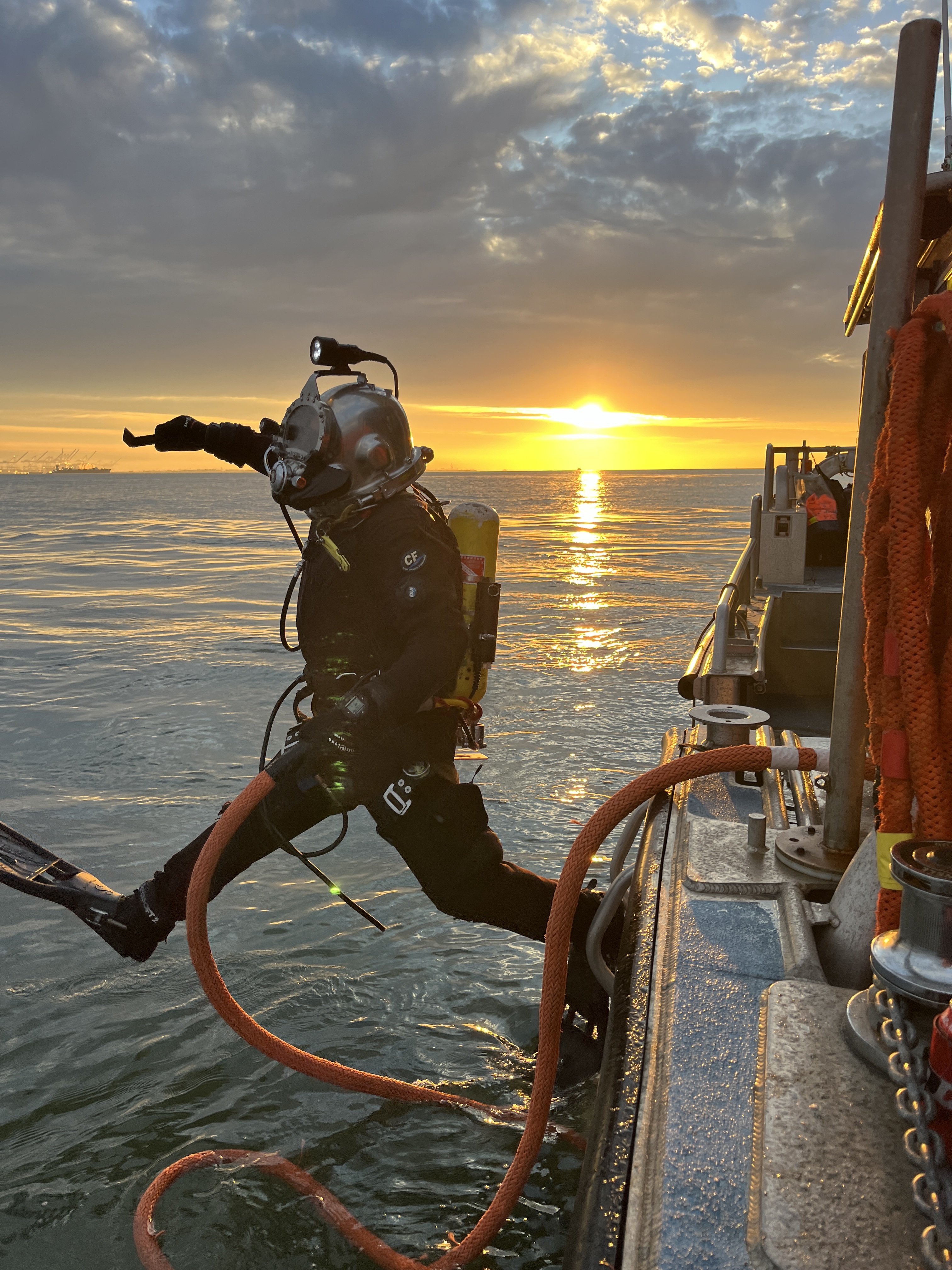 Amazing scenery and cool equipment are among the perks enjoyed by Caltrans divers.
Dive team photo
Visibility is one of the biggest challenges for divers assessing bridges. Currents play a large factor in how quickly the team can get the job done.
“I think it would be neat for everyone to know that we are out there inspecting the bridges. A lot of people don’t even think about it until the bridge is falling apart. We (the Dive Team) are down there doing the job making sure that the public is safe,” said Miller. “It’s always fun. It’s always rewarding. It’s known that you are doing a job that helps with public safety. You’re performing something that is pretty unique.”
For Miller, the reward goes beyond the adventure of working underwater, it comes from knowing the team can make a difference by finding problems before they become bigger safety concerns.
“You are always proud of the fact that you’re finding the damage and cool that you found something and fix it. Most of the time, you don’t find anything. That part is making sure that you make a difference. You found a problem before it became a bigger problem. That’s cool,” said Miller.
Miller started with the Caltrans paint crew as a bridge painter in 1999. In the spring of 2004, he met one of the dive team members and turned into his mentor, Dave Kindle.
Miller was the young new diver and that was fun at the beginning and now he is the seasoned veteran diver with his long-standing career that gets to teach the next generation.
“As I am on the road to retirement, you look back on those moments that you will be retiring with a career that not many people have the opportunity to do,” said Miller.
The next generation appreciates that Miller has years of knowledge and he is willing to share with them. Everyone wants to gain more from Miller and it’s nice that they recognize, appreciate and value what he brings to the table. Miller is happy that the next generation can lean on him for anything that he has and is willing to share.
The Underwater Investigations Office currently maintains an inventory of almost 800 public bridges in the State that have submerged structural elements and require regular underwater investigations on an interval not to exceed five years. The Office develops and maintains the inventory of bridges requiring underwater investigations, schedules and performs the investigations, and recruits and trains the divers who perform them.
Annual poster contest spurs young artists to think safety
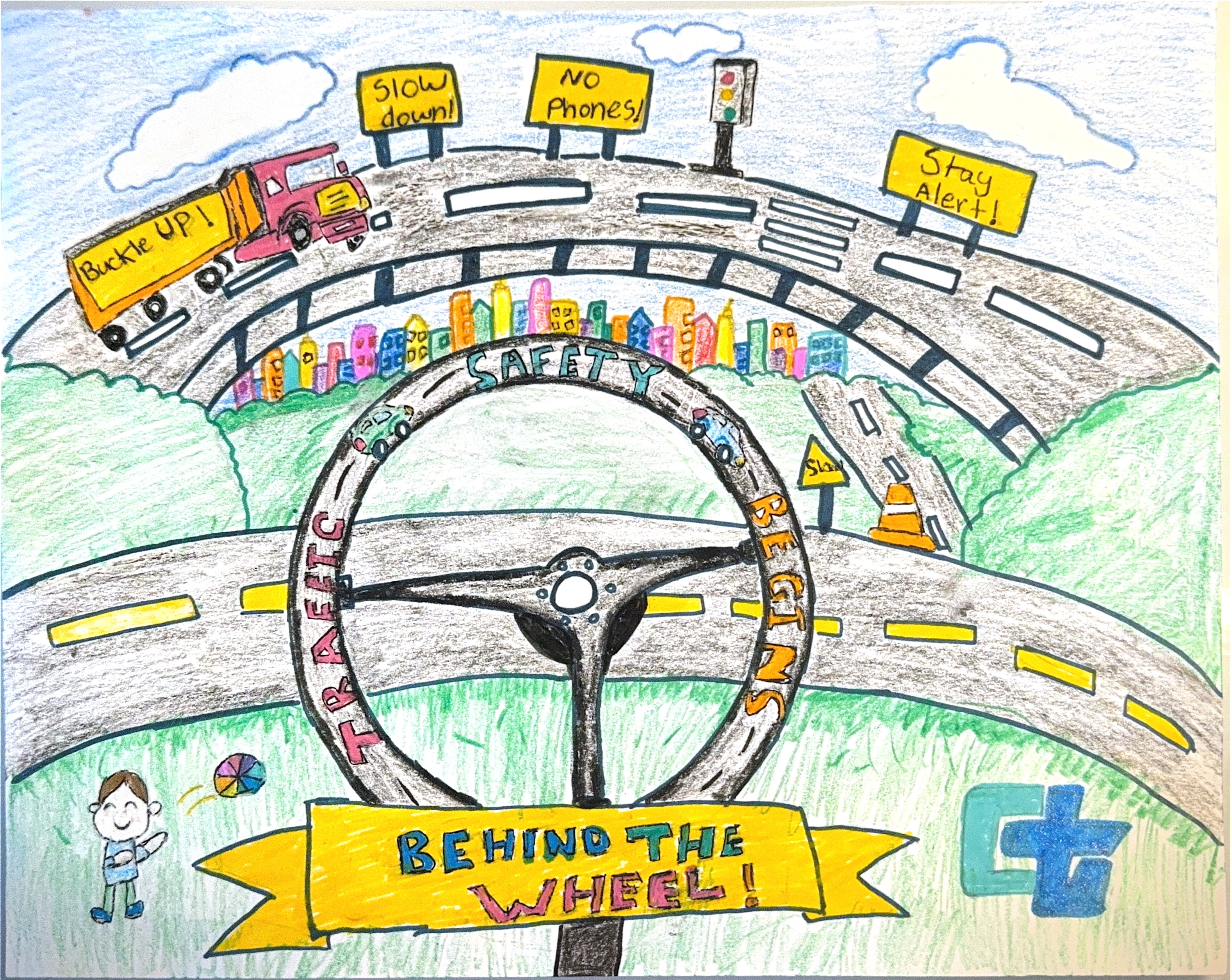 Sara Alqutami created the winning poster in the contest’s 7-to-10 age bracket. She is the daughter of District 6 transportation engineer Mohammed Alqutami.
Headquarters Public Affairs image
By Jay Connerley
Headquarters public information officer
Each year, Caltrans holds a Safety Poster Contest open to all children and minor family members of department employees. The contest’s aim is to reinforce the message that safety is the responsibility of every person that uses the state’s vast transportation system to get them where they want to go.
Inspired by the theme of Caltrans’ 2026 contest – “Safety Begins Behind the Wheel” – four talented young artists’ posters were selected from more than 100 submissions for inclusion in the department’s Workers Memorial last April. Their artwork – originally 8x11-inch digital documents – were transformed into large, physical posters that were printed, mounted on easels, and displayed prominently at the West Sacramento event.
Cora Howell, the niece of District 1 environmental scientist Devin Sutfin, placed first in the 6-and-under category. Cora is a Girl Scout who likes to sing, ride her bicycle, jump on trampolines and do cartwheels.
Sara Alqutami, whose poster was the winner in the 7-to-10 age bracket, is the daughter of District 6 transportation engineer Mohammed Alqutami. Sara says reading, swimming, doing crafts and playing outside are among her favorite activities.
Isabela Williams, the daughter of Headquarters Legal Division Deputy Division Chief Dominique Williams, took first place in the 11-to-13 category. Isabela plays volleyball and softball and says that she really likes pickles and rock music.
Gautam Repaka, the son of Headquarters transportation engineer Sunil Repaka, was the winner in the 14-to-17 age group. Gautam plays basketball and tennis, says his hobbies include computer coding and travel, and likes to ride his electric bike to school.
Caltrans is gearing up for the 2027 Safety Poster Contest, so stay tuned for details about the new theme and how to enter!
Stockton paint crew supports bridge operations in San Diego
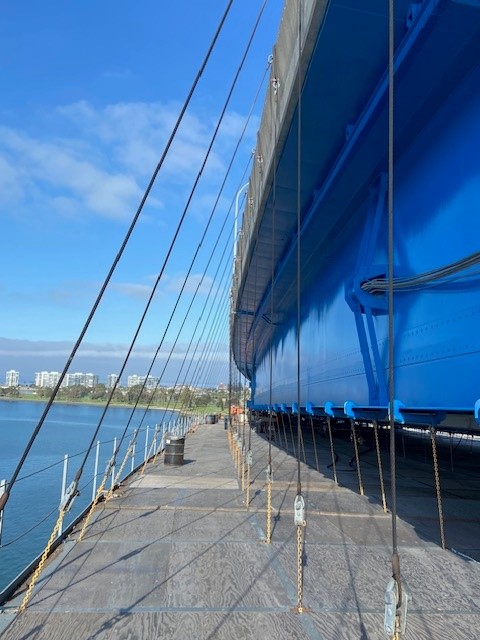 District 10's Structural Steel Paint crew recently traveled to San Diego to assist with a deck-rigging effort on the Coronado Bridge.
District 10 photo
By Erin McQueary
District 10 public information officer
Under the leadership of Supervisor Roger Casi, District 10’s Structural Steel Paint crew traveled to San Diego this summer to assist with a deck-rigging effort on the iconic 200‑foot‑high Coronado Bridge.
The highly trained and respected District 10 team is a designated travel crew, sent by Headquarters to assist in locations around the state, Roger said.
For this operation, crews participated in rigging and derigging across two of 32 spans of the 11,179-foot-long bridge. Rigging involves installing quick‑deck scaffolding so that bridge decking hardware and cables can be removed and the steel painted. Derigging removes that same system once the work is complete. Other team members transported equipment between the spans or moved materials from the roadway down to the work site.
This work is essential to maintaining the integrity of steel bridges statewide by allowing painters to access surfaces that must be painted to prevent rust and long‑term structural damage — avoiding costly future repairs or replacements, Roger said.
“It still amazes me the talent we have on our crews!” said Tanya Sanguinetti, deputy director of Maintenance.
The Coronado Bridge operation is another example of the skill, commitment, and teamwork District 10 crews bring to their work — whether close to home or on the opposite end of the state. With crews like Roger’s, Caltrans continues to uphold its mission of providing a safe, reliable, and environmentally responsible transportation network for all Californians.
Partial depth recycling brings savings, durability to SR 33
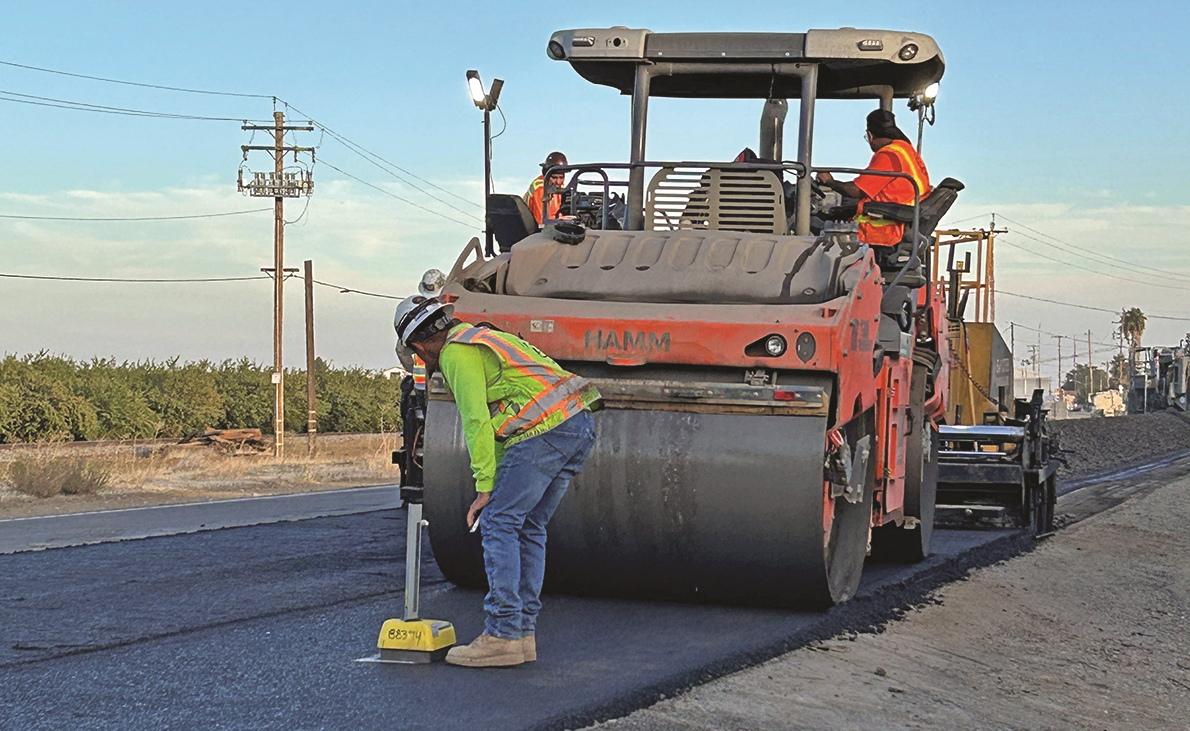 Partial Depth Recycling (PDR) saves time, money and natural resources.
District 10 photo
By Erin McQueary
District 10 public information officer
A recent repaving project on State Route 33 in West Stanislaus County used Partial Depth Recycling (PDR), an innovative pavement rehabilitation method that saves time, money and natural resources by making new pavement out of old pavement.
PDR grinds the top three to five inches of existing asphalt and blends it with a recycling agent such as foamed asphalt or emulsified asphalt to create new pavement material.
By reusing the existing roadway instead of hauling in large quantities of new aggregate and asphalt, PDR significantly reduces the use of non‑renewable resources such as fossil fuels and virgin aggregate. It also delivers meaningful initial cost savings — at least $100,000 per lane‑mile, according to District Pavement Coordinator Karen Bonnetti-Ramirez
Construction is typically faster with PDR because crews do not need to remove and replace large sections of pavement or transport large amounts of material. “It’s like having a hot mix asphalt plant right on the road,” Karen said.
Beyond efficiency and sustainability, PDR also improves pavement durability. The recycling and stabilization process produces a stronger, more resilient pavement layer that performs better under traffic loads and resists cracking more effectively than conventional mill‑and‑fill repairs. This durability translates to significantly longer pavement life cycles and fewer disruptive maintenance needs in the years ahead.
The SR‑33 effort is one of nine Caltrans District 10 projects using Partial Depth Recycling, and more are being planned. Karen also noted that several additional projects are in the conceptual phase and plan to use Full Depth Recycling, a similar technique that recycles pavement all the way down to the aggregate base while requiring minimal new materials.
What lies beneath: An encampment removal story
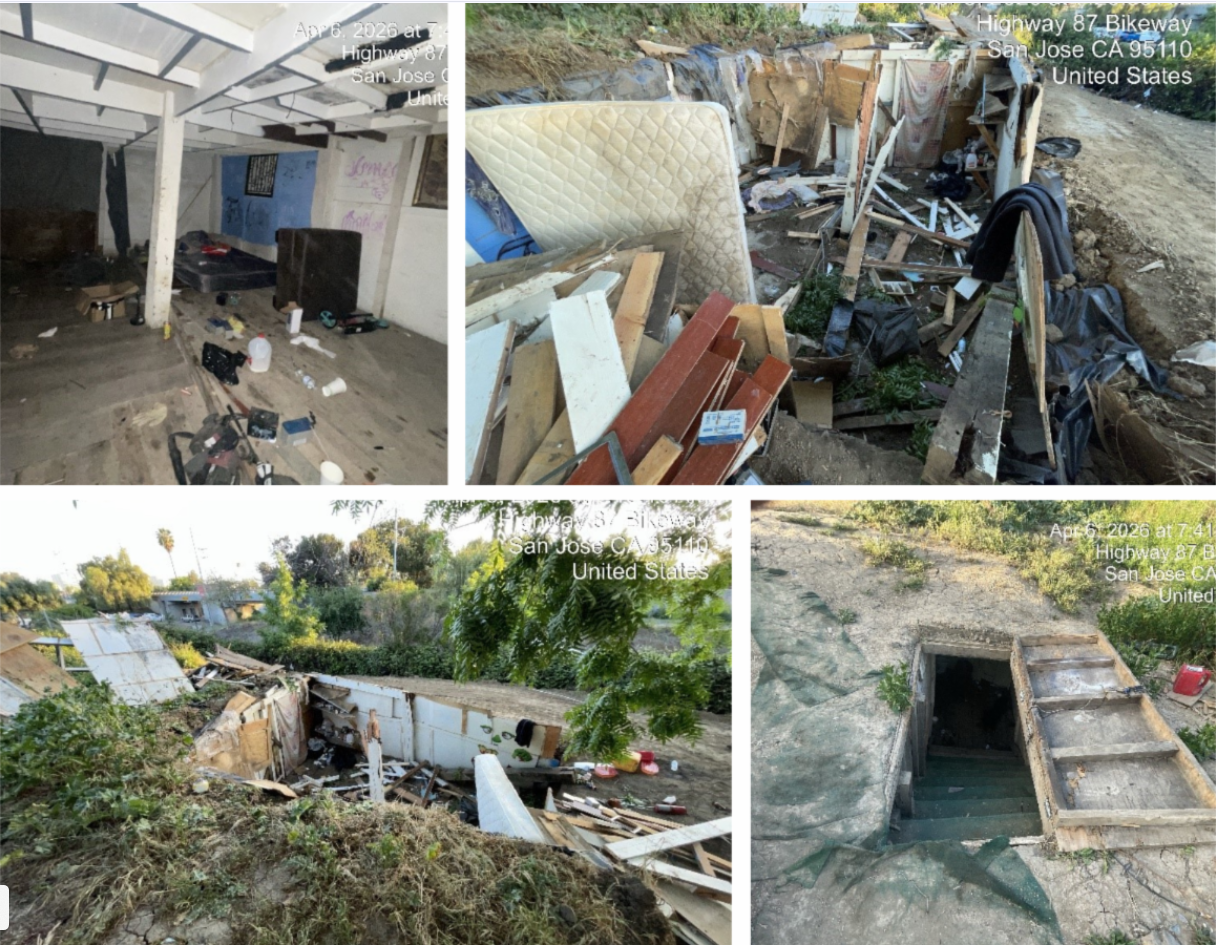 One interesting discovery led to another as Caltrans crews worked to clear an encampment near northbound State Route 87 in San Jose,.
Division of Maintenance photo
By Alisa Becerra and Alyson Hanner
Division of Maintenance, Office of Homelessness and Encampments
Hidden beneath the packed earth along the state right of way near northbound State Route 87 in San Jose, Caltrans crews uncovered something entirely unexpected.
What appeared at first to be a routine encampment cleanup quickly shifted when staff noticed an opening partially concealed by soil and debris. A closer inspection revealed a secret underground shelter, carefully tucked beneath the roadway, invisible to passing traffic and easily missed during surface level checks.
The discovery occurred near Willow Street, where a site assessment confirmed that the shelter’s entrance had been deliberately obscured by trash and vegetation, allowing the encampment to remain undetected for months. After documenting the location, Caltrans coordinated with local partners and the California Highway Patrol (CHP) to evaluate conditions, monitor safety, and notify occupants of the need to vacate.
During the initial inspection, one occupant explained that the underground shelter had been altered months earlier. As crews looked deeper into its origin, research revealed a startling truth: the chamber was not newly built at all, but the last remnant of a long-forgotten basement, an artifact from a home removed by the city of San Jose, decades earlier to make way for the rising highway above.
Caltrans put together a team of specialists from the Office of Homelessness and Encampments, the Division of Maintenance, the Division of Engineering Services, and the CHP, to check the site out.
Reaching the underground structure was no simple task. Crews pressed forward through a series of secured access points, three heavy doors in all, each one resisting as officers rammed it open. Behind every threshold lay new obstacles: bulging bags of recycling stacked deliberately to conceal the next barrier, forcing the team to push through layer after layer while announcing their presence into the darkness.
When the final door gave way, the space opened before them like a secret chamber. The team advanced in measured steps, their flashlights cutting through the stale air as they tried to make sense of what they had found, what filled the room, and what hidden risks might linger beneath the roadway.
One thing was certain: this was no ordinary encampment removal. The structure could not be safely removed through standard procedures. This would require a costly excavation and would require complete removal of the subterranean space, restoration of the landscape above, and careful backfilling to stabilize the ground. This had to be done with urgency.
Planning began immediately, including discussion on how we would pay for this. Formal notifications were issued to the occupants to vacate: the site would be closed, cleared, and restored.
In April 2026, Caltrans successfully completed the encampment removal and excavation of the underground structure, the remnants of a dwelling long since gone. During restoration activities, crews also uncovered a previously buried drainage facility, allowing it to be restored as part of the project.
In the end, the underground encampment was removed, the slope repaired and reshaped, and the damaged drainage restored to its intended use. The hidden chamber is now gone, its hazard resolved. What remained was the imprint of extraordinary collaboration: multiple Caltrans divisions and partners working in lockstep to reclaim this space safely. Proving that sometimes you have to dig deep to find solutions.
For more information on this and other encampment related stories or to learn more about the Office of Homelessness and Encampments, click here.
Kelly Loehrer: Guiding others through challenges
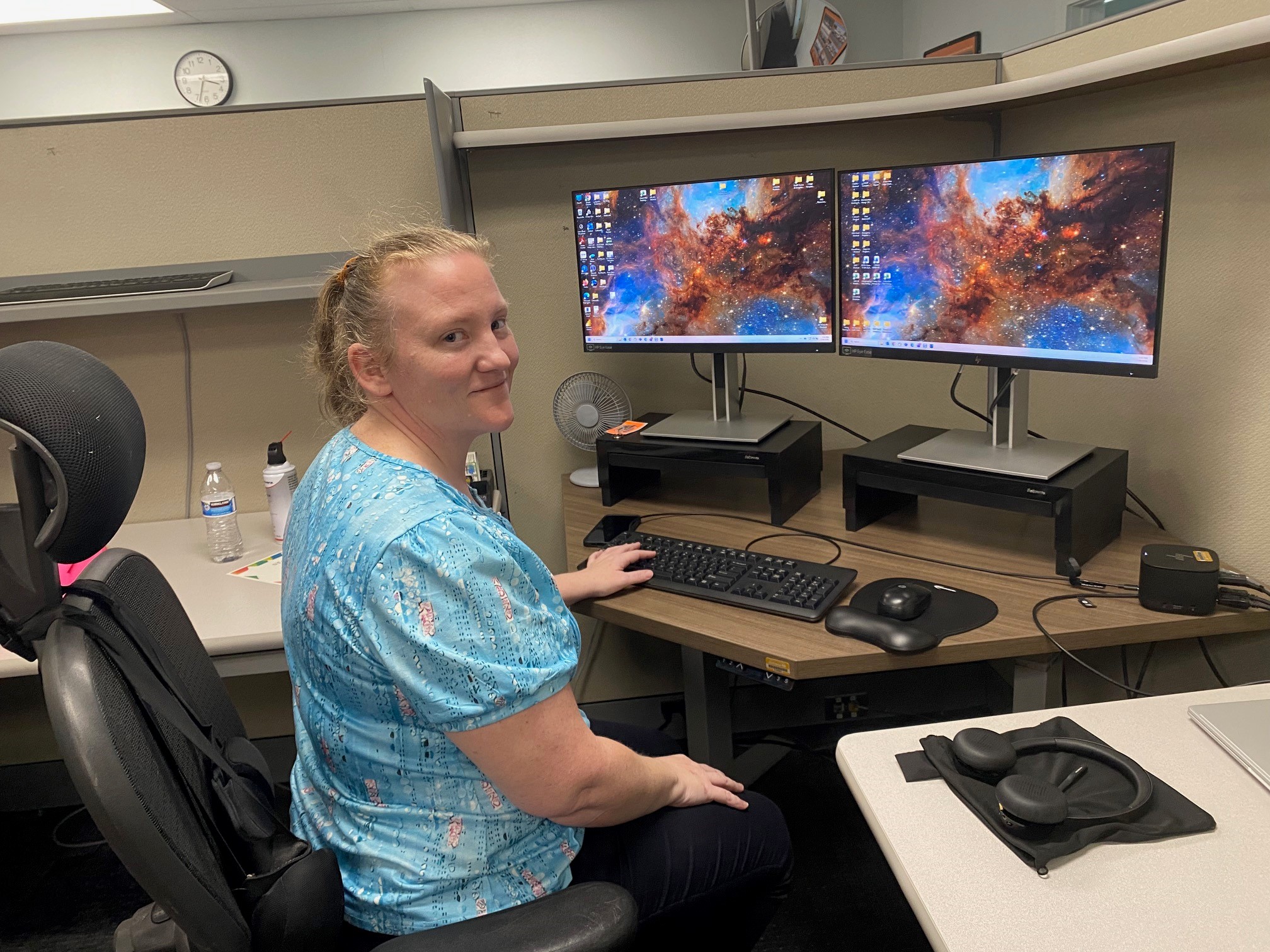 Kelly Loehrer is District 10’s Position Management and Clean California Grant Coordinator in Maintenance.
District 20 photo
By Bob Highfill
District 10 encampment coordinator
Kelly Loehrer helps job candidates navigate the challenging state of California hiring process and supports partner agencies applying for Clean California grant funding to improve their communities.
As District 10’s Position Management and Clean California Grant Coordinator in Maintenance, Kelly brings empathy and dedication to her work, embodying Caltrans’ core values: collaboration, equity, innovation, integrity and people first. Her personal experiences inspire her to go above and beyond, understanding more than most the impact a helping hand can have.
“My senior year of high school, we were actually homeless,” she said. “So, I know how it is to be down-and-out. I understand how hard it is to get out of that situation and get back on your feet.”
Despite hardships, Kelly was determined to build a better life. She earned her high school diploma while homeless. A turning point came when her then-husband’s father offered her a place to stay. With a stable home, Kelly was able to support and care for her family. She worked at a big-box retailer, often on weekends and holidays, leaving little time for her family. Acting on a tip, she applied for a position at Caltrans and accepted an Office Tech role with District 10.
Kelly has flourished at Caltrans. She was promoted to staff services analyst and now serves as Analyst II in her 11th year with the District. Kelly enjoys a much better work-life balance and is proud of her contributions, especially those related to Clean California.
Recently, Kelly helped three partners in District 10 — Stockton, Modesto and Calaveras County — secure portions of $25 million in Community Cleanup and Employment Pathway grants. She hopes the CCEP program continues.
“One aspect of Clean California is helping the disadvantaged hopefully get jobs,” she said. “That resonates with me. I like to do anything I can to try and help.”
Kelly shares her story so others facing challenges know there is hope and encourages a less judgmental perspective on homelessness.
“It’s hard,” she said. “You have to ask for help and keep trying and hope you find someone who cares.”
Kelly continues to strive for self-improvement. She is currently studying accounting at Modesto Junior College. Originally from Southern California, Kelly grew up in Patterson. She has two children and two stepchildren, and lives in Manteca.
Employee transforms travel credit cards into extraordinary adventures
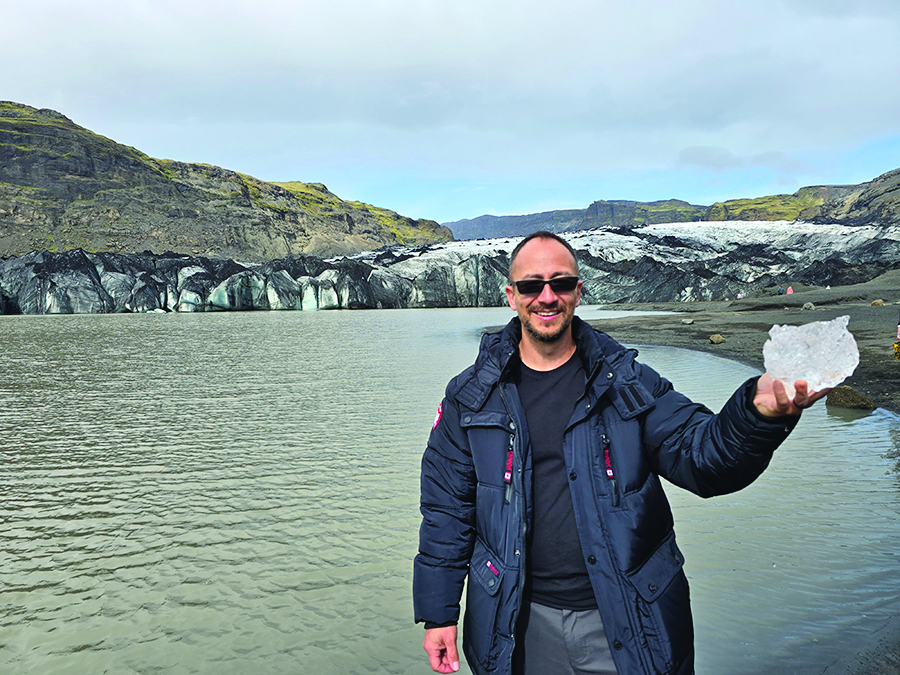 District 10 Business Operations Office Chief Michael Conrad has made a science out of extracting the most from travel cards.
Photo courtesy of Michael Conrad
By Erin McQueary
District 10 public information officer
Some people collect stamps. Others collect sneakers. But Michael Conrad collects credit cards – 33 of them to be exact. What started in 2024 as a practical effort to secure travel insurance has grown into a finely tuned rewards optimization that has unlocked business‑class flights, luxury hotels, and bucket‑list trips around the world.
Travel has always been a priority for Michael, the District 10 Business Operations office chief. In the past, he and his family typically planned one weeklong vacation a year. Today, thanks to meticulous strategy and a trove of card benefits, they take three or four major trips annually — trading Holiday Inn Express stays for 5‑star hotels.
Michael didn’t set out to become a travel-card strategist. His hobby started with the goal of securing affordable insurance for an upcoming cruise, which he found as a benefit in a Chase credit card.
From there, curiosity took over. “I conducted extensive research through articles, blogs, issuer websites, YouTube videos, and podcasts,” he said, recalling the hours spent decoding point systems, reading fine print, and learning complex issuer rules.
Now, Michael dedicates about three hours each day to staying current in the ever‑shifting world of points and perks. He keeps comprehensive notes but mostly relies on memory. He can instantly identify which cards earn the highest points for dining versus groceries, outline annual reward structures, and explain which issuers offer transferable points that multiply value.
Every bill, every expense -- even his mortgage – Michael pays for with a credit card. The math works out, he explains, because the value of points exceeds the processing fees.
For anyone interested in maximizing travel cards, he stresses the importance of understanding point‑to‑dollar conversion rates, using enough benefits to outweigh annual fees, and never carrying a balance—interest charges erase the rewards.
Michael’s discipline has paid off with remarkable travel experiences. Lavish room upgrades, like the apartment-sized suite lined floor to ceiling in marble and complete with a butler in Shanghai, China, and an oceanfront family suite in the Cayman Islands, have become part of the travel routine, thanks to loyalty status and strategic certificate use. He’s often also rewarded with luxury car rentals, complimentary meals, and access to airport lounges.
The adventures keep expanding. The Conrad family has explored Canada, Mexico, Korea, Japan, China, the Bahamas, the Virgin Islands, Puerto Rico, and Iceland. They have their next trips booked to the Maldives and Costa Rica, with plans on the horizon to visit Greece, Norway, Switzerland, Bora Bora, Thailand, and even Antarctica.
Despite the complexity, Michael believes anyone can start exploring travel credit cards—responsibly. His advice: understand your spending habits, choose cards that match them, and pay off balances monthly.
“I’m happy to help others with advice and find fulfillment in helping people improve their travel experiences,” he said.
His collection isn’t about the cards — it’s about the incredible experiences and the memories they create.
Health and Safety
Many factors influence how well you age

By the Wellness Program
of the Division of Safety and Management Services
Healthy aging looks different for each of us.
For many people, it simply means staying healthy enough to continue doing the things you love, whether that's spending time with family, traveling, gardening, volunteering, or enjoying favorite hobbies.
Many factors can influence how healthy you are as you age, including:
- Family health history. Conditions like high blood pressure or diabetes can run in families, which may increase your risk.
- Relationships and support, Staying socially connected plays an important role in overall well-being.
- Access to health care. Regular preventive care helps you stay on top of your health.
- Income and resources. Access to healthy food, safe places to exercise, and health services can make a difference.
- Life experiences and environment. The communities we live in and our lived experiences can also impact our health.
The good news? Many aspects of healthy aging are within your control.
- Avoiding tobacco helps reduce the risk of many chronic diseases.
- Eating a balanced, nutritious diet fuels your body and mind.
- Staying physically active helps maintain strength, balance, and energy.
- Getting enough sleep and managing stress also support healthy aging.
Who’s New
Gillian Gillett, division chief of Data and Digital Services
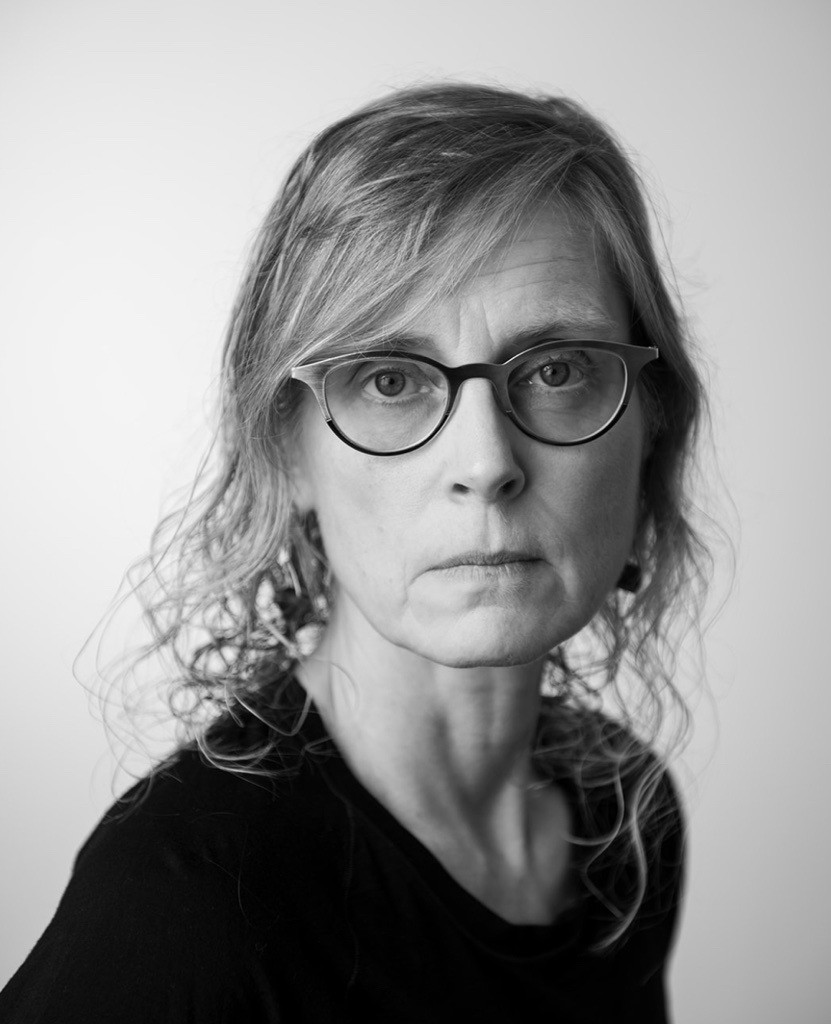
Gillian Gillett has been appointed division chief of Data and Digital Services (DDS).
For more than a year, Gillian has served as acting division chief of DDS while also leading the California Integrated Mobility Program at Caltrans. During this time, she has built a multidisciplinary team that provides technical assistance to more than 200 California transit operators, helping them modernize service through standards-based technologies, open payments, automated discounts, and digital planning and grant-management tools.
Previously, Gillian served as director of transportation policy for San Francisco Mayor Edwin M. Lee, where she advanced funding for Caltrain electrification, negotiated the Bay Area Bike Share program, led regional transportation and land-use advocacy, and co-architected San Francisco's successful first-phase proposal for the USDOT Smart City Challenge.
She also served on the Caltrain Board of Directors from 2017 to 2019, chairing the Board in 2019 during the first year of Caltrain electrification.
Earlier in her career, Gillian was chief of staff to San Francisco Supervisor Scott Wiener, chaired SPUR's Transportation Policy Board, and co-founded Graffio, a custom software development company serving major financial services and healthcare organizations.
Her career brings together technology entrepreneurship, public policy, transportation partnerships and governance, and the delivery of large-scale public services.
Jennifer Simmers, deputy division chief in Safety and Management Services
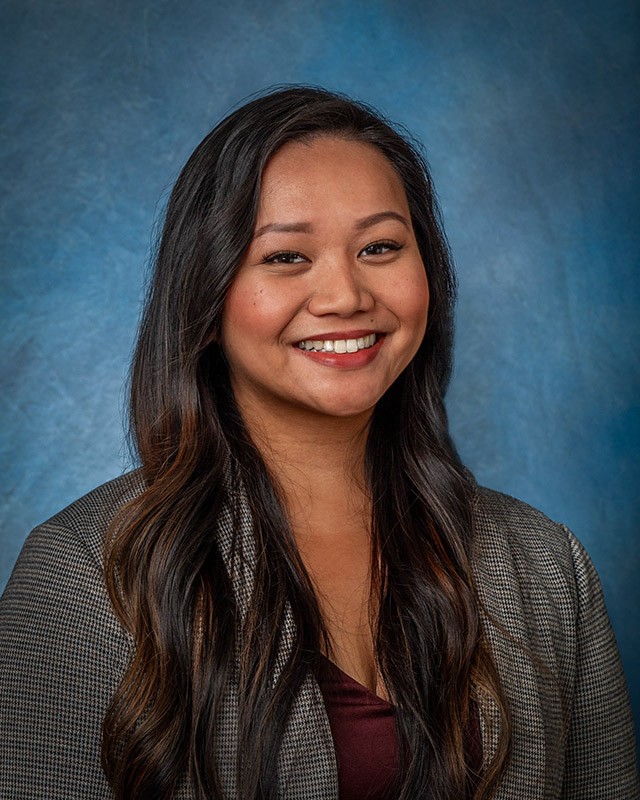
Jennifer Simmers as the new deputy division chief over the Office of Employee Health and Safety, Workers Compensation, Reasonable Accommodation and FMLA.
Jennifer began her career with the state in 2017 and became part of the Caltrans family in 2019, joining the Office of Employee Health and Safety.
As the office chief of Employee Health and Safety, Jennifer has been instrumental in leading, developing and streamlining processes, policies, and training for major department-wide employee health and safety initiatives. She has also contributed significantly to hybrid telework efforts, ensuring that employees are supported and protected in both traditional and remote work environments.
Jennifer holds a bachelor of arts in psychology, specializing in industrial organization psychology, from California State University, Long Beach. During her studies, she cultivated a passion for mental health awareness and gained insight into the factors that impact overall wellbeing, particularly in workplace settings.
Jennifer later earned a master of business administration degree with a concentration in business analytics from California State University, Sacramento. This advanced education enhanced her leadership abilities, curiosity, innovation and commitment to continuous learning.
Outside of her professional life, Jennifer enjoys spending time with her husband and two daughters. She loves traveling, especially to destinations with beaches, and considers herself a “foodie.” Jennifer also values learning new skills, particularly those that allow her to express her artistic and creative side.
Luc Sou, division chief of Procurement and Contracts
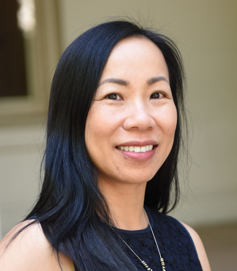
Luc Sou is the new division chief of Caltrans’ Division of Procurement and Contracts,
Luc is a results-driven leader with more than 20 years of experience leading automation initiatives from concept to completion, enterprise-level governance, portfolio oversight, and contract management in complex, highly regulated environments. She specializes in modernizing legacy systems and implementing enterprise-wide automation platforms while balancing strategic goals with organizational needs.
Since joining Caltrans in 2018, Luc has served as division chief of the IT Project and Business Management Division, leading enterprise projects, automation initiatives, strategic planning, and technology business management. In this role, she was responsible for driving system automation initiatives and strategic planning to ensuing the division aligns with the organization's overarching digital transformation goals.
Her proven track record in enterprise transformation led to her being entrusted with establishing the CalSTA Enterprise Portfolio Management Office (EPMO), where she standardized governance frameworks, performance metrics, and stage‑gate methodologies across the agency.
Prior to joining Caltrans, she contributed to shaping statewide IT governance policies at Department of Technology (CDT) and provided expertise in procurement and project-approval reforms
Luc holds a Bachelor of arts in psychology and is a certified project management professional.
Obituaries
Kathleen “Kathy” Nolan, retired District 2 worker
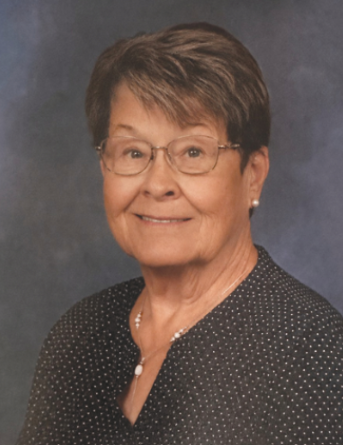
Note: The following obituary appeared in the Red Bluff Daily News.
Kathleen “Kathy” Nolan (Fillmer), 80, passed away peacefully in her sleep on July 14 in Redding.
Kathy was born November 23, 1945, in Tilden, Nebraska, to Leonard and Verna Fillmer. She and her family moved to Corning in 1955, where she grew up and graduated from Corning High School. She married John Nolan in 1973 in Corning.
Kathy met lifelong friends while working at Fish & Wildlife in Red Bluff and finished her career at Caltrans in Redding, where she retired in 2010.
Kathyaka Grandma (or “Gram”) rarely missed her grandchildren’s games and activities. She spent countless hours in her garden, was an avid quilter, an unmatched bargain hunter, and a devoted volunteer at the Our Lady of Mercy food bank. She loved to travel, loved to laugh, loved spending time with family and friends, and adored her pets.
Kathy was preceded in death by her husband, John Nolan. She is survived by her son, Dennis Nolan, and daughter-in-law, Tammy, of Cottonwood; her daughter, Kelly Kane, and son-in-law, John, of Santa Rosa; six grandchildren, Sabrina (30), Chris (27), Emily (20), Katelyn (17), Benjamin (17), and Finley (15); her brothers, Jack of Florence, Oregon, and Gerald of Colfax; several nieces and nephews; and many special friends.
Rosie, her loyal dog, remains by the family’s side.
Thomas (Tom) Rut, retired engineer
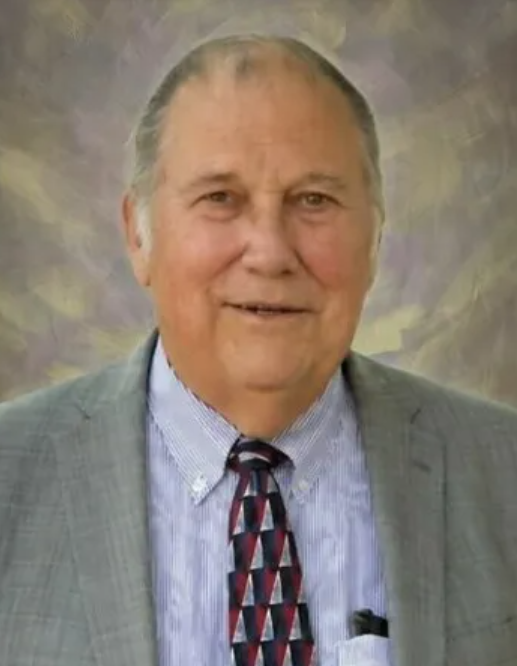
Note: The following obituary appeared in The Stockton Record.
Thomas (Tom) Rut passed away suddenly in Stockton on August 20 at the age of 83.
He was born in Cicero, Illinois, to Marie and Nathaniel Rut. He is survived by his younger sister Nancy, daughter Laura, son Joe, and grandchildren Max and Krysta. He was married to Patricia (Pat), nee Moers, for 59 years until she passed in 2024. He was a devoted husband and loving father/grandfather.
Tom graduated from the Illinois Institute of Technology in 1965 with a B.S. in civil engineering. He moved to California after graduation to work for Caltrans and eventually held licenses in civil and structural engineering. He worked as an engineer for 43 years, including 33 with Caltrans, culminating with a management position with the California State Bridge Maintenance Engineers.
He was responsible for many aspects of bridge maintenance and design for 25,000 bridges in California. During his time there he wrote and presented papers on bridge design and maintenance, including at international conferences in both Denmark and Korea. In addition, he was vice president of two different consulting firms and ran his own consulting firm for 21 years. He encouraged others to go into engineering by supporting scholarships and speaking at schools.
Tom was very active in the Stockton community. With his young kids he was a Boy Scout leader, Little League coach, and Bobby Sox coach. He was always active in his church and had many close friends there.
He and Pat joined a Model A Ford car club, The Delta A’s, in the 1990s and they relished their group meetings, touring trips and other events. He wrote several articles for the Model A Restorer Magazine. He worked on the Model A judging standards committee, of which he was made Chairman in 2018, and helped write and publish the updated judging standards. He was running for board member of a national Model A group (MAFCA) when he passed.
He loved that his involvement in the club led to so many friendships and adventures later in life and wanted to make sure that opportunity was available for others.
Tom loved the outdoors and enjoyed camping, fishing and boating. He also loved trains, both model and real. He celebrated his 80th birthday by driving a steam locomotive. He also golfed regularly and loved a good game of cribbage or Scrabble.
Tom will be remembered for his many accomplishments but more so for his loving, friendly nature. He could talk to anyone and make them comfortable. He was always willing to lend a hand, whether it was helping with engineering, car or personal issues. He had a long, full, and happy life. He will be deeply missed by all of his family and friends.
- All-in-one version
- Health and Safety
- News
- Obituaries
- Who's New