

All-in-one version
News
California Transportation Foundation helps a fire victim
.jpg?h=249&w=400&hash=980AD074A1CA699DDC65E48640CAA506) Sloan Holand-Crespo explains how CTF has made a positive difference in her life.
Sloan Holand-Crespo explains how CTF has made a positive difference in her life.Caltrans YouTube channel screengrab
The California Transportation Fund uplifts those in the state’s transportation industry by providing funding to workers and families in their time of need.
People like Sloan Holand-Crespo, whose life was upended when her family had to evacuate because of the Caldor Fire in August 2021. Listen to her story here in this short video.
To learn more about the foundation and donate to help those who serve California by visiting the foundation's website.
Please consider making a donation to support this important work. Every contribution makes a meaningful difference.
Learn more, and donate here.


District 10 adds member to Caltrans Statewide Honor Guard
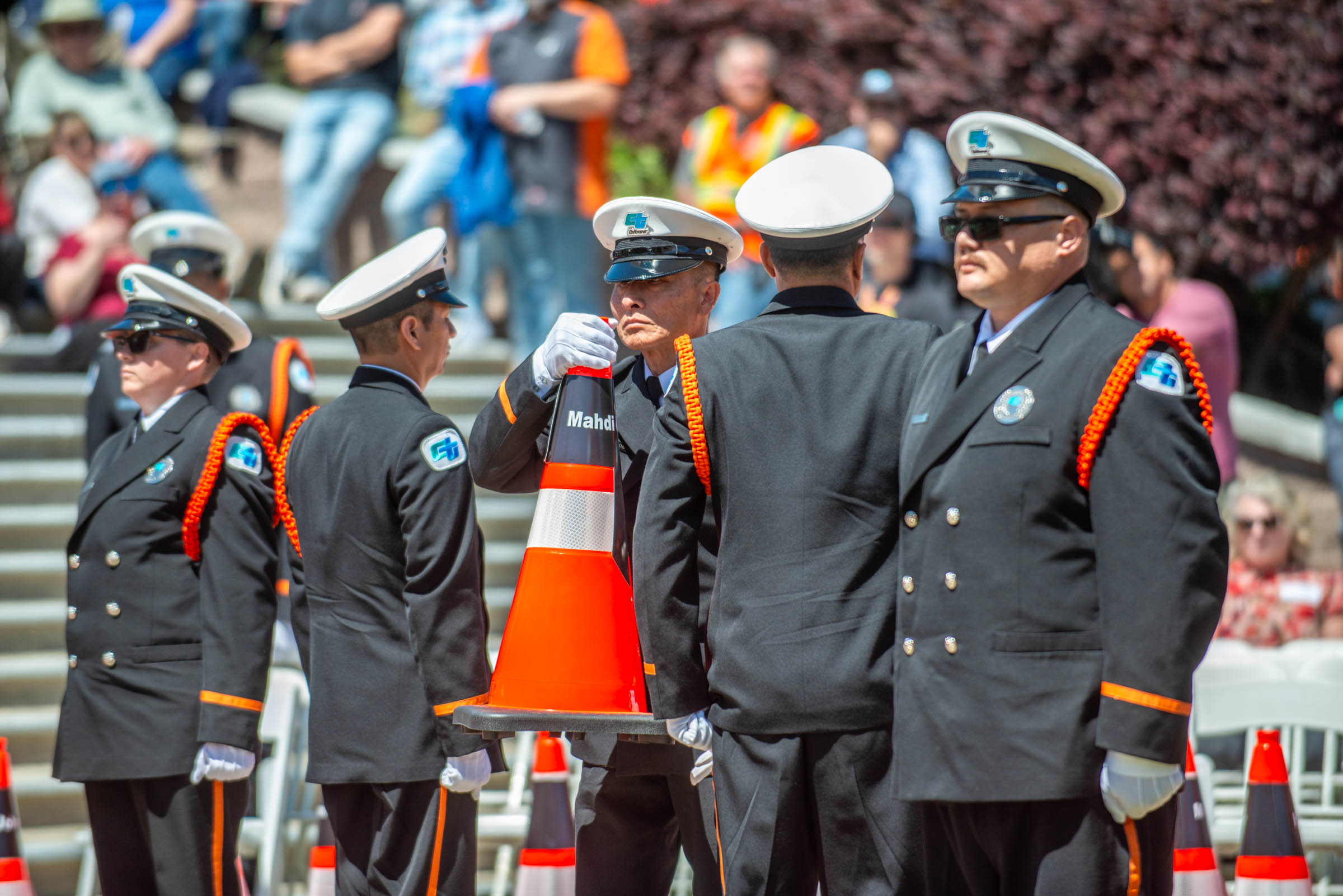 Isaac Clark, landscape maintenance worker with Crew 675 out of Patterson, is now part of the Caltrans Statewide Honor Guard.
Headquarters photo
By Rick Brewer
Headquarters Public Affairs
Isaac Clark, 39, is among the newest members of the Caltrans Statewide Honor Guard, and the first to be chosen from District 10 since the pandemic.
Now, in addition to his duties as a landscape maintenance worker with Crew 675 out of Patterson, Issac will participate alongside other Guard members in the annual Workers Memorial event each April. He will also serve at various functions when called upon. The Guard’s main purpose is to honor the men and women of Caltrans killed while on duty serving the state.
“The whole (Honor Guard) process struck a chord with me,” Isaac said. “First, with my military background, and then watching the Caltrans service over the years, it reminded me of the familiar ways we honor our fallen.”
Before joining Caltrans seven years ago, Isaac served in the Marine Corps for four years. While deployed to Iraq and Afghanistan, he watched fellow soldiers die in combat.
“(Isaac’s) strong military background played a pivotal role in our decision to bring him into the Honor Guard. It represents a foundation of service, discipline, accountability, and commitment – values that directly align with the expectations and responsibilities of this unit,” said Honor Guard Captain Alex Valdez.
“His soldier mentality translates into a clear respect for the chain of command, the ability to carry out orders with precision, and a steady sense of duty under pressure.”
Upon his return stateside, Isaac joined his family’s business as a plumbing and construction contractor. He landed a job refurbishing the restrooms at the Caltrans Division of Equipment office in Sacramento and was encouraged to consider state service.
“I didn’t really know anything about Caltrans at the time. But they gave us a plaque because the new bathrooms turned out amazing,” Isaac said. “From that job I ran into a man who liked the work we did and asked if I was getting retirement, benefits or health care, which I wasn’t. He gave me a nudge.”
It took three applications for Isaac to be hired as a permanent intermittent employee before landing a full-time position. He has since become a licensed sprayer and drone pilot. Isaac first applied for a position with the Honor Guard in 2023 and was accepted during the 2025 recruiting period.
“My mentality is to never give up,” Isaac said, “I told my supervisor if it ever came up again, I wanted another shot.”
During the most recent Honor Guard recruitment, Isaac noted the unexpected passing of longtime District 10 Public Information Officer and Homeless Encampment Liaison Rick Estrada. He became close with the Estrada family over the years, often performing handyman jobs at their Oakdale residence.
Isaac utilized this personal connection with a fellow Caltrans employee to illustrate how one must handle Guard requirements of providing compassionate comfort to family members of fallen employees while still maintaining personal dignity and professionalism.
It’s a responsibility Isaac believes all Caltrans employees should want to do - participate in a cause bigger than any individual or crew. He sees the Honor Guard as an opportunity to transcend the entire department.
“This is very special. At the end of the day, we all want to go home safely. And this sheds light on those who didn’t get to go home,” he said. “This shows that Caltrans cares about you, you will be remembered, and your family will be cared for.”
How the Strategic Highway Safety Plan helps save lives
From Headquarters Public Affairs
Roadway safety in California is at the forefront of all stakeholders that participate in the Strategic Highway Safety Plan (SHSP). After working with multiple federal, state, regional, local and tribal agency partners, the latest 2025–2029 SHSP was signed in March of 2026 by California State Transportation Agency Secretary Toks Omishakin.
With a goal of zero fatalities and serious injuries on all of California’s public roadway by 2050, this comprehensive plan provides California with guidance to identify and address key factors that lead to fatal or serious injury collisions.
“Everyone has the right to travel safely on our roads, regardless of race, socioeconomic status, gender, age, ability or geographic location,” Omishakin said. “By working together, each one of us can make a positive difference in the lives of all California road users and contribute to the health and economic vitality of our state.”
The SHSP is aligning its activities and actions with the state’s Safe System Approach (SSA), which identifies six guiding principles:
- Death and serious injuries are unacceptable: The SSA prioritizes crashes that result in death and serious injuries, since no one should experience either when using the road system.
- Humans make mistakes: People will inevitably make mistakes that can lead to crashes, but the road system can be designed and operated to accommodate human mistakes and injury tolerances to avoid death and serious injuries.
- Humans are vulnerable: People have limits for tolerating crash forces before death and serious injury occurs; therefore, it is critical to design and operate a road system that is human-centric and accommodates human vulnerabilities.
- Responsibility is shared: All stakeholders (road system users and managers, vehicle manufacturers, etc.) share responsibility that crashes do not lead to fatal or serious injuries.
- Redundancy is crucial: Reducing risks requires that all parts of the road system be strengthened, so that if one part fails, the other parts still protect people.
- Safety is proactive and reactive: Proactive tools should be used to identify potential safety hazards before crashes happen while also recognizing the importance of historical data that helps inform where and why crashes are happening.
Through the SHSP, safety stakeholders from over 600 public and private agencies and organizations work together to find and implement data-driven strategies to improve safety across public roadways in California.
There is also a corresponding implementation plan that details specific actions. The SHSP identified 16 challenge areas, such as lane departures, impaired driving, and speed management/aggressive driving, that statistically create the greatest challenges to road safety and/or provide the greatest opportunity to achieve the SHSP goal.
Challenge area teams collaboratively develop actions that provide opportunities to address critical safety issues such as those experienced by bicyclists and pedestrians traveling on mixed-use facilities. The implementation plan will be regularly updated to ensure that identified actions move the state towards the goal of zero traffic fatalities and serious injuries.
If you want to learn more about saving lives on California public roads visit dot.ca.gov/programs/safety-programs/shsp and consider how to get involved.
36 quilts and counting: Grace Magsayo’s legacy in fabric
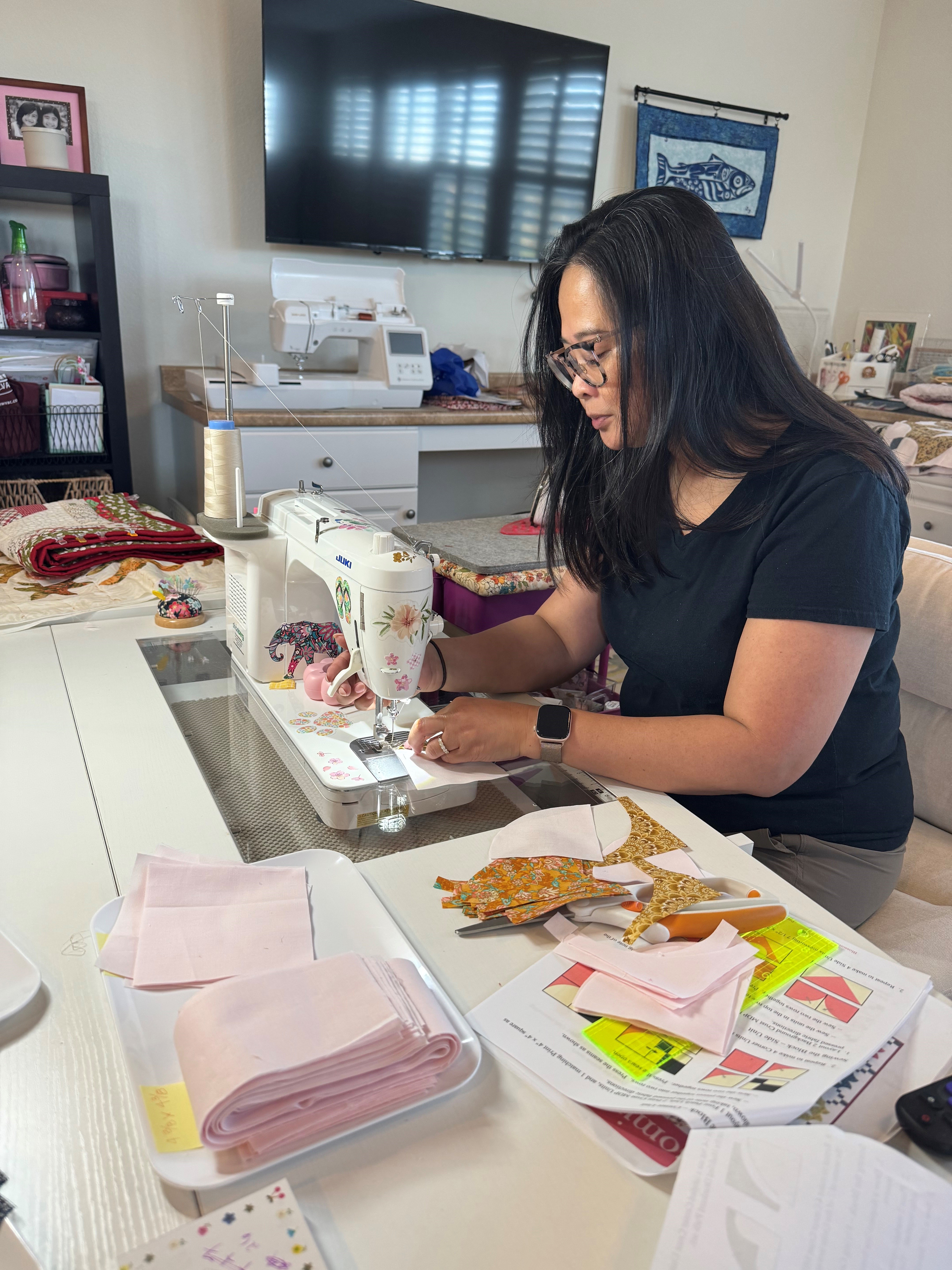 District 10 Director Grace Magsayo says, "When I am working on quilts, my stress goes away."
District 10 photo
By Erin McQueary
District 10 public information officer
Auctions are a regular part of the District 10 Events Committee’s fundraising efforts. Last year, however, a particular item captured everyone’s attention: a handcrafted quilt made by District Director Grace Magsayo.
The quilt, featuring a fall theme with vibrant orange, brown, and burgundy leaves, started at a price of $75. Enthusiastic bidders quickly increased its value, and Engineer Andrey Chevychalov ultimately won the quilt for $200.
Andrey was captivated by the quilt as a unique work of art created by someone renowned within the district. He admired the craftsmanship and wondered about the time invested in its creation. The answer: approximately 12 full days.
Finding joy in quilting
For Grace, quilting is not just a task – it is a source of joy and fulfillment. “When I am working on quilts, my stress goes away,” she explained. “I just feel so fulfilled.”
Her journey with sewing began decades ago in home economics classes in the Philippines. It became a college hobby and eventually blossomed into a lifelong passion. In the early 2000s, a morning show segment ignited her interest in quilting specifically.
“I thought, ‘I can do that; that’s just geometry.’ ”
Grace purchased fabric and a modest $200 sewing machine, creating a few quilt blocks. However, with two young children and a demanding engineering career, those blocks were set aside for nearly ten years.
Eventually, Grace returned to her unfinished quilt blocks. “I decided I was going to finish that quilt, so I just did it … and after that I caught the fever.” Her renewed enthusiasm led her to invest in a high-quality $4,000 quilting machine – “$4,000 too much for my own skill,” she joked. This upgrade motivated her to master her craft.
Crafting comfort and giving back
Grace has made quilts for her daughters and extended family, and she began creating them as gifts for loved ones facing hardship, including several battling cancer.
“Instead of sending flowers, I would spend the time to make a quilt,” she said. “While I’m sewing, I pray for them … for their recovery, for their health.”
Her generosity extends beyond her immediate circle. Grace had already been crocheting blankets for Project Linus, a charity that donates handmade blankets to children in need, and she now contributes quilts as well.
A lasting legacy
To date, Grace has completed 36 quilts. Last year, she started titling, numbering, and stitching her name into a corner of each quilt. She believes that each quilt reflects her creative process, joking, “I am a bit of a scatterbrain.” Grace enjoys how unexpected shapes and colors can blend into something beautiful.
She can quilt from sunrise to sunset without fatigue and looks forward to dedicating even more time to the craft in retirement. Her plans include joining a quilting club, expanding her collection, and continuing to donate quilts to those in need of warmth and hope.
“I am really lucky that I found this outlet that can do some good, some service,” Grace said. “I think that is going to be my identity when I retire.”
District 10 sign shop upgrade enhances efficiency, safety and self-reliance
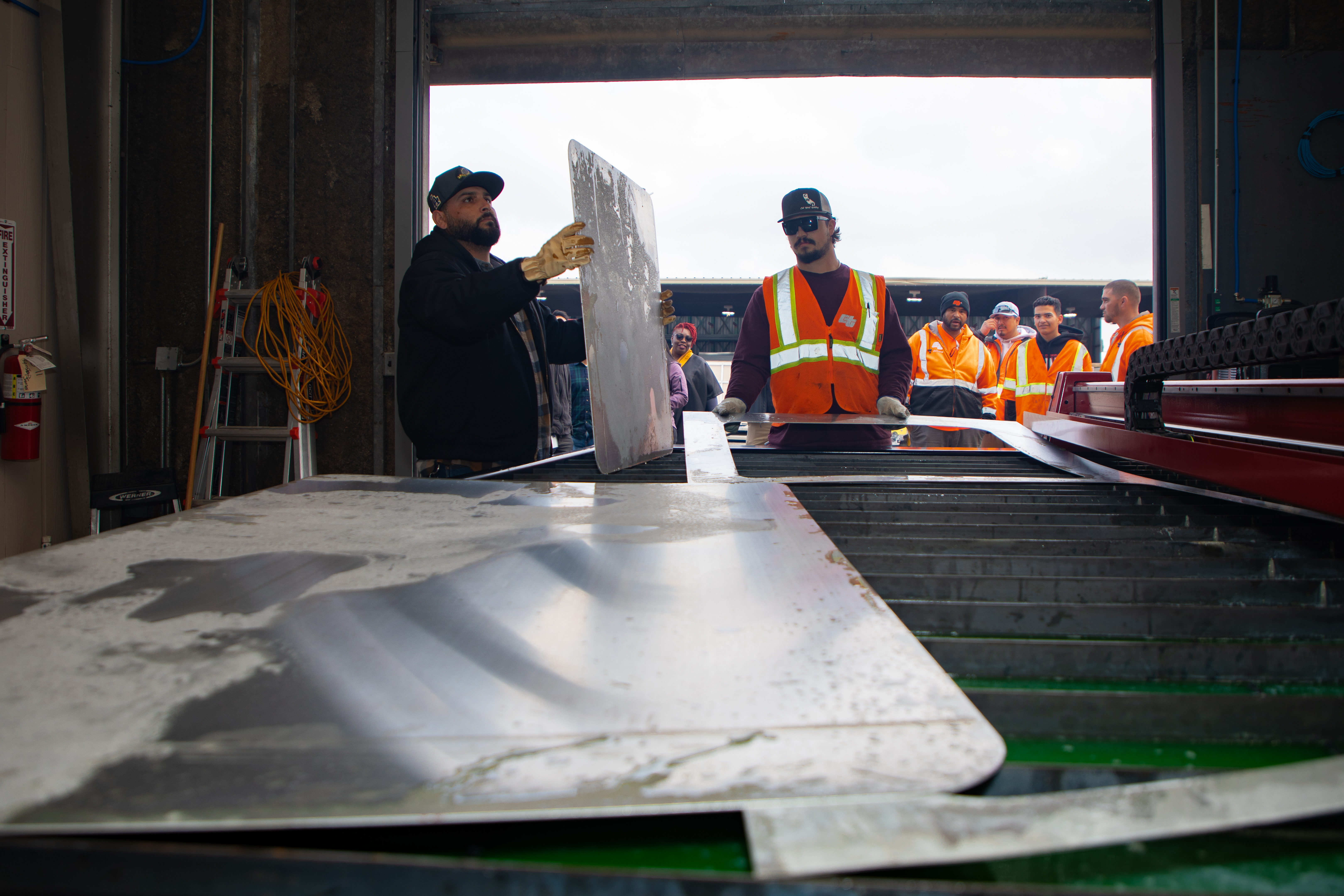 District 10 equipped the Stockton and Merced maintenance yards with HP sign printers and plasma cutters. Previously, the district relied on a single printer in Stockton and outside vendors.
District 10 photo
By Bob Highfill
District 10 PIO/encampment coordinator
A recent collision on Highway 99 in Stockton caused extensive damage to guardrails, fencing, and signage. Stockton’s Fence and Guardrail team responded quickly, made repairs, and replaced the damaged sign using newly acquired in‑house fabrication technology.
Working in coordination with Headquarters Traffic Operations, District 10 equipped the Stockton and Merced maintenance yards with HP sign printers and plasma cutters. Previously, the district relied on a single printer in Stockton and outside vendors. The new equipment expands graphics capabilities, allows the use of graffiti‑resistant film, and enables custom designs – significantly reducing reliance on external production, said Valley Maintenance Manager Jesus Zuniga, who led the effort.
“Jesus has been the driving force behind this project since early discussions in 2023,” said Tanya Sanguinetti, Deputy Director of Maintenance for District 10. “His leadership strengthened the partnership between HQ and District 10 and greatly improved the efficiency of our sign production.”
In February, District 10 unveiled its upgraded sign‑making system at the Stockton Maintenance Sign Shop. Staff demonstrated the new tools before an audience that included Vijay Talada of the Headquarters Division of Maintenance and Tong Yang, Deputy Division Chief for Field Technical Support.
“In emergencies, when signs are not readily available in‑house, we can now fabricate them ourselves,” Talada said. “Incorporating these technologies took substantial initiative and effort.”
Previously, procuring a sign through vendors could take weeks—or even years. Now, District 10 can produce and install signs within days. “We would sometimes wait two years for signs,” said James Serpa, Maintenance Supervisor for Stockton’s Fence and Guardrail crew. “If I get a CHP report, I want that sign built right away. This system lets us do that.”
The first sign produced with the new equipment replaced a damaged Stockton City Limits sign along northbound State Route 99 at Arch Road.
Two years ago, Caltrans operated only two in‑house print shops statewide. Today, most districts have the equipment and trained staff to fabricate their own signs. The cost savings are significant—Zuniga estimates reductions of up to 60 percent—supporting Caltrans’ commitment to responsible stewardship of public resources.
Beyond time and cost savings, the upgrades enhance workforce capability and product quality. Staff can now produce durable, high‑quality signs, including those with advanced graffiti‑resistant coatings, on demand. The customized printing options also support specialized needs, such as memorial highway signage.
Most importantly, faster sign production directly supports Caltrans’ top priority: safety. “It’s impressive to see how quickly we can produce signs in‑house and return them to the field,” said Jose Alicea, Office Chief of Maintenance Engineering for District 10. “This capability is a tremendous benefit to our district and to the motoring public.”
District 10 Public Information Officer Erin McQueary contributed to this report.
Health and Safety
Wildfire smoke and respiratory protection
From the Office of Employee Health and Safety
Wildfire smoke can create rapidly changing air‑quality conditions that impact breathing, lung function and overall health.
Air quality must be monitored when wildfire smoke may impact our worksites. The Air Quality Index (AQI) can be checked for PM2.5 levels using an AQI Monitor or the U.S. Air Quality Index website (https://www.airnow.gov/).
N95 or higher filtering face piece respirators (aka dust masks) must be offered to employees for Voluntary Use when AQI levels are 151-499.
Respiratory protection is Mandatory when AQI levels are 500+.
Change or replace respirators if they become dirty, damaged, or difficult to breathe through.
For more information about respirator use requirements, wildfire safety, and air monitoring, visit the Wildfire Safety for Caltrans Employees site.
Visit the Employee Safety Bulletins & Alerts page to view previous Safety Bulletins.
Who’s New
Diana Campbell, state asset management engineer
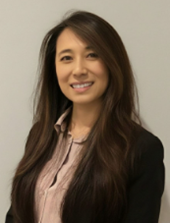
Diana Campbell has been appointed as the state asset management engineer.
With more than 24 years of experience in bridge engineering and transportation asset management, Diana brings extensive experience in funding, policy and budgeting, including developing statewide guidelines, shaping SHOPP and HM3 investment strategies, and collaborating across districts, headquarters and external partners to prioritize projects, meet federal and state requirements, and guide decisions that balance cost, risk and performance.
In her recent acting role as the state asset management engineer at Caltrans, Diana provided strategic leadership for statewide asset management efforts, ensuring our infrastructure is managed efficiently.
She works closely with the California Transportation Commission and the Federal Highway Administration and oversees key statewide deliverables, including the Transportation Asset Management Plan, Performance Benchmark Report and State Highway System Management Plan.
Diana is passionate about collaboration and partnership and is committed to working together to meet statewide goals.
- All-in-one version
- District Workers Memorials
- Health and Safety
- News
- Retirements
- Service Awards
- Who's New