

All-in-one
News
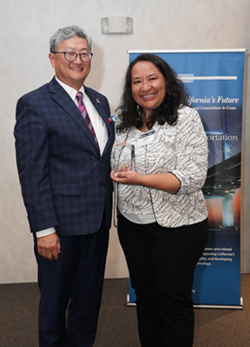
Fresno-based engineer wins statewide honor
District 6 photo
By Mohammed Alqutami
District 6 transportation engineer
We are proud to share that Leonor Ayala has been selected as the recipient of the statewide Professional Engineers in California Government (PECG) Outreach Award in recognition of her exceptional leadership, dedication, and service to the Outreach Program.
As the Outreach Committee Chair for the PECG Fresno Section, Leonor has gone above and beyond in advancing Caltrans’ mission by fostering meaningful connections with students, educators, professionals, and community members across California. Her passion for public service and engineering has inspired many and strengthened the visibility of both Caltrans and PECG statewide.
Throughout the past year, Leonor has represented PECG and Caltrans at numerous outreach events, including college career fairs, community programs, and professional conferences across the Central Valley. She has become a driving force for recruitment and mentorship, guiding students and recent graduates toward engineering careers in public service.
This statewide recognition is a testament to Leonor’s remarkable efforts and her lasting impact on both PECG and the engineering community. Congratulations, Leonor, on this well-deserved honor!

District 7 photo
By Colleen Park
District 7 public information officer
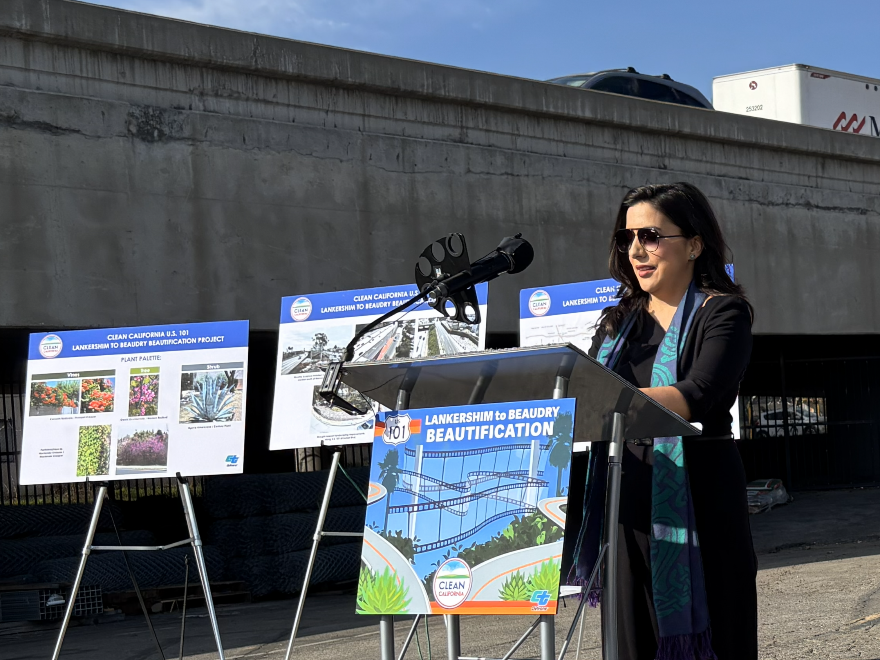
For Senior Landscape Architect Kathleen Hamer, who created the design for the U.S. 101 Lankershim to Beaudry Beautification project with Design team members Keith Sellers and Mark Perez, the culmination of the Clean California project in 2025 held a special significance.
From its inception, the U.S. 101 beautification project was both a challenge and a dream. The $1.2 billion Clean California initiative, launched by Governor Gavin Newsom in July 2021, was an exciting but limited opportunity for each district to propose improvements along corridors that needed it most.
While a typical Plans, Specifications, and Estimates (PS&E) project would have three to four years from initiation process to design, Hamer recalls having four to six months to get the U.S. 101 beautification project from initiation proposal to Ready to List (RTL).
“We worked very hard and very fast, using as-builts, using the knowledge I already had of the sites, so I could just quickly do the plans,” Hamer said. “That was a challenge, but we knew the opportunity we had and we did not want to let that go.”
In addition to long hours for the Design team, Hamer credits the resident engineers (REs) Jacky Chan and Jeanette Vong, as well as the project team for working to make the project proposal a reality.
“It just had so much invested into it, there's so many people that believed in it, including the REs. We all put in a lot of time and effort,” she said. “The overall project and the importance of the route deserves that attention.”
For the design of the sculpture, Hamer drew upon the history of this stretch of U.S. 101, also known as the “Hollywood Freeway.” With a husband who has worked in the film industry, she recognizes the current era of filmmaking has faced difficulties keeping the film industry in Hollywood, with financial incentives and outsourcing to other states and countries.
“Hopefully, this will inspire people to remember what Hollywood was founded on. Maybe that's wishful thinking, [but hopefully] this will inspire a resurgence,” Hamer said. “I know there's a lot of things happening in the industry that is making it tough right now in Southern California, but it's hard to move forward if you're not reminded of your history.”
Designing the 23-foot-wide steel filmstrip sculpture was also a balancing act, following Caltrans standards and guidelines. The Design team wanted the sculpture to be beautiful but not distracting, iconic in its simplicity, and above all, relatively easy to maintain.
“As responsible landscape architects, we do have to follow Caltrans guidelines for safety and maintenance reasons … if we do something that's super colorful, super artistic, maintaining it creates a problem for our maintenance staff, and it's not worth putting their time on busy traffic, putting their safety on the line,” Hamer said. “We want to make their lives easier. We value what they do. So, it creates an interesting problem-solving [exercise] for us to be creative, find something that's beautiful, low maintenance, and sustainable.”
The U.S. 101 beautification project also marks the end of a chapter in Hamer’s career, as the final project she directly designed as a project landscape architect. Her role now as a senior involves being an asset advisor and programming. “But I'm always available to help teams with designs and the problem-solving of landscape challenges.”
As a native Californian with 19 years of service at Caltrans, and whose mother immigrated to the United States from Cuba, the beautification project is one more way for Hamer to pay her success forward.
“It does give me a lot of pride to be able to give back with my talents, to a state who's that's provided me so much, including an education, a job, an opportunity, my career,” she said. “It’s wonderful that I can use my talents to beautify the state that I love. “
Kathleen’s identity as a Californian and Angeleno were further cemented this past year after the 2025 Los Angeles wildfires. As a resident of the Pasadena/Altadena area forced to evacuate during the Eaton Fire, her life and community were upturned by disaster. Despite the challenges, Hamer says she was touched by how neighbors, friends and family came together to help each other out.
“I still have a home, so I'm one of the fortunate few, but just seeing people come from other places and even people that were really impacted, they gave whatever they could and that was just amazing to see that support and resilience,” Hamer said. “It's hard, but I am grateful for our community. Neighbors came to support and strengthen one another. It makes me truly proud to be a part of the community.”
Engineer bridges love of heritage with pollution prevention
Headquarters photo
By Kristine Yabumoto
Headquarters Media CPRA Coordinator
For the past five years Caltrans has participated in Coastal Cleanup Day, the nation’s largest annual volunteer event to remove litter from beaches, rivers, creeks, bays and wetlands. Cleanups co-sponsored by Caltrans’ Stormwater Public Education Campaign span the state, from Ocean Beach in San Francisco to Martha McLean-Anza Narrows Park in Riverside to Huntington State Beach in Orange County.
Since all state waters are interconnected, by cleaning up and reducing litter on local rivers, creeks and lakes, we prevent storms from flushing trash downstream to the coastline. Studies have found that 80 percent of trash on our beaches originated from an inland source.
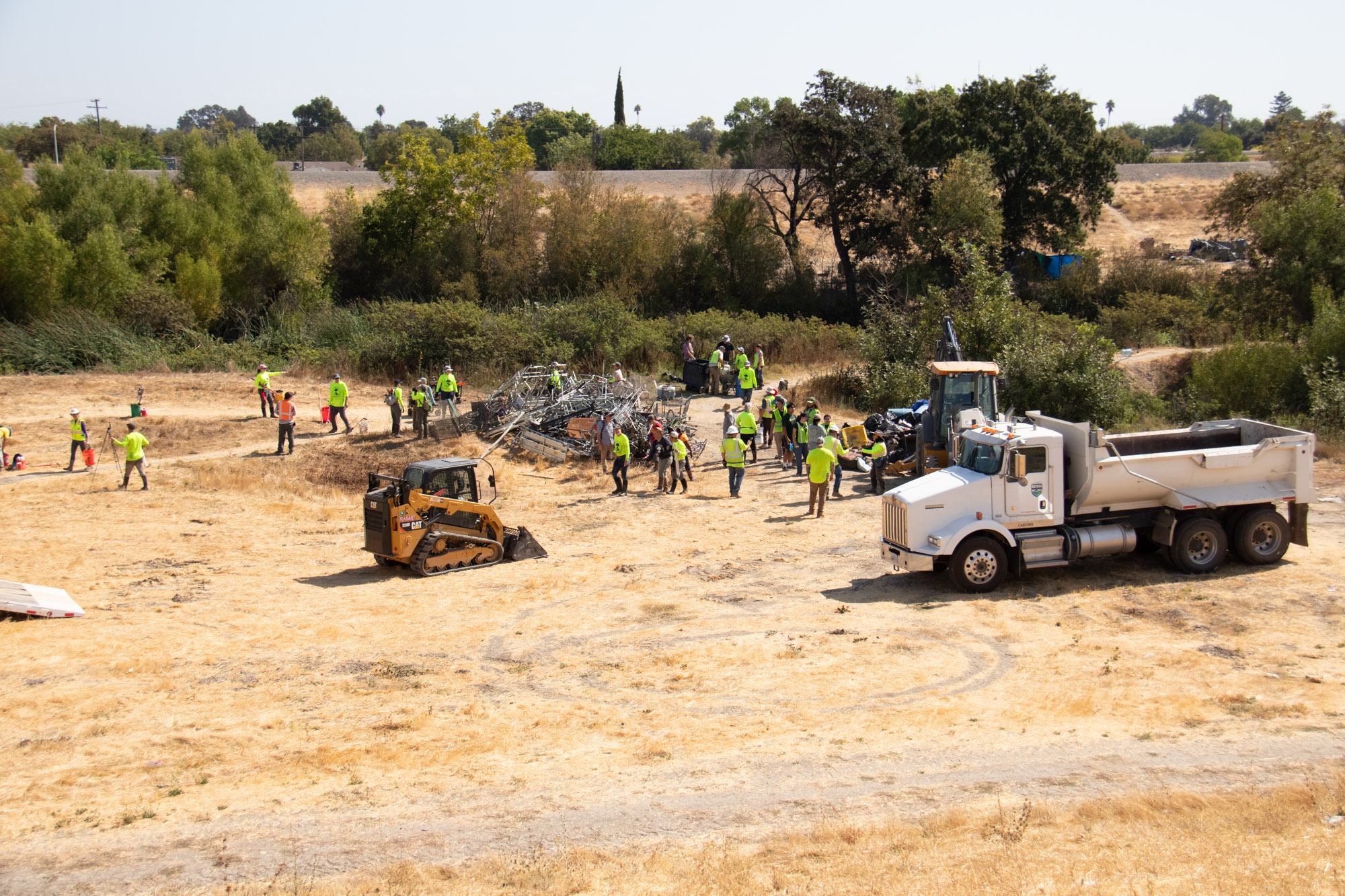
On September 20, 2025, Caltrans employees and community members came together for a massive cleanup of Steelhead Creek in Sacramento, which flows into the American River. Fifty-three volunteers came together to collect roughly 57,000 pounds of debris -- about 45,000 pounds of trash and another 12,000 to 15,000 pounds of metal.
Bijay Panda, his wife Sandhya Panda, and his 8-year-old grandson were among the volunteers who participated in the cleanup. Panda works as a civil transportation engineer in the Office of Program Management and has worked for Caltrans for 22 years. In his spare time, he volunteers at community events hosted by the Odisha Association of Greater Sacramento (ODIAS). ODIAS is made up of volunteers from the Odia community, an ethno-linguistic group from India, who help support and promote the culture’s traditions and values in the Sacramento region.
“While we were cleaning up Steelhead Creek, we saw a temporary structure built [by a person experiencing homelessness],” said Panda. “It made me think about the power of opportunity—how ideas can become something greater. As an engineer, I believe that when people have access, they can make a real difference.”
Community stewardship is as important to ODIAS as family. Panda and other ODIAS members have ties to a coastal city in India called Odisha. In Odisha, families come together to support one another, and the community is tightknit. In the U.S., Odia work to create that same community here.
“When an Odia community member is going through tough times here in Sacramento and are away from their family in Odisha, we call and meet as a nuclear family,” Panda explained.
Panda asked his grandson to join him at Coastal Cleanup Day.
“He said, ‘Yes I would like to go.’ He knows what ‘cleanup’ means because he does it at home,” said Panda. “He saw and found new things [at Coastal Cleanup Day] but I believe he learned something from it because he went to school and he said he went there to pick up some stuff.
“Things like that we encourage. We believe we have the duty to give back and help keep our city clean and beautiful. That’s the thing we are encouraging our youth to do—to come forward and participate and give some time to help keep our California and Sacramento clean and beautiful.”
Panda believes environmental stewardship should begin at home and emphasized it’s everyone’s responsibility to help maintain California’s beauty. Panda also believes this should apply to our public transportation systems. Panda has been a public transportation commuter for the past 20 years, taking the light rail into work every day and recognizes the collective duty we all have to ensure our public spaces remain inviting and pristine. One of Panda’s goals is to involve the Odias community in cleaning up light rail stations around Sacramento.
“One day, if you see a clean station, it will make a very good impression,” said Panda. “It starts from our home to everywhere else, right?”
Other groups involved in the Coastal Cleanup Day in Sacramento included River City Waterway Alliance, co-founded by Caltrans employee Lisa Sanchez. The group is dedicated to addressing the local ecological health of the American and Sacramento Rivers and other waterways by engaging local citizen volunteers to remove trash at organized events.
As we start a new year, everyone can take part in protecting California’s ecosystem by participating in this year’s Coastal Cleanup Day on September 19, 2026. Visit coastal.ca.gov for more information and a local event near you to join.
Department’s fleet powers up for a greener future

Headquarters photo
From the Division of Equipment
Caltrans’ Division of Equipment’s commitment to fleet modernization is more than just acquiring new vehicles. It's about becoming the greenest government fleet in the nation.
As of fall 2025, Caltrans has 1,227 electric vehicles (EVs) in its fleet, consisting primarily of Teslas, Volkswagen ID.4s, Chevy Silverados, Chevy Bolts and a variety of heavy-duty fleet vehicles. The Division of Equipment also had an additional 485 all-electric units on purchase order and in delivery, including Rivian R1-T trucks, Rivian R1-S SUVs, Ram ProMaster EV vans, Volvo VNR Class 7 cargo trucks, electric sweepers and Bollinger cone trucks.
In addition, Caltrans has 289 new plug-in hybrid vehicles coming into the fleet: 75 Jeep Grand Cherokee 4xe plug-in hybrids, 22 Toyota RAV4 Primes, and 192 Ford F-150 hybrids.
There are several benefits to the regular replacement of Caltrans light-duty fleet vehicles. Newer vehicles are more reliable, leading to more uptime for customers and less unexpected downtime.
Also, they allow Caltrans to take advantage of factory warranties, ensuring manufacturers are responsible for major repairs, not Division of Equipment staff. Most new EVs carry an eight-year, 100,000-mile warranty on the battery and drivetrain.
Additionally, a modern fleet promotes a People First culture. When Caltrans employees are driving newer, well-maintained vehicles, it creates a sense of pride in their work and shows the division’s commitment to providing the best possible equipment for the department.
Finally, regular replacement is a sound financial strategy. By turning over its fleet more regularly, Caltrans gets more money back when vehicles are auctioned off at the end of their useful life cycle. This provides a better return on investment, adds more money back into the department’s new equipment fund, ensures the most value for the fleet, and continues a sustainable fleet replacement cycle.
The California Air Resources Board has set a goal for Caltrans to replace its entire fleet with fully electric vehicles by 2035. The Division of Equipment is embracing this transition, but there are challenges to overcome, particularly with heavy-duty equipment.
The typical range for a heavy-duty Class 4-8 electric truck is currently between 120 and 250 miles, with an average of about 150 miles.
A significant challenge in the industry is managing the size and weight of battery packs, as well as thermal management to keep batteries cool during use.
The industry is rapidly evolving, and the Division of Equipment's continued investment and partnership with the original equipment manufacturers (OEMs) is critical to helping vehicle-makers move technology forward.
Caltrans is actively working with manufacturers such as Volvo, Bollinger, Mack, Global Environmental Products, and International Trucks to purchase and help develop new EV products. The department already has a Volvo VNR Electric transport tractor in service, with another on order, along with 11 straight-frame cargo trucks.
Caltrans also has a purchase order for eight Bollinger vehicles, which will be upfit into electric cone trucks, and 15 Global Environmental Products electric sweepers.
To ensure these EVs are put to their best use, Caltrans’ Engineering & Production team uses fleet telematics data to identify locations where they are best suited.
Caltrans strives to be on the cutting edge of new EV technology. That approach comes with its own set of challenges, and the department is at a watershed moment when it comes to vehicle propulsion. Caltrans is working directly with OEMs to develop technology and solutions that will overcome challenges for the rest of the world, and the department’s field crews are finding ways to adapt.
Such efforts have earned Caltrans a reputation as globally respected subject-matter experts in the EV world. As the Division of Equipment continues to modernize its fleet, the integration of new technologies represents an evolution for the entire organization.
A cool approach to paving roads in a greener way
District 8 photo
By the Division of Maintenance
Caltrans' Division of Maintenance continues to be a leader in advancing sustainable pavement solutions with the growing adoption of Cold Central Plant Recycling (CCPR).
In partnership with industry experts and academic researchers through the Pavement and Materials Partnering Committee (PMPC), Caltrans has worked to create clear, consistent guidelines for cold recycling — a method of reusing old pavement materials without applying heat.
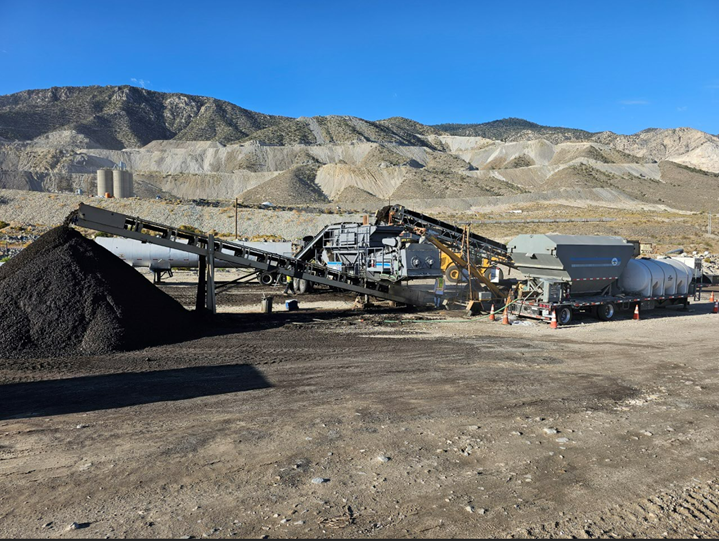
Cold recycling includes two main approaches: Cold In-Place Recycling (CIR), where the existing road is ground up, treated and compacted right on site; and CCPR, where the old pavement is removed, processed at a nearby mobile plant, and then brought back to the site to be laid down as a new base layer.
These standardized CCPR guidelines were officially published in Caltrans' construction specifications in October.
With these standards in place, Caltrans can more easily use CCPR to maintain and rehabilitate asphalt roads across the state, according to Leo Mahserelli with Caltrans’ Headquarters Office of Pavement Recycling and Job Order Contracts.
CCPR is a flexible option that works well when more control is needed during the recycling process or when on-site recycling isn’t practical — such as roads with sharp curves, steep terrain or limited space for equipment. It can also serve as an alternative to other cold recycling methods or even be used in new construction projects.
With four pilot projects already completed, CCPR is proving to be a viable alternative to other cold recycling strategies, especially when in-place methods aren't feasible due to physical constraints. The new standards now make it easier to apply this method across California’s roadways.
Ongoing research continues to improve the strength, durability and environmental benefits of CCPR — through better mix designs, low-carbon cement alternatives, advanced emulsions and enhanced pavement design tools such as California Mechanistic-Empirical (CalME), which helps engineers create longer-lasting, more efficient roadways.
The Office of Pavement Recycling and Job Order Contracts works with Caltrans’ 12 districts and various stakeholders on prioritizing pavement recycling under appropriate pavement applications, which includes partial depth recycling, full depth recycling and cold central plant recycling. The benefits include lower capital costs, lower global warming potential, reduced material to the landfills, and aligning with Caltrans goal for sustainability.
The office also assists districts in implementing Job Order Contracting (JOC), which is a project delivery method utilized to deliver projects comprised of numerous, non-complex, commonly encountered and repetitive tasks whose scope is narrow. The benefits would include time savings and reduce procurement support costs for the department.
District 6 unveils Transportation Engineering Academy
District 6 photo
By Rachel Moya
District 6 chief of staff
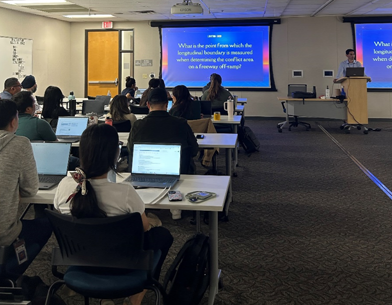
District 6 recognizes the valuable role its Transportation Engineers (TE) play in delivering safe and innovative solutions for California’s transportation systems. To enhance their skills and ensure organizational excellence, District 6 has launched the Transportation Engineer (TE) Academy.
The TE Academy is specifically designed for newly hired engineers, providing them with essential knowledge and tools to excel in their roles. This comprehensive 14-session program delves deep into Caltrans' project delivery process, ensuring that participants are well-versed in both the technical and cultural aspects of the district. The program emphasizes key values and expectations, fostering a sense of belonging and purpose among participants.
Since its inception in 2022, the Academy has made a significant impact on its attendees. Engineers who have completed the program report increased confidence in their abilities, empowering them to pursue professional advancement within their careers. The high demand for the program has prompted District 6 to prepare for multiple cohorts, ensuring that more engineers can benefit from this essential training. This expansion is a strong testament to District 6's commitment to cultivating capable and confident engineers who can navigate the complexities of the transportation sector.
The TE Academy is not just an educational program; it is a strategic investment in the future of transportation engineering. By equipping the next generation of engineers with the skills they need to succeed, District 6 is ensuring the continued evolution and improvement of California’s transportation systems.
If you are interested in attending the TE Academy or would like more information, please reach out to Jennifer Nishikawa or Rachel Moya.
2026 Caltrans Safety Poster Contest: Time to enter!
From the Division of External Affairs
The deadline to enter the 2026 Caltrans Safety Poster Contest is 5 p.m., February 27. It is open to all children and family members of Caltrans employees.
This includes stepchildren, nieces, and nephews who are 17 years of age or under at the time of the contest deadline.
The contest has four divisions: age 6 and younger, ages 7 through 10, ages 11 through 13, and ages 14 through 17. The theme is “Traffic Safety Begins Behind the Wheel.”
This contest provides young people the opportunity to use their artistic creativity to help spread the message of traffic safety –The Number One priority at Caltrans.
Submitted poster artwork must be 8½ x 11 inches and can be either portrait (vertical) or landscape (horizontal) orientation. No computer-generated, AI-driven, or altered artwork will be accepted. It must be created by the young artist’s hand. Also, each submission must contain the pictured Caltrans logo and the theme phrase listed above.
To enter, please include the following:
- Completed entry form (District Liaisons will provide upon request)
- Scanned image from 8½ x 11” artwork (horizontal or vertical)
- Hi-resolution photograph (jpeg or similar file) of student with their Caltrans relative
Please send submissions to the correct district or headquarters liaison:
1 – Rhiannon Montgomery. rhiannon.montgomery@dot.ca.gov.
2 – Christopher Woodward. christopher.woodward@dot.ca.gov
3 – Stevey Sparks. stevey.sparks@dot.ca.gov.
4 – Vince Jacala. vince.jacala@dot.ca.gov.
5 – Heidi Crawford. heidi.crawford@dot.ca.gov
6 – Melissa Skulley. melissa.skulley@dot.ca.gov.
7 – Monica Ruvalcaba. monica.ruvalcaba@dot.ca.gov.
8 – Michael Martinez. michael.martinez@dot.ca.gov
9 – Monique TeSam. monique.te.sam@dot.ca.gov
10 – Roland Armstrong. roland.armstrong@dot.ca.gov.
11 – Mana Ghodsian. mana.ghodsian@dot.ca.gov
12 – Robert Johnson. robert.w.johnson@dot.ca.gov.
Headquarters – Jay Connerley. jay.connerley@dot.ca.gov.
Each district will choose regional winners in each age category and send them to Caltrans Headquarters to compete for the statewide awards.
Statewide winners will receive the following:
- A printed display at the annual Workers Memorial on April 23.
- The winning designs placed in the event program
- A full color poster to keep
- Artwork inclusion in a 2027 calendar to be distributed throughout California.
Winning poster designs may also be distributed online, throughout Caltrans social media, and featured in public service announcements.
District Winners will be announced March 16.
Statewide Winners will be announced March 30.
District 11 executive deemed a ‘person to watch’
District 11 photo
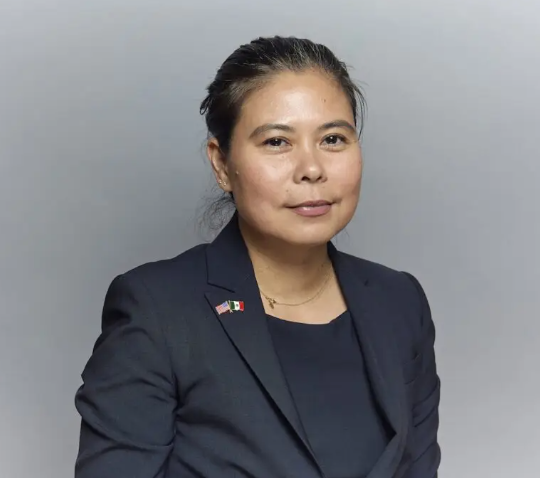
Note: Nikki Tiongco, District 11’s South County Trade Corridor director, was featured in San Diego Magazine’s 50 People to Watch in San Diego, 2026. Here’s that story:
The San Ysidro Port of Entry is the one of the busiest border crossings in the world—a massive economic and cultural driver for San Diego. But it’s also a pain, with hours-long waits. Nikki Tiongco’s working on solutions.
California Department of Transportation (Caltrans) may be a state agency, but Tiongco, as the South San Diego County and Trade Corridor Director, plays a critical role for two countries, serving as the point person for big projects at the border. “San Diego and Tijuana understand this border region really is considered one community,” she says.
Her current venture: the Otay Mesa East Port of Entry, slated for completion in late 2027. With tens of billions of trade passing through the existing Otay Mesa and Tecate ports each year, Otay Mesa East will be an economic boon to an ever-growing area. It will also incorporate state-of-the art tech to improve efficiency and sustainability. Dynamic tolling will change prices based on demand to help manage the flow of vehicles, helping the port serve as a release valve for traffic at other border crossings, like San Ysidro. The resulting shorter wait times will mean vehicles idle less, reducing emissions and pollution.
Ultimately, Tiongco’s goal is to make the entire border system more efficient. She’s part of the team leading plans for a rail study on both sides of the line and facilitating a binational dialogue to prioritize the planning of projects for the forthcoming Border Master Plan.
Who’s New
Cory Binns, chief deputy director of Caltrans

Cory Binns is the new chief deputy director of the California Department of Transportation. Cory is well known throughout the Caltrans family, having served as both the deputy director of Maintenance and Operations and the District 11 director.
He brings extensive leadership experience and a deep understanding of the transportation infrastructure, having most recently served as a retired annuitant director of construction and engineering at the San Diego Association of Governments. In his new role, he will work closely with the executive leadership team to support Caltrans’ strategic priorities, drive operational excellence, and ensure effective delivery of our mission to provide a safe and sustainable transportation system for all Californians.
This appointment underscores the Governor’s confidence in Cory’s capabilities to help guide Caltrans through our current and future challenges, strengthening organizational performance and delivering meaningful results for the people of California.
Cassandra Schmitz, chief of staff to deputy director of Administration.
Cassandra Schmitz is the new chief of staff to the deputy director of Administration.
Cassandra brings a strong understanding of the Administration program, having served in multiple roles at Caltrans, most recently as a Staff Services Manager I, Organizational Excellence Specialist. In that role, she led enterprise-level governance efforts, coordinated cross-functional priorities across all Administration divisions, and supported executive leadership through strategic planning, communication, and organizational improvement initiatives.
With experience spanning state service, local government, nonprofit and private-sector environments, Cassandra is known for a collaborative leadership style, sound judgment, and a deep commitment to employee excellence, integrity and public service.
Matt Smith, Broadband Facilities Program coordinator in Division of Design.
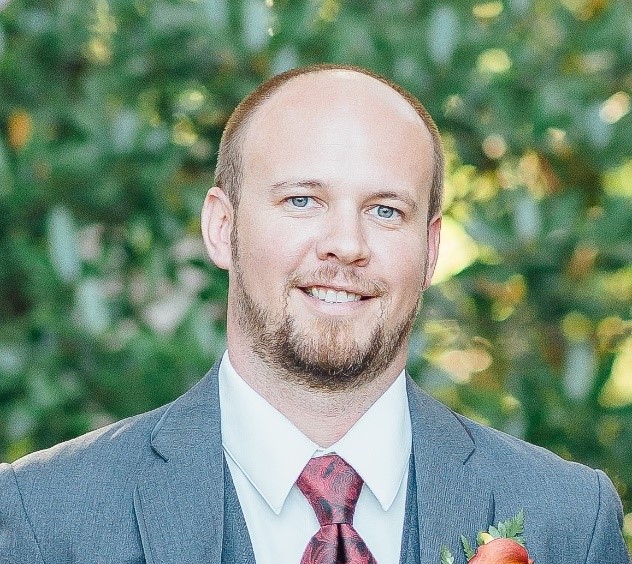
Matt Smith is the new Broadband Facilities Program coordinator in the Headquarters Division of Design.
Matt Smith holds a bachelor of science degree in civil engineering from Humboldt State University (CalPoly). As a student, he worked for the Department of Water Resources performing stream gauge monitoring along the North Coast. He began his Caltrans career in 2008 with the District 1 Office of Advance Planning. He soon moved onto the Office of Traffic Safety working for three years as the Highway Safety Improvement Program coordinator, scoping and initiating several safety projects.
Matt then moved into Design where he spent a majority of his career developing a variety of projects through PA&ED and RTL, including some early involvement with alternatives for the Last Chance Grade project on Route 101.
In 2022, he moved to Marysville (District 3) to assume the role of design senior for the MMBN Design branch focused on the Eureka (District 1) geographic area, where he led the design team to deliver multiple MMBN Caltrans Build Job Order Contract (JOC) and Construction Manager – General Contractor (CMGC) projects.
Matt continued the MMBN work as it evolved into the encroachment permit system of delivery, working with the Encroachment office to perform design reviews and provide guidance to the applicants.
Outside work, hobbies are limited while raising three children ranging from 4 to 16 years old. He enjoys spending time with his family and exploring the lakes and rivers in the surrounding area. They still travel back to the North Coast to visit friends and enjoy the ocean and redwoods. He still manages to snowboard and see some concerts a few times a year and is considering reviving an older hobby of playing drums.
Obituaries
Richard Wayne Gold, retired Maintenance worker
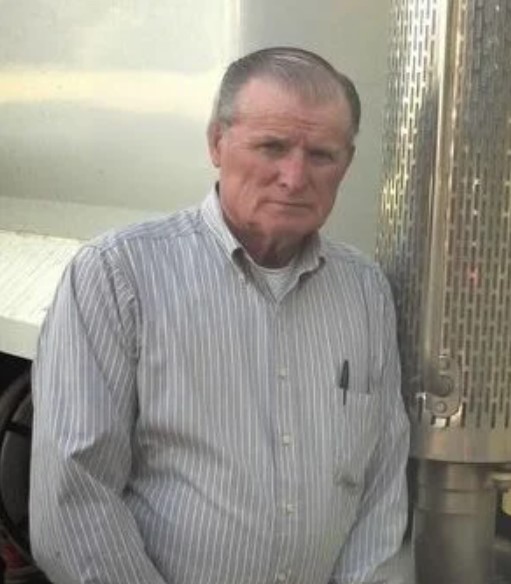
Note: The following obituary appeared in the Ledger Dispatch (Amador and Calaveras counties).
On Jan. 4, retired Maintenance worker Richard Wayne Gold passed away peacefully at the age of 81 at his home in Ione.
Rich was born on Sept. 9, 1944, in Manteca, California to Thomas Jefferson and Lottie Agnes Gold. Growing up in the Acampo area, he held a deep respect for his father and a soft spot for his mother. He also enjoyed playing marbles with his brothers and always lent a helping hand to his sister, especially when it came to washing out the oatmeal pot.
After 3 years at Lodi High, difficult circumstances required his family to relocate. Rich was justifiably reluctant about this change. The family landed in the Camanche area, only to be uprooted soon after due to the reservoir being filled. A short move to the Jackson Valley soon turned Rich’s reluctancy into a fondness of the Ione area, where he became a proud graduate of Ione High School in 1962.
Little did he know that the move they made to the Ione area would become the foundation where their future generations would grow, take root and become deeply woven in the community.
Rich quietly, yet deeply loved his faith, family and his country, and proudly served overseas in the Army for two years. Rich met his future wife of 51 years, Judith Maple, at Ione Homecoming and the couple eventually married on Sept. 14, 1974.
Rich got started helping with “The Picnic” early on, clearing and burning brush at Howard Park in the area where Evalynn Bishop Hall would later sit. He donated his time by painting benches and more recently hauling bark, rock and water. Rich ran the frog jump for many years, helped with the sheep dog trials and served as President of the Ione Picnic Association in 1997.
He also coached Little League and enjoyed watching the traditional Friday night homecoming games. In 2014, Rich was proudly named Grand Marshal of Ione Homecoming. This year will be the first Homecoming in 58 years that Rich will not be in attendance.
Calling Rich Gold a hard worker would be a severe understatement. He knew what it felt like to go without and never wanted anyone around him to struggle. From picking peaches by the box as a kid to hauling hay by the bale as a teen, Rich eventually ended up in the sand pits of Ione operating open cab scrapers by the load.
Operating Engineers provided steady work for various earth-moving contractors through the years for Rich where he honed his craft on multiple pieces of heavy equipment. He also worked for Caltrans for several years, where he plowed snow and won multiple belt buckles at the district and state levels for his skill and finesse on heavy equipment.
His work ethic shows through not only on his extremely weathered hands, but also through those around him trying to continue his legacy of hard work. Rich eventually “retired” only to start his own dump truck service which became Gold and Sons Trucking. Rich never slowed down and worked another 25-plus years until the day he passed.
Hunting, fishing and camping was more than just a hobby for Rich, it was a way to spend time with his family and friends while enjoying the outdoors. Whether he was camping at Dillon Beach, fishing the delta, dove hunting in Ione, or chasing mule deer out of state, everyone looked forward to one of Rich’s famous camp breakfasts.
Rich also had a passion for old GM cars and trucks, taking pride in owning and knowing the history behind them. Rich always had multiple “projects” that he drove and could be seen making his daily stops at the Chevron.
He was known for his gentle nature and a perfectly timed one-liner joke. Rich rarely missed a sporting event of his grandchildren, where he often refereed from the sidelines. Many looked to Rich as a pillar of steady strength to lean on. All who met him felt the love he had for his family. He will truly be missed.
Rich was preceded in death by his parents; brother Theadore Gold; and sister Dorris Jean. He is survived by his wife Judy; his four children, Richard (Christine), Reggie (Katie), Ryan (Britten), Lindsey (Jared) D’Agostini; his grandchildren Jordan (Dakota) Steinkamp, Eric (Alyssa), Shane, Aubrie, Rocky, Colton, Bodie, Sydney, Ainsley, Range, Hallie, Arlo, Rowdy; great-granddaughter Jolene; his siblings Linda Souza, Tom and Troy Gold; and many nieces and nephews.
Judy Eileen McCullough, retired civil engineer
Note: The following obituary appeared in the Union Democrat (Sonora).
Retired civil engineer Judy Eileen McCullough, 63, died late last year. She was born to Dearl and Edith McCullough in Lewiston Idaho on Jan. 9, 1962.
The family moved frequently between Rocky Mountain states during her early childhood. They stayed in Macdoel, California, from 1968 until settling for good in Sonora, California, in 1974. Judy finished elementary school and high school in Sonora. Judy took classes at Columbia Junior College, Modesto Junior College and Fresno State before settling at San Jose State, where she completed her bachelor's and master's degrees in civil engineering.
Judy followed in her mother's footsteps by completing an advanced degree. Judy worked for California Department of Forestry (Now CalFire) in Columbia for three summers. Judy also worked as an EMT.
Judy had a few jobs before landing her dream job at Caltrans, where she worked for 25 years as a civil engineer until she retired.
She attended St. Thomas Catholic Church in Oroville and raised her daughter, Rachel, in the Catholic faith.
Judy was very athletic and adventurous. She was a finisher in 11 marathons, including the Boston Marathon twice. She also completed a few triathlons. Judy enjoyed snow skiing. She loved the outdoors. She enjoyed scuba diving and free diving for abalone.
She loved her horses and riding them. She also enjoyed camping, hiking and trap shooting. She enjoyed making wine. Judy loved to travel, and learn about other cultures. She loved spending quality time with family and was always willing to help out a friend in need.
Judy is survived by her daughter, Rachel McCullough, of Oroville; her father, Dearl McCullough, of Sonora; two older sisters, Sue McCullough, of Oakland, California, and Ester McCullough, of Meeker, Colorado; and younger brother Dan McCullough, of Grey, Georgia.
Judy passed away peacefully in her sleep on the morning of Nov. 6, 2025, after a nearly year-long battle with cancer.
Lloyd “Skeeter” Aubrey McMurry, retired engineer
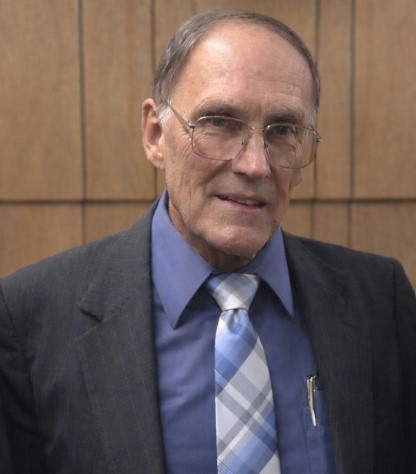
Note: The following obituary appeared in The Press-Enterprise (Riverside).
Retired Caltrans engineer Lloyd “Skeeter” Aubrey McMurry finally decided to rest on Dec. 13, 2025, at the age of 83 – something he spent a lifetime avoiding.
Born on Sept. 3, 1942, in Bishop, California, he was affectionately known as “Skeeter,” a nickname that perfectly captured his boundless energy, untamable nature, and mischievous attitude, all of which evolved into an adventurous spirit deeply rooted in the outdoors.
Skeeter earned a degree in civil engineering before continuing his education at Western State College of Law, where he obtained a Juris Doctorate. He dedicated 44 years of service to Caltrans in San Bernardino, working in the Division of Construction Safety and concluding his career overseeing the Legal Department.
Throughout his tenure, he was widely respected for his intelligence, integrity, and unwavering commitment to keeping others safe.
After retiring from Caltrans, Skeeter was far from slowing down. He went on to start a construction company with his wife and son and ultimately served as director of safety for Leading Edge Scaffold in Las Vegas. He was deeply involved in the day-to-day operations and played a major role in establishing Leading Edge Scaffold as one of the most respected scaffold companies on the West Coast.
In his personal life, however, he preferred a far more independent interpretation of safety rules, where warning labels were optional and personal safety was, at best, selectively applied.
Age was just a number to Skeeter and one he treated like a speed limit, completely optional. He outworked, outpaced, and out-stubborned people half his age, earning a reputation as the hardest-working man around. There was always something that needed to be done and he was usually already doing it. The younger crowd tried to keep up, but Skeeter never slowed down, because to him, rest was optional and quitting simply didn’t exist.
Outside of work, Skeeter found joy in fishing, trap shooting, remodeling houses, and tackling challenges of any kind. Racing Motocross wasn’t just a hobby, it was a personality trait … full throttle, airtime mandatory, and gravity more of a suggestion than a rule.
He was happiest when working with his hands, being outdoors, and spending time with family. Skeeter was known for his sharp intelligence, quick wit, and endless supply of stories he loved to tell, retell, and retell again, just in case you missed a detail the first three times. If you weren’t enjoying yourself, he would fix that, living by his favorite saying: “It’s your responsibility to have fun.”
Skeeter is survived by his loving wife, Ronda McMurry; his children, Mike McMurry, Heather Allen, Audrey Greeley, Kelly Cretti, and Matthew McMurry; his grandchildren, Kalei Greeley, Karson Greeley, Kade Greeley, Sean Allen, Kyle Greeley, Kyra Allen, Tristan McMurry, Averie McMurry, Ainsley Cretti, Mikylla McMurry, Declan Cretti, Brayden McMurry, Mitchel McMurry, and Devynn McMurry; and his great-grandchildren, Makaio Greeley and Nalukai Greeley.
Skeeter leaves behind a legacy of laughter, hard work, adventure, and a reminder to enjoy the ride, and always exaggerate your stories … just a little.
- All-in-one version
- News
- Obituaries
- Retirements
- road-trippin-gallery
- Service Awards
- Who's New